
 Celebrate Hispanic Heritage Month with Hispanic Genealogy Research Tips Hispanic Heritage Month is a time to celebrate the rich and diverse cultures, histories, and contributions of Americans who trace their roots to Spain, Mexico, Central America, South America, and the Caribbean. It is also a great opportunity to explore your own Hispanic ancestry and learn more about your family's origins. How to Start Hispanic Genealogy ResearchIf you are interested in learning more about your Hispanic ancestry and heritage, you might be wondering how to start your genealogy research. Genealogy is the study of family history and origins, and it can help you discover your roots, connect with relatives, and preserve your legacy.
Online Genealogy Sites for Hispanic ResearchSome of the most popular and reliable sites for Hispanic genealogy research are:
Records for Hispanic Genealogy ResearchAnother important aspect of Hispanic genealogy research is to know what types of records are available and how to use them effectively. Some of the most useful records for tracing your Hispanic ancestors are:
By using these online genealogy sites and genealogy records, you can discover more about your Hispanic heritage and connect with your ancestors. Happy Hispanic Heritage Month! More Hispanic Genealogy and other Genealogy Resources:
Learn about more Hispanic genealogy research resources, along with other family history and genealogy resources under the Genealogy Resources category and on my dedicated Genealogy Resources page.
0 Comments
 African American Genealogy Research Tips African American Genealogy: Research TipsSearching for your African American ancestors can be quite challenging, to say the least. Here are some basic tips to get you started on your African American genealogy research journey, so you can start climbing your family tree! Steps to researching your African American Ancestors:
African American Genealogy Research Tips:
More Genealogy Resources: Learn about more family history and genealogy resources under the Genealogy Resources category and on my dedicated Genealogy Resources page. 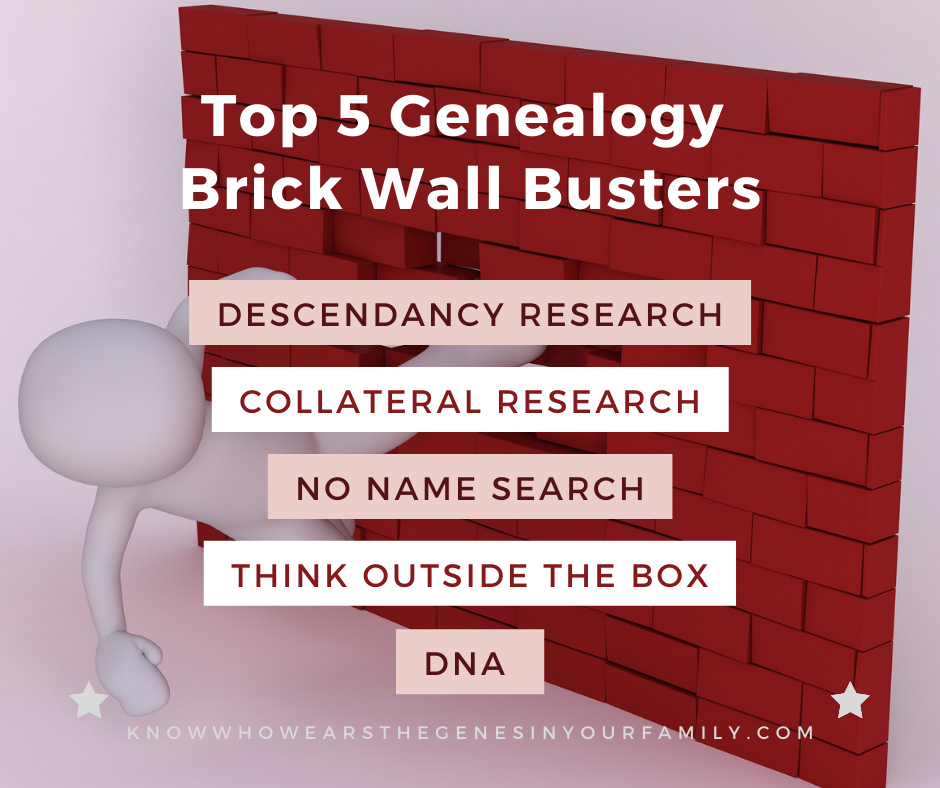 Top 5 Genealogy Brick Wall Busters We’ve all been there; there always seems to be that one ancestor (or many) whose records run dry and that just seem to fall off the face of the earth in one’s family tree. What do you do when you come across the dreaded genealogy brick wall? Do you get frustrated? Do you spend tons of money on possible records and professional research help? Do you start searching aimlessly? Do your brick walls seem to last for years on end? Your brick walls may not really be brick walls at all; it may be HOW you search, that you’re missing key clues, and that you’re not using ALL your resources. I have quite a few “brick wall" busters, but these are my top 5 tried and true ways of breaking through them. 1. Descendancy Research
2. Collateral Research
3. No Name Search
4. DNA
5. Think Outside the Box
More Genealogy Tips: Find more brick wall tips under the Genealogy Brick Wall Cases category, research tips under the Genealogy Research Tips category, and quick tips under the Genealogy Quick Tips category! *Best of the Genea-Blogs  Adoption or Unknown Parentage Research Tips Using Genealogy + DNA: Searching without Any Information Adoption or Unknown Parentage Research Using Genealogy+DNA: Searching without Any Information Traditional Genealogy + DNA + Descendancy Research + Living People Search + a Whole Lot More
After 7 days of extensive research and DNA mapping on a new case, I was able to narrow my non-legally adopted client's biological father down to 2 brothers, and on day 8, I had found one child (out of many) of the 2 brothers willing to take a DNA test to confirm which of the 2 brothers it is. She excitedly agreed to test to see if she has a newly found brother or 1st cousin! There is a lead on his biological mother (narrowed down to one line) with a possible birth certificate number, but getting that certificate, when you can't show proof it's yours or how you're related, is a whole other story. This recent unknown parentage case, out of many, has brought me to share part of the methodology I use. These are just guidelines and some tips for adoptive research that combine DNA and traditional genealogy with my “Uncovered Roots Method” DNA Research; descendancy research; living people search; and a WHOLE lot more, but this is in no way the full process that I use. 😉 These tips can be used in adoptive research or anyone looking for an unknown biological parent or other relative. 😉 Sometimes you may find your parent or other relative with this method, and sometimes you may just get down to a particular family or family line. 😉 Steps to Adoption or Unknown Parentage Research if No Information:
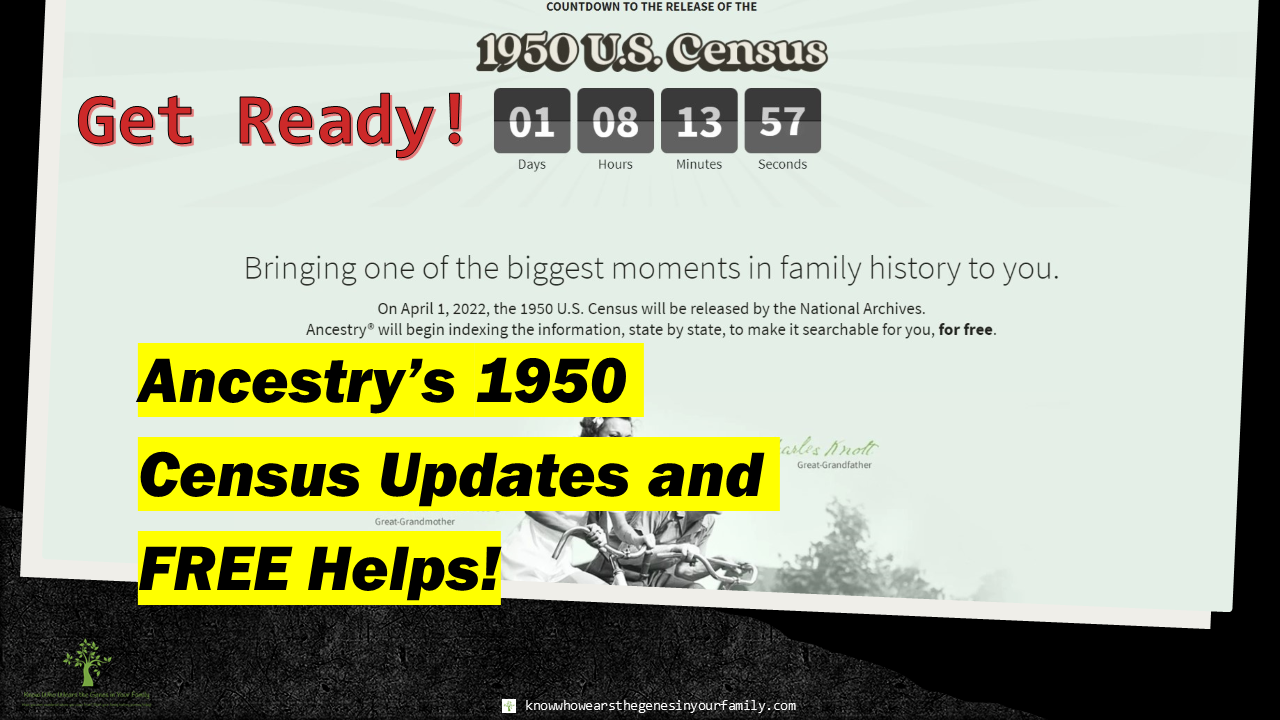
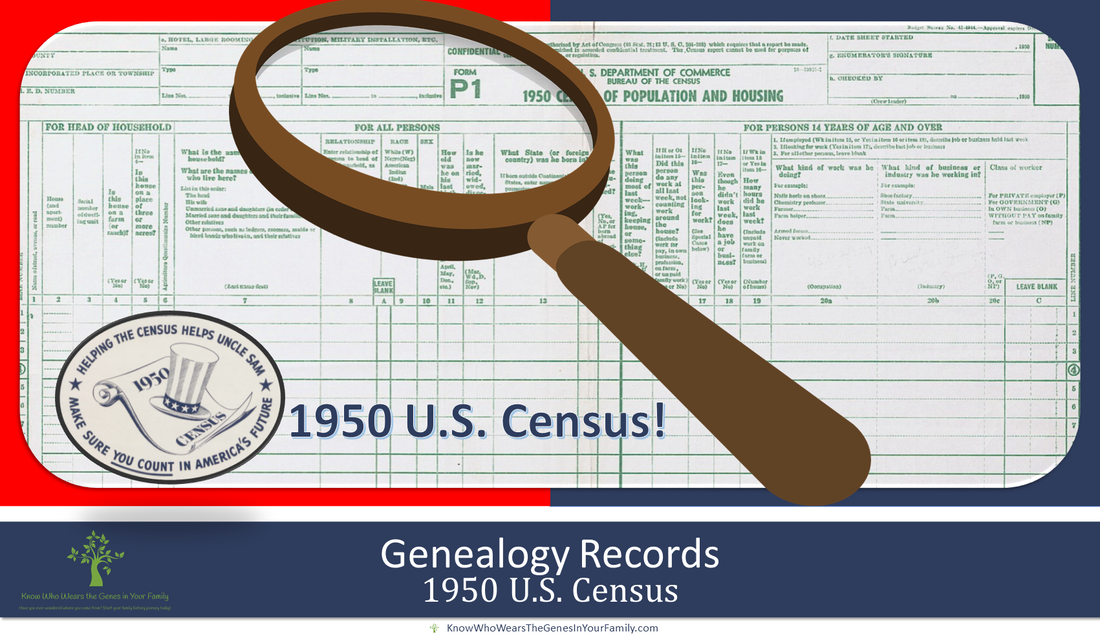
Other Tips: Have you tried a "no name search" in the areas where you suspect you were born, with just your birthdate? Interactive Questions: Are you adopted or did you grow up with just one known parent and are looking for a biological parent? Have you reached a genealogy brick wall for a particular ancestor or relative? Have you tried these tips to find a parent, ancestor, or any other relative? I’d love to hear your comments below in the comment section! More Genealogy Resources: Learn about more family history and genealogy resources under the Genealogy Resources category and on my dedicated Genealogy Resources page! More Genealogy Research Tips: Get more family history and genealogy research tips under the Genealogy Research Tips category and on my dedicated Genealogy Research Tips page! More DNA + Genealogy Tips: Get more DNA + genealogy research tips under the DNA Simplified category! More Genealogy Brick Wall Tips: Get more genealogy Brick Wall research tips under the Genealogy Brick Wall Cases category! Genealogy + DNA Coaching: Are you adopted or have an unknown parent and need help figuring out your DNA match’s or where to start, but want to research on your own? I offer private, one-on-one family history and genealogy coaching services! Genealogy + DNA Research Services: Are you adopted or have an unknown parent and need to hire a genealogist to find a biological parent or birth family? I offer my “Uncovered Roots Method” DNA Research Service for just that! This post is a participant in The Genealogy Blog Party: November! The Best of the Genea-Blogs 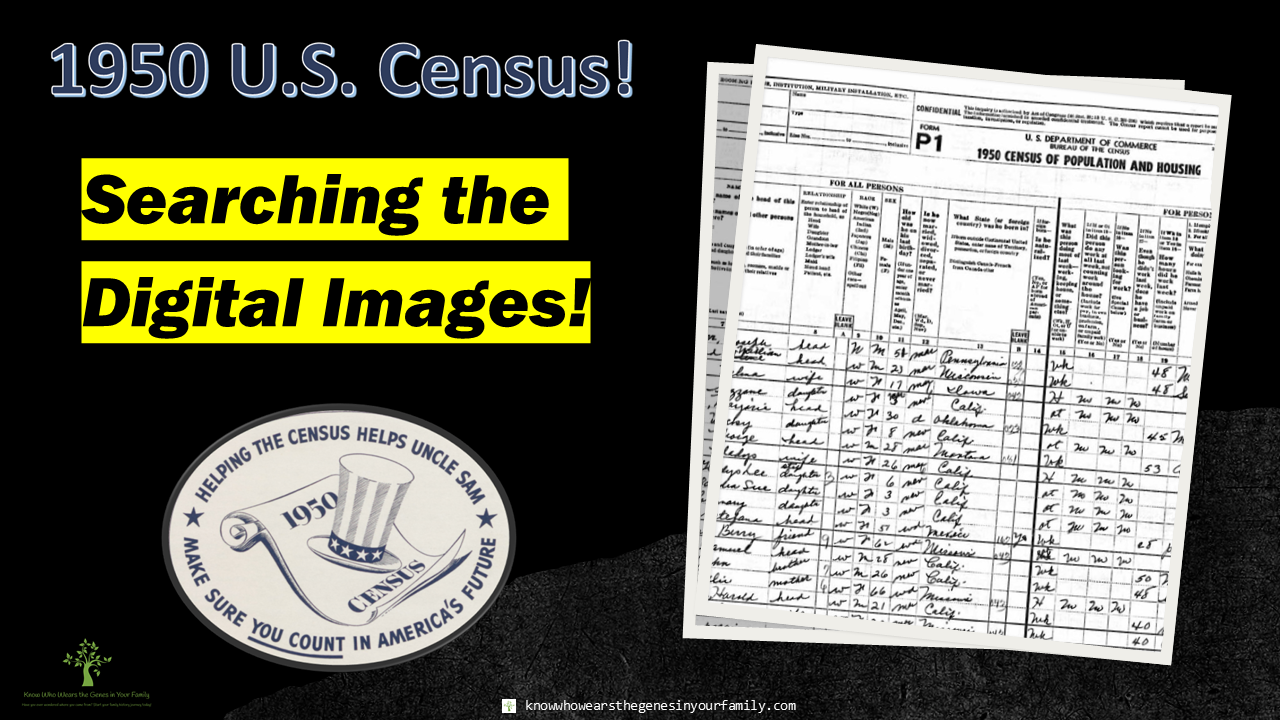 Searching the 1950 Census Digital Images! A Whirlwind of Searching the 1950 Census Digital Images!Well, the release day of the 1950 census on April 1st was definitely a whirlwind to say the least! It’s a good thing that it was the first day of my spring break, because I spent the entire day (about 16 hours) searching for my family! Then I was at again the next day! 2 days was my cap, haha! I figured if I couldn’t find who I was looking for manually, then they were most likely not on the census. Just as many of you have done, I had created a list of who I wanted to find first in the 1950 Census. After I had already made my list, which took quite a while, MyHeritage came out with a super cool new 1950 Census tool, called Census Helper, that does all the work for you (if you have a tree on MyHeritage 😉)! 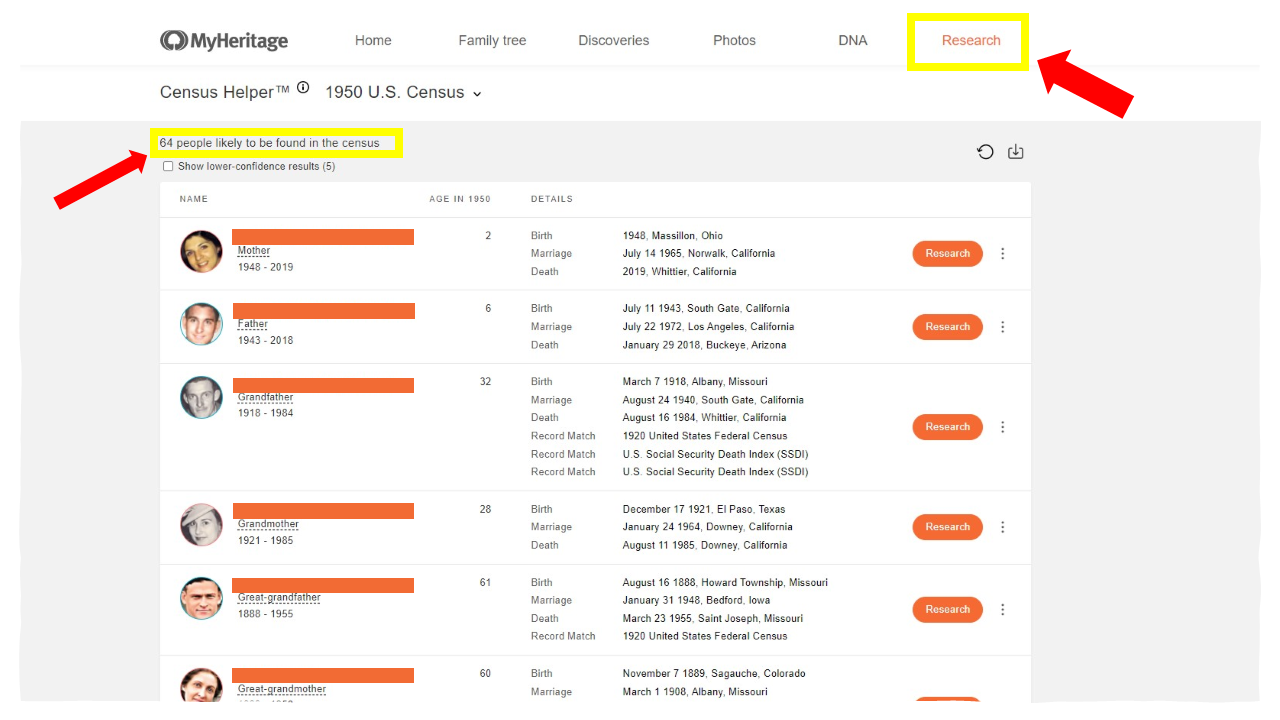 MyHeritage Census Helper for the 1950 Census Using the 1950 Census Distict Finder Tool from Ancestry to Search the 1950 Census Digital Images: With the 1950 Census district finder tool from Ancestry, that I spoke about last, in Get Ready for the 1950 Census with New Updates and FREE Cool Helps from Ancestry, I was able to find anyone I had an address for, right away! 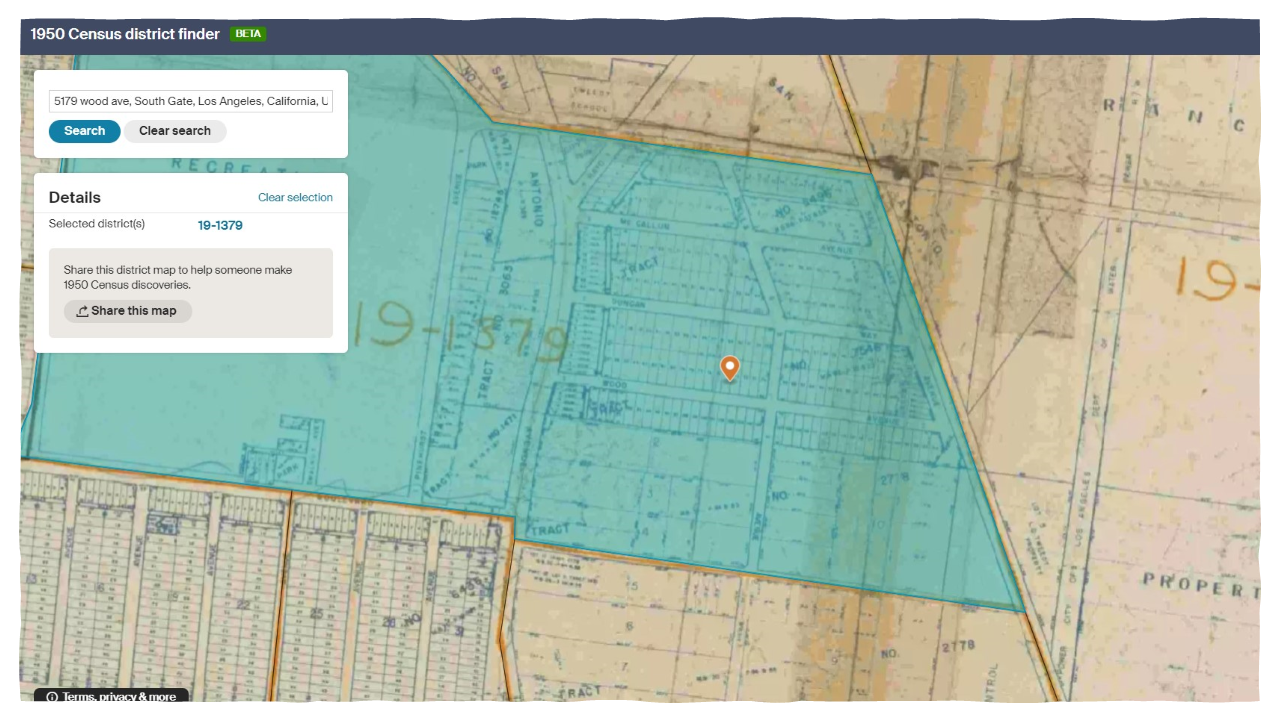 Ancestry's 1950 Census District Finder Address Search When it came time to search for anyone with just a city with their tool, it just took a little more effort. 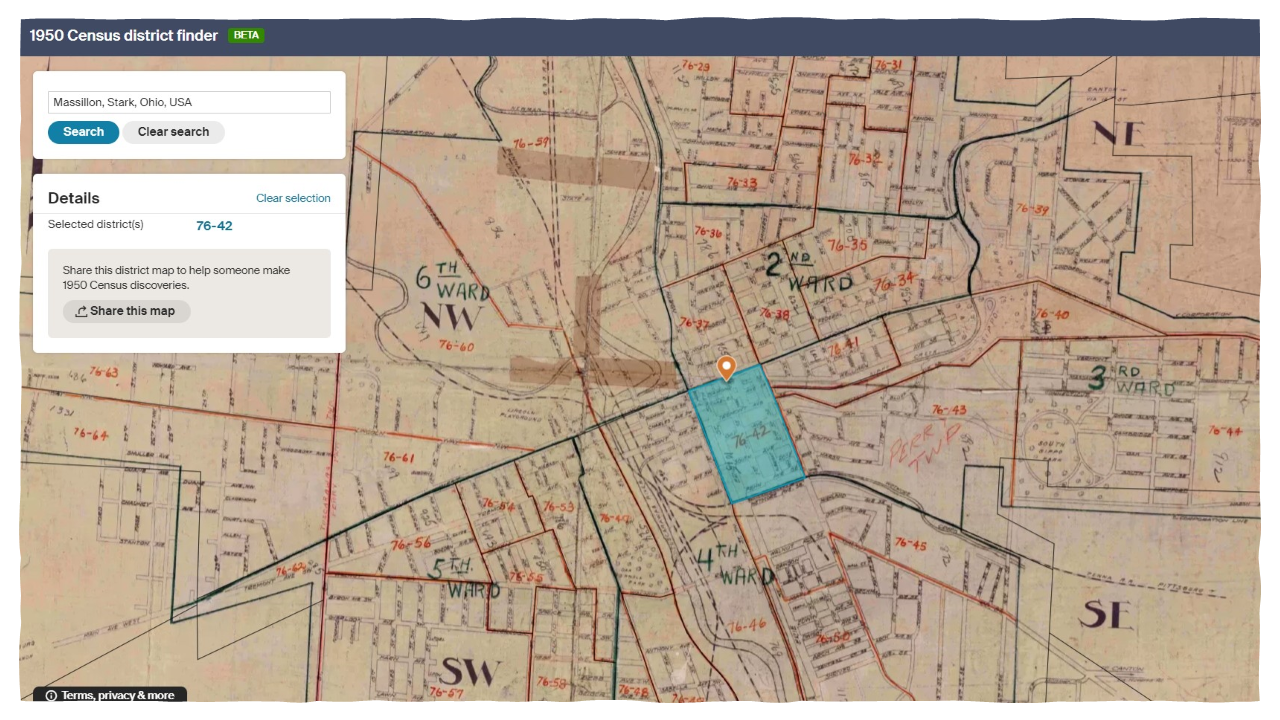 Ancestry's 1950 Census District Finder City Search Using NARA to Search the 1950 Census Digital Images: That’s when I went to NARA (National Archives) and used their tool. With NARA you also are able to search for a name with their 1950 Census Artificial Intelligence/Machine Learning index. Don’t confuse it with the standard searchable index that you’re used to though. The AI was better at getting some names more than others, and remember if you search for a last name, it will only be attached to the head of household. I found it much more concise with first names. If you only have a city and name, you will have to look through quite a few digital images. If you only have a county and name, then you will most likely be searching through tons of images! 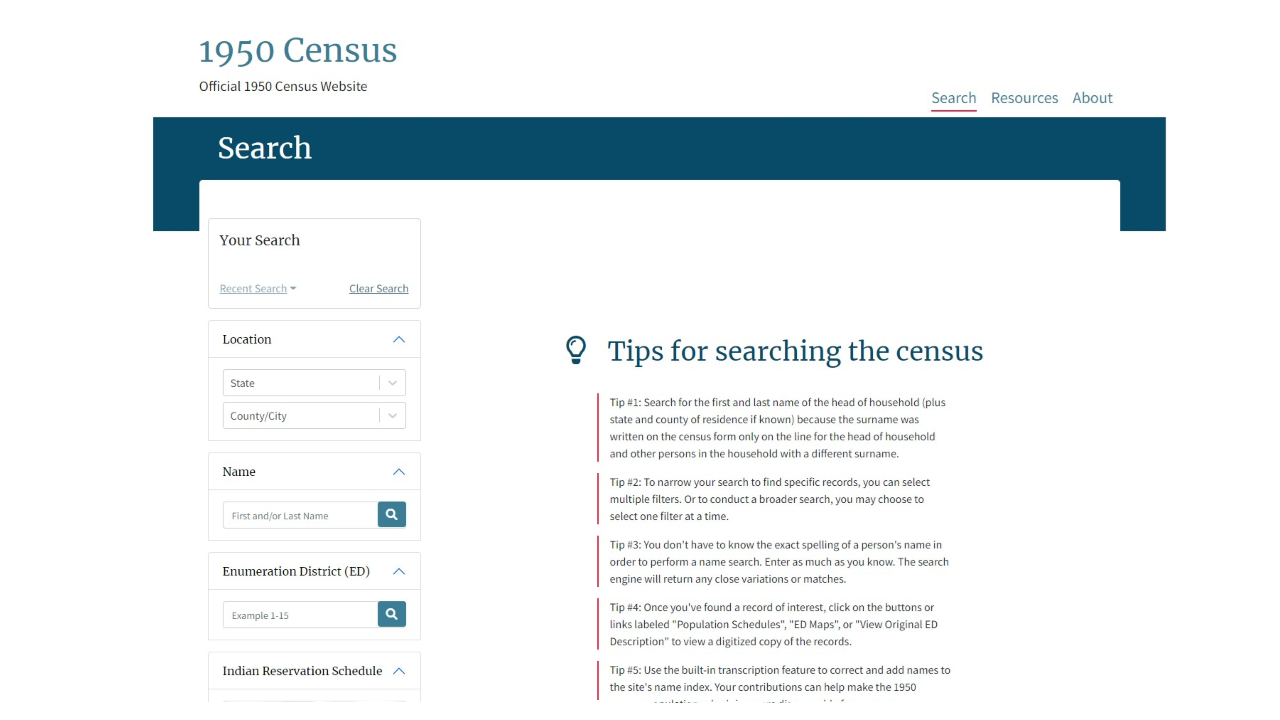 NARA's 1950 Census Artificial Intelligence/Machine Learning Index I also used this tool in conjunction with Ancestry’s 1950 Census district finder; it helped to narrow things down, especially when I had to search counties and sometimes just states. I was able to view other counties around the area of the city and county they should have been in, by finding the enumeration districts of all the areas close by, then plugging them into NARA with names, sometimes just a first name in case the AI couldn’t decipher the last name. Using MyHeritage to Search the 1950 Census Digital Images: AT some points, I also took the info from Ancestry’s ED district finder and NARA’s AI/ML searchable by name index and headed on over to MyHeritage to search. I found that MyHeritage had everything much more organized and laid out for me, minus the other’s tools. I also thought their digital image viewing was much easier to see and use. 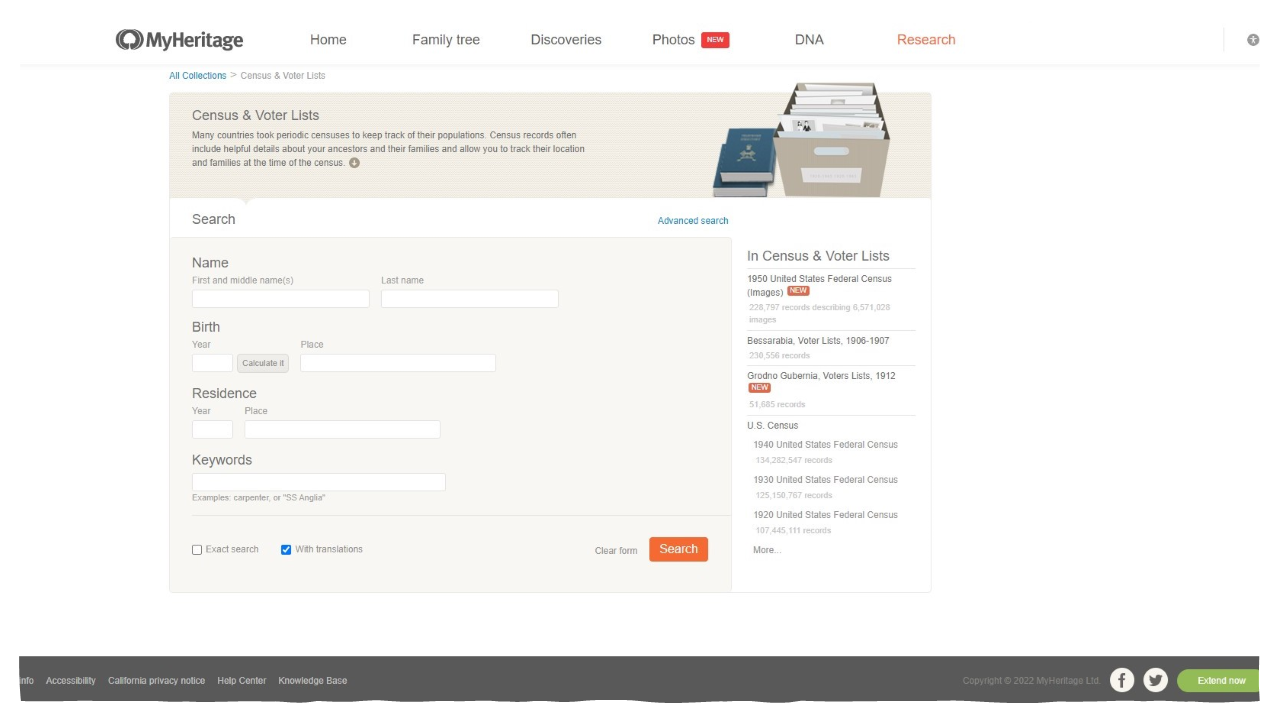 MyHeritage's 1950 Census Digital Image Search Using FamilySearch to Search the 1950 Census Digital Images: FamilySearch also has the 1950 Census digital images available! Although Family Search is usually my first choice for accessing online records, I just didn’t need to access it with the other 3 already being used in conjunction. 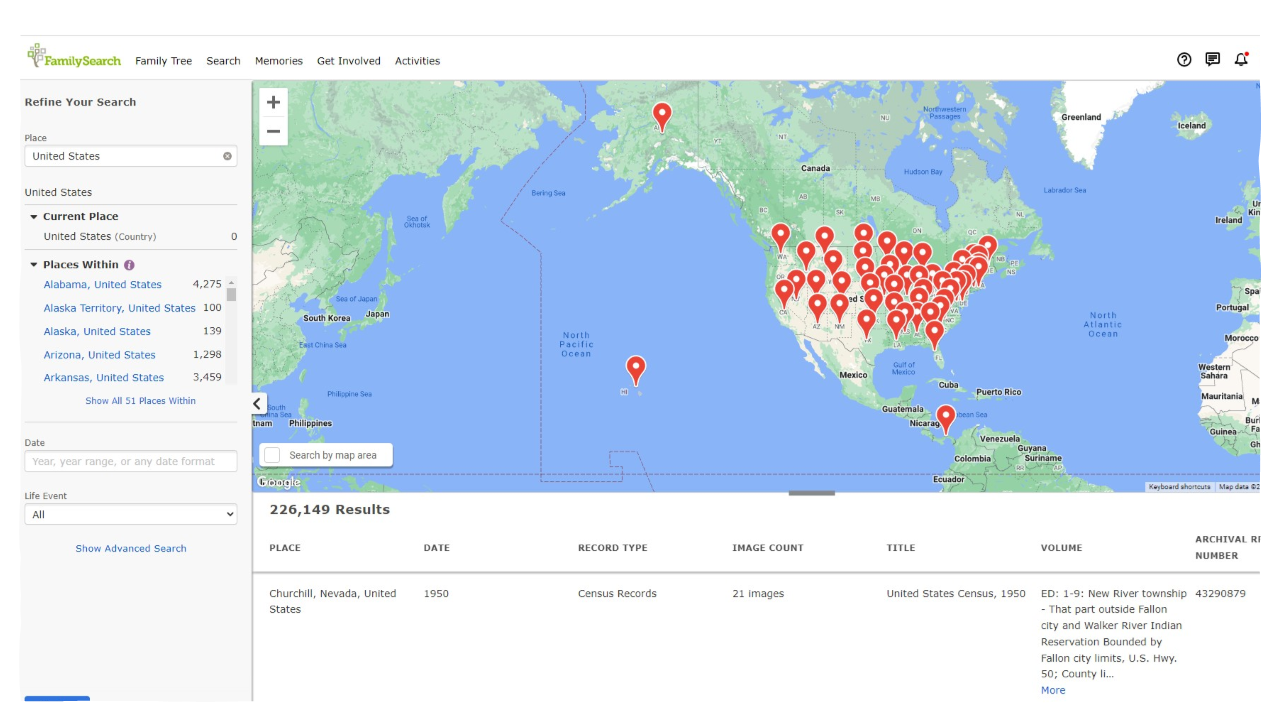 Family Search's 1950 Census Digital Image Search I did realize that the most difficult family/ancestors to find were the ones that weren’t where they should have been or moved around A LOT. Of course, for these ones I had to go back into my tree and search for more directories; more of their family members in directories; more marriages, births, and deaths for any of their family members around that time; and more, so that I could get their addresses as close to 1950 as possible. I eventually found everyone I wanted in the 2 days I had searched, except for my mom and her mom, and one great grandfather. I’m not sure why I can’t find my great grandfather, as I know from directories and other documents of the city he was living in, but for my mom and her mom, I think they just slipped the census. Her mom was an unwed teenager at the time, with my mom being 1 1/2. I know where my mom was born, I searched all family members (painstakingly), and she was with none of them. I searched my mom’s stepfather, who her mom had married just a few weeks later, and she was not with him. I then searched ALL the areas around him, then the entire county, then the state. They are no where to be found, as of yet. 😉 Note (4-7-22): As of today, the states of Wyoming and Delaware are fully searchable in the 1950 Census! Interactive Questions: Did you search the 1950 Census for your family on release day? What sites or tools did you use to search through the 1950 Census digital images? Did you prep beforehand with a list of relatives you were going to search for? Were you able to find everyone you had hoped to find? Let me know how it went or ask me any questions, below in the comments! More Genealogy Resources: Find other useful genealogy resources under the Genealogy Resources category and on my dedicated Genealogy Resources page! More Genealogy Records: Find my other posts on the U.S. Census records under the Genealogy Records category! Update (4-8-22): As of today, Vermont and American Samoa are fully searchable! Update (4-12-22): As of today, Alaska, New Hampshire, and the U.S. Virgin Islands are fully searchable! This post is a participant in the Genealogy Blog Party! Related 1950 Census content that may be of interest:
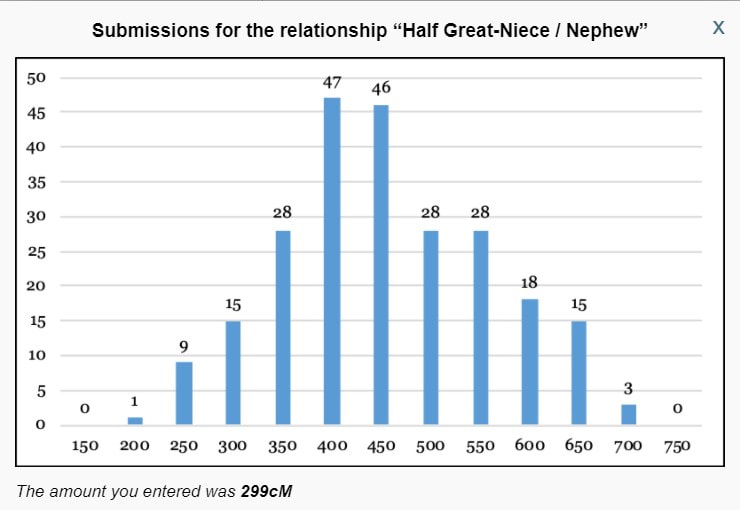
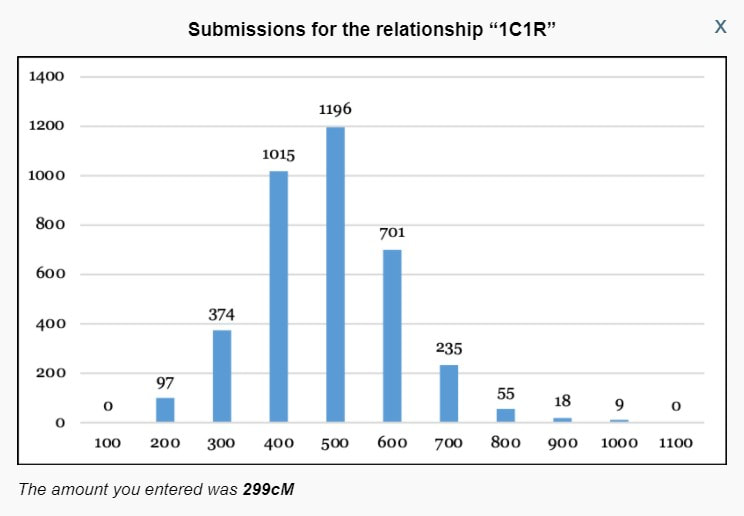
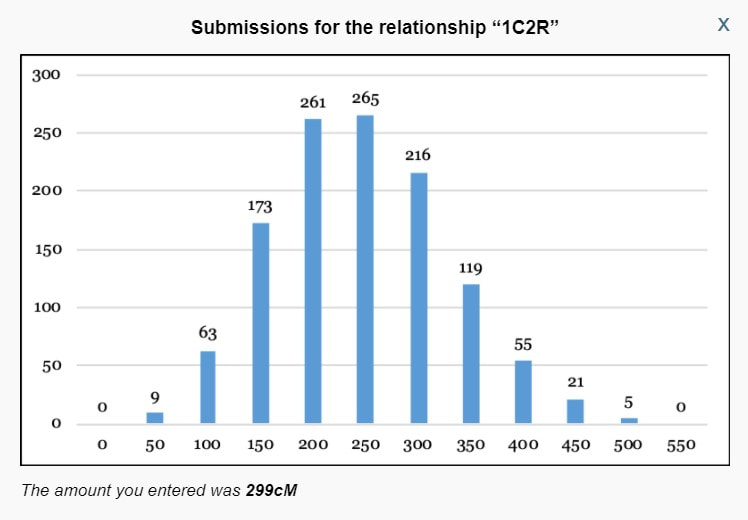
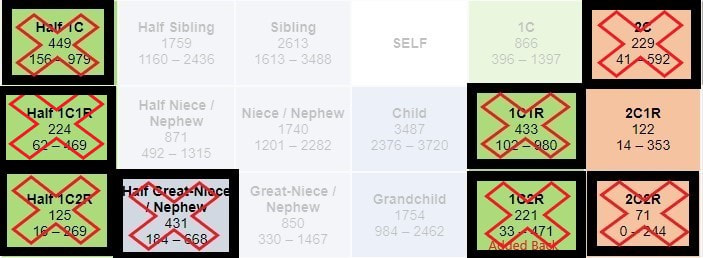
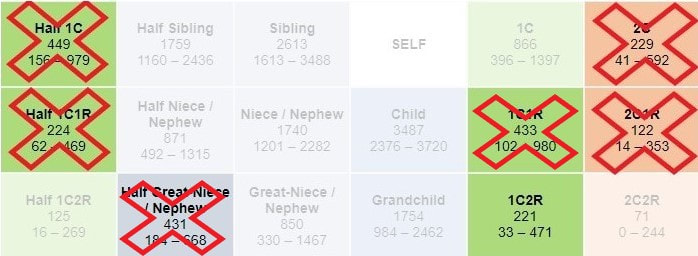
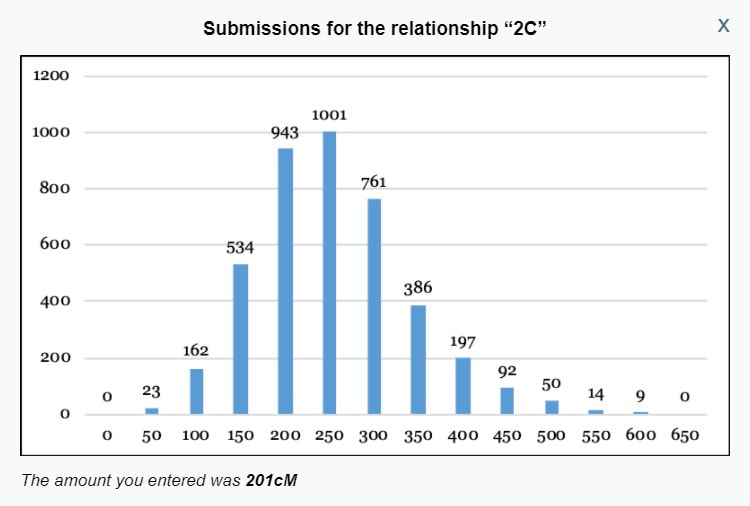
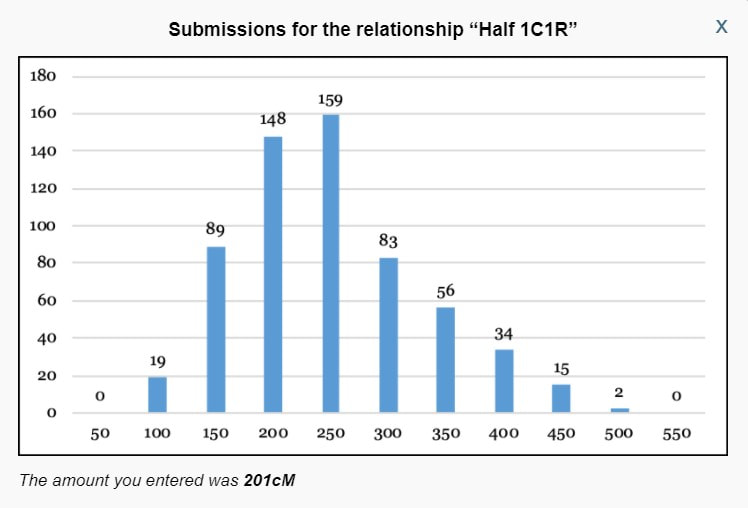
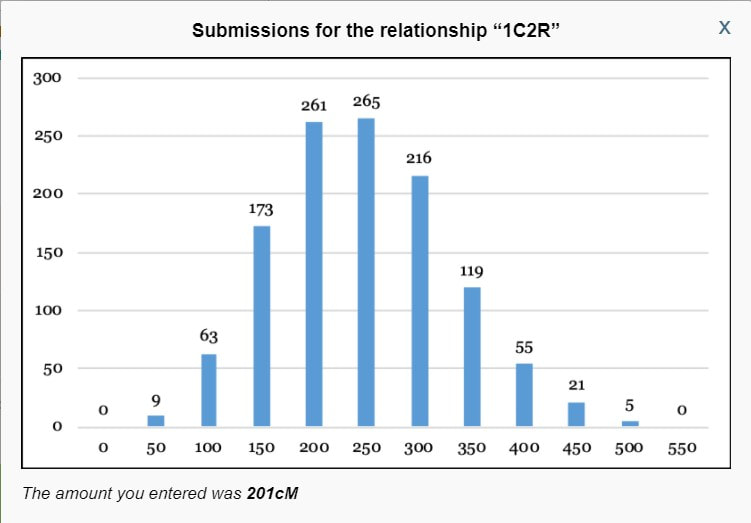
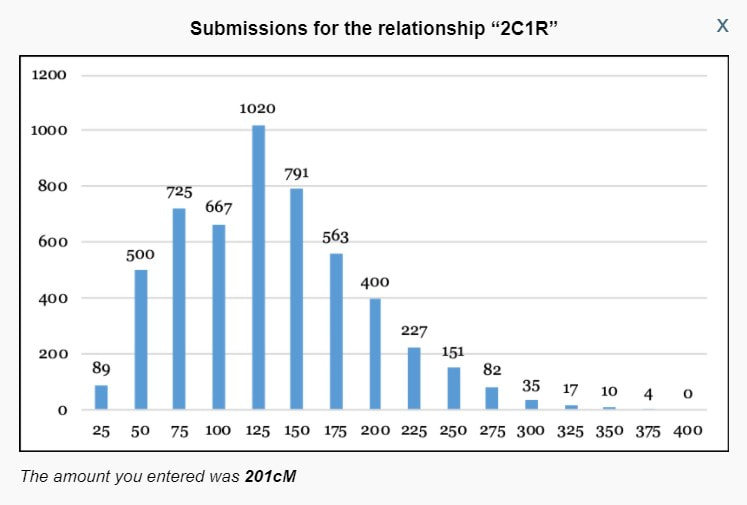
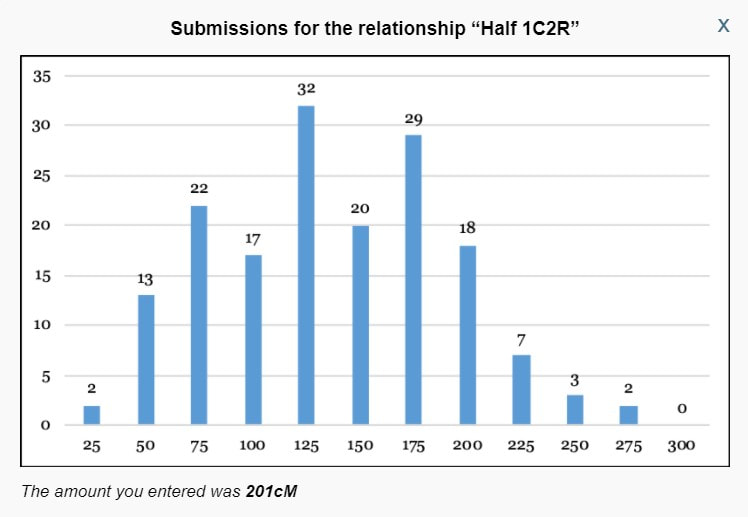
 Continued from Part 6 Continue with me in part 7, my final part, of my genetic genealogy journey of a temporary brick wall for yet another new DNA mystery match that had just showed up, when I already know all the descendants in that line! I left off last, in Genealogy Brick Wall: Another New DNA Mystery Match-Part 6, with it being narrowed down even further. I had ended up with my match having a higher possibility of being my grandfather’s great grandchild or my great uncle’s great grandchild. Let’s check my uncle’s cMs matched to the mystery match for another perspective. 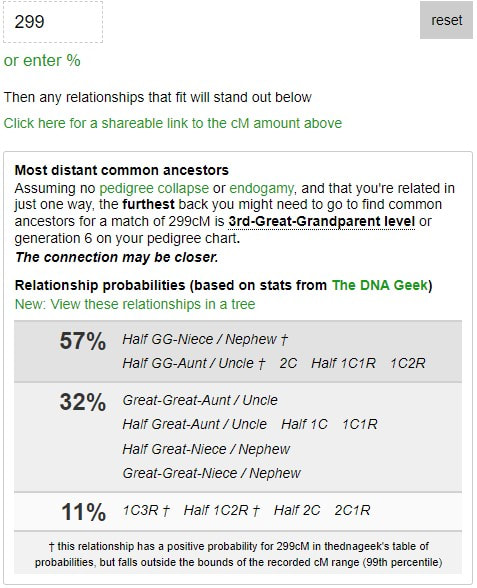 My uncle's relationship possibilities in the DNA Painter Shared cM Tool 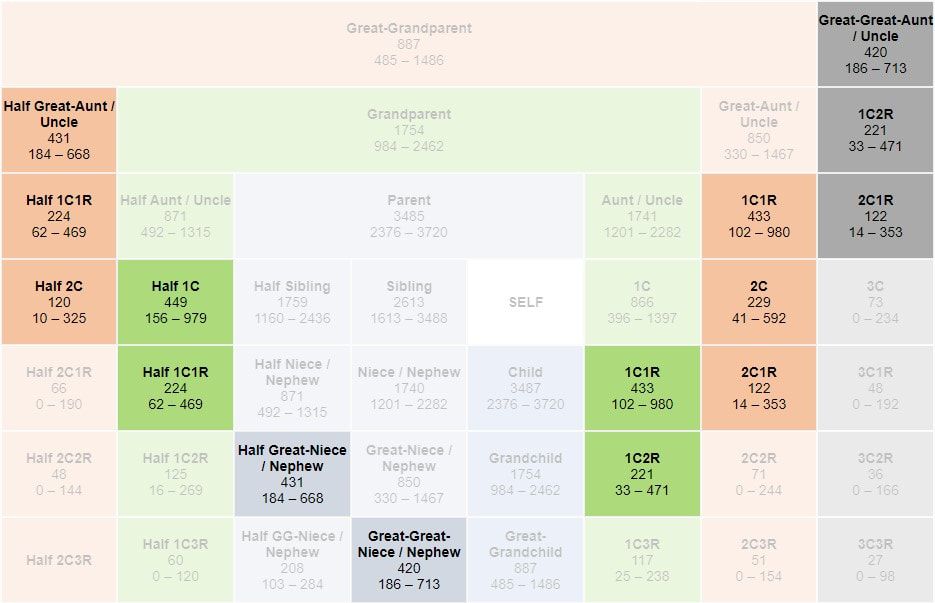 My uncle's relationship possibilities in the DNA Painter Shared cM Tool Relationship Chart If I use the same method I used on my own cMs to narrow down the possible relations that I used in Genealogy Brick Wall: Another New DNA Mystery Match-Part 5 and Genealogy Brick Wall: Another New DNA Mystery Match-Part 6, by eliminating what is not practical against my Uncle’s centimorgans matched to him, the possibilities are: 1c2r, 1c1r, ½ great- nephew. 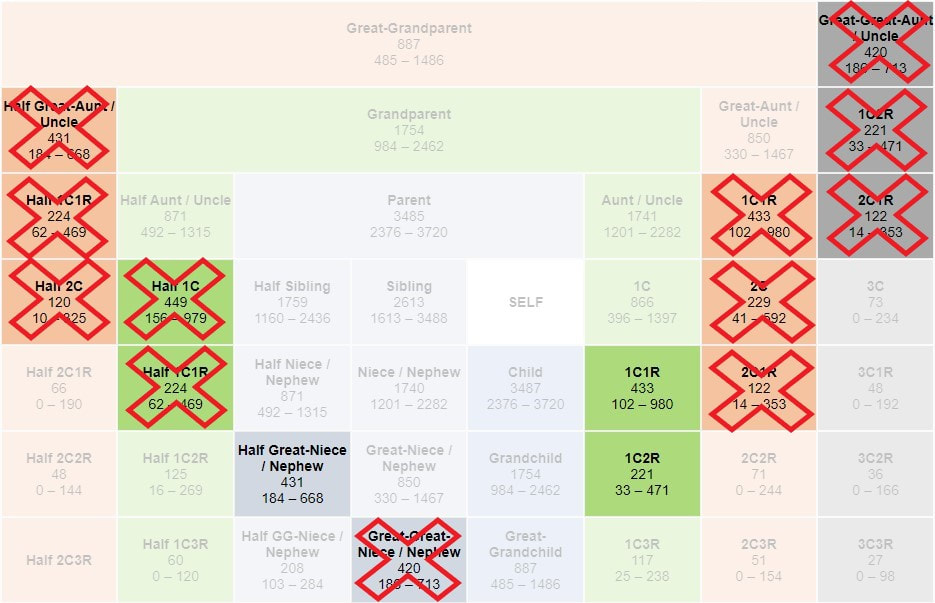 My uncle's relationship possibilities narrowed down in the DNA Painter Shared cM Tool Relationship Chart, with the same method The histogram findings in the DNA Painter Shared cM Tool are: 1c2r (highest on histograms) ...his uncle’s (aka my great uncle) great grandchild???
Even though this wasn’t necessary, this narrowed it down even more for me! It always helps by getting rid of another generation to deal with. 😉 I now have one possible relationship to work with! In summary, I am now confident that my match is my 2c1r and my uncle’s 1c2r (my great uncle’s/my uncle’s uncle’s great-great grandchild).
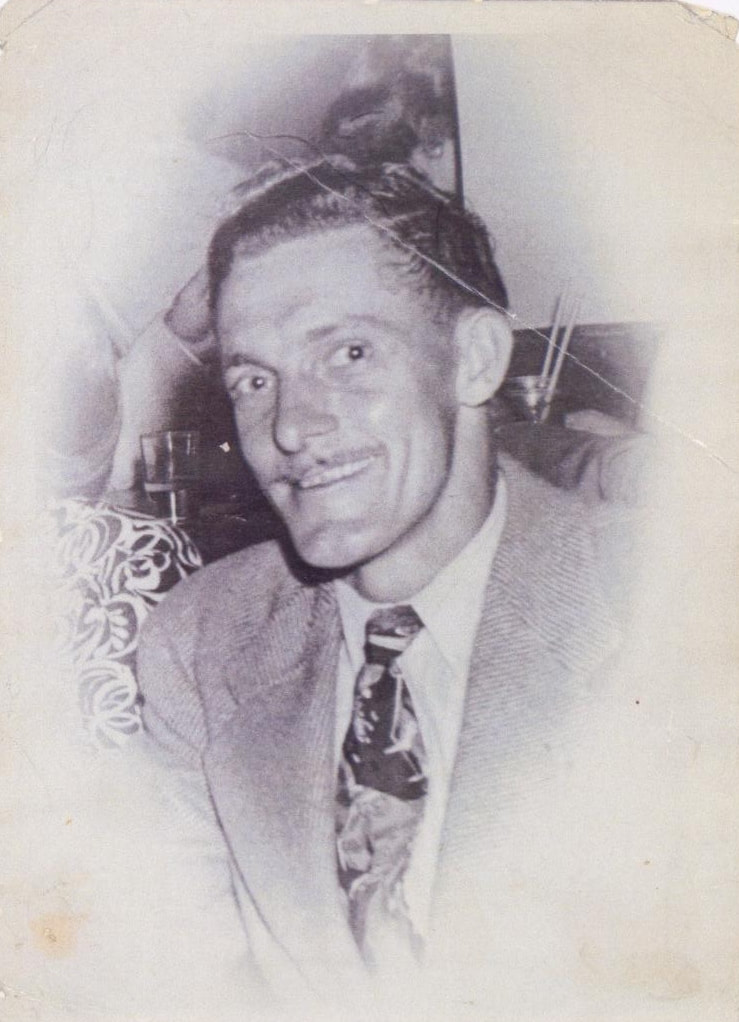
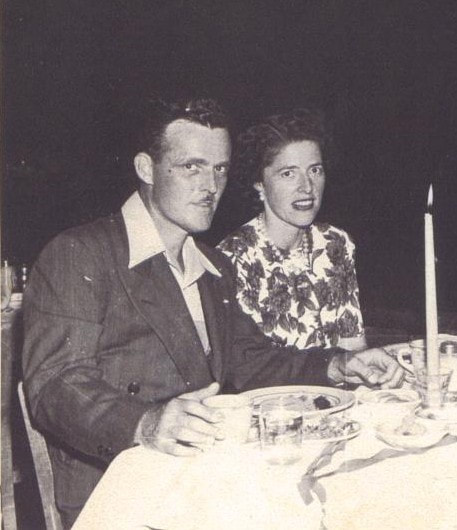
There are also no other unknown/mystery matches matched to my mystery match as of yet. Even though we would have the same shared matches of course, it is easier to see them from his shared matches with me, as opposed to my thousands of shared matches to that line, since he is only half related to that line. Oh my gosh, I finally got a working number for my matches mom, near the end of this second day on this! I’m going to call now and get back to you all! I called my match’s mom and spoke to her for a while. I made sure to ask pertinent questions to see which of my match’s 4 grandparents could be my great uncle’s child. I asked if she had tested, and she said she had. Since his mom said she had tested, and I know I am not a match to her, her 2 lines/my match’s 2 maternal grandparents are out. That now leaves me with 2 possible children for my great uncle, one of either of my match’s paternal grandparents. I asked if her husband looked more like his father or his mother, and she stated that he looked just like his father; my matches father does not really resemble my great uncle or our family. I was hoping to get a photo of her husband’s parents (my match’s paternal grandparents and one being the probable child of my great uncle), but she said she didn’t have access to any pictures right now, as she had just moved. Hmmmmmmmm, my match’s paternal grandmother’s mother was in Sedgwick County, KS at the time her daughter (my match’s paternal grandmother) was born in 1930. My great uncle was also in Sedgwick County, KS at that time. My match’s paternal grandmother’s mother was also married only a little less than 5 months before the birth of her daughter (my match’s paternal grandmother). My match’s paternal grandfather’s mother was in Cloud County, KS, just four counties over, at the time her son (my match’s paternal grandfather) was born. She had just married her husband within the year of her son’s birth; although, I have not gotten their marriage record yet. It’s very interesting that her son, my match’s paternal grandfather, is named Donald, the same name as my great uncle. I also finally got a working number for my match’s uncle, and I called. I was hoping for a photo of his parents, but he had asked how he was supposed to do that, more in a not willing sort of way. He seemed a little upset with the information presented to him, but I got the feeling that he wasn’t necessarily surprised. He then said he wanted to end the conversation and was not interested in it anymore. I am hoping that one day I can get a photo of my match’s paternal grandparents, along with his paternal grandfather’s mother’s marriage record, not that a child can’t come about while married to someone else. 😉 I am also hoping that my match will be willing to speak to me about his matches, and let me view them, as I would be able to confirm it by HIS shared matches. His mother said she would give him my number, not to mention I left him a message on Ancestry (that has been viewed) and Facebook, with no response. ☹ Well, here it is, after discovering my match 2 days ago: In summary, I find it very interesting that my match’s paternal grandfather was named Donald, the same name as that of my great uncle, but I strongly believe his paternal grandmother is my great uncle’s child. She was born in the exact area where my great uncle was at the time, and her mother didn’t marry until she was almost 5 months pregnant with her. I will not know for certain until I can compare pictures, and until my match is willing to respond to me and hopefully lets me view his matches. 😊 To follow this story from the beginning, you can find the links below: Genealogy Brick Wall: Another New DNA Mystery Match-Part 1 Genealogy Brick Wall: Another New DNA Mystery Match-Part 2 Genealogy Brick Wall: Another New DNA Mystery Match-Part 3 Genealogy Brick Wall: Another New DNA Mystery Match-Part 4 Genealogy Brick Wall: Another New DNA Mystery Match-Part 5 Genealogy Brick Wall: Another New DNA Mystery Match-Part 6 Find more research tips under the category Genealogy Research Tips, brick wall tips under the Genealogy Brick Wall Cases category, and DNA tips under the DNA Simplified category. I'd love to read your comments! My older site theme does not support the "Leave a Reply" field labels; if you'd like to leave a comment on a blog, the fields are: Name, Email, Site (if you'd like), and Comment, the standard fields 😉 ←Back to Genealogy Research Tips Page This post is a participant in the Genealogy Blog Party! Other related genealogy brick wall research cases that may be of interest:
 Genealogy Brick Wall: Another New DNA Mystery Match-Part 6 Genealogy Brick Wall: Another New DNA Mystery Match-Part 6Continued from Part 5 My genetic genealogy journey of a temporary genealogy brick wall for yet another new DNA mystery match relative that had just showed up, when I already know all the descendants in that line, continues with Part 6. While still trying to get working numbers for my match and his mom, I left off last in Genealogy Brick Wall: Another New DNA Mystery Match-Part 5 by narrowing down my possible match relationships in DNA Painter, using deductive reasoning. I used the DNA Painter Shared cM Tool and their relationship histogram charts. Compare Relationships against Dates and Places, Again: Now it’s time to narrow down my deductions even more, by comparing the possible relationships left against dates and places!
I am going to eliminate his sisters, as it would have been obvious if they were pregnant. By building my own quick tree for my match's lines, where I only had his father and "Private" mother to go off of, which I talked about in Genealogy Brick Wall: Another New DNA Mystery Match-Part 3 and Genealogy Brick Wall: Another New DNA Mystery Match-Part 4, I had found the following:
This info is based off no one being adopted, etc. No matter what, he (my mystery match) is descended from my grandfather or his sibling, most likely his brother… More Centimorgan Relationship Elimination: Now I just need to work with the last possible centimorgan relationships that I had narrowed it down to, with my new findings. In Genealogy Brick Wall: Another New DNA Mystery Match-Part 5, I had narrowed it down to 2c, ½ 1c1r, 2c1r (and a possible 1c2r from the histograms in the DNA Painter Shared cM Tool). 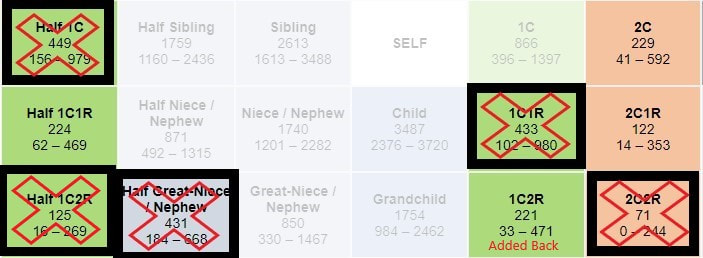 Where I last had narrowed down my relationship possibilities using the DNA Painter Shared cM Tool
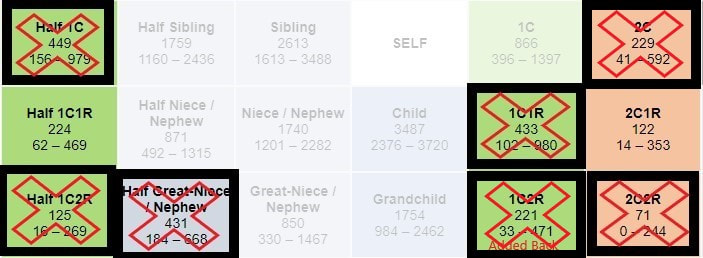 My relationship possibilities narrowed down further using the DNA Painter Shared cM Tool So, in short, I am now left with my match having a higher possibly of being my grandfather’s great grandchild, or my great uncle’s great grandchild. Stay tuned for more in Part 7 where I wrap things up, and see how my mystery match is related! 😊 Interactive Questions: Are you making sure to compare your DNA match relationships against dates and places to help break down brick walls? Are you weeding out as many of those centimorgan relationships that you can? Let me know in the comments below! Update, December 25, 2021: Part 7, the final part in this solving a DNA mystery match series, is now here!: Genealogy Brick wall: Another New DNA Mystery Match-Part 7 Follow This Story from the Beginning: Genealogy Brick Wall: Another New DNA Mystery Match-Part 1 More DNA and Genealogy Research Tips and Resources: Find more research tips under the Genealogy Research Tips category, brick wall tips under the Genealogy Brick Wall Cases category, and DNA/genetic genealogy tips under the DNA Simplified category. You can also find some DNA research resources, to help you in your research, on my dedicated Genealogy Resources page. Other related genealogy brick wall research cases that may be of interest:
 Genealogy Brick Wall: Another New DNA Mystery Match-Part 5 Genealogy Brick Wall: Another New DNA Mystery Match-Part 5Continued from Part 4 Continue with me on my genetic genealogy journey of a temporary brick wall for yet another new DNA mystery match that had just showed up when I already know all the descendants in that line, from Genealogy Brick Wall: Another New DNA Mystery Match-Part 4! I left off last by working a bit on his parents’ lines just to gather the info I needed to see which of the lines was the connection, while waiting on working numbers, then comparing yearbook photos of his parents and their siblings to my grandfather and his siblings, to no avail. I had worked a total of two hours on my case already and decided to stop and continue the next day. Good morning! Okay, time to get going on this and try to finish up. I’m going to need a pumpkin chai latte for this! Regular tea just won’t cut it this morning; I need something special to help me focus better and get this figured out! 😉 More Centimorgan Relationship Elimination: Back to the Centimorgan relationships: I’ve got to make sure I take out every possible matched centimorgan relationship in DNA Painter that is not directly descended from my grandfather or one of his siblings because my match has matches to my grandfather’s paternal and maternal lines; therefore, he has to be descended from my grandfather or one of his siblings. Anything above my grandfather’s generation is now out, otherwise my DNA match would only be matched with my grandfather’s paternal line matches, or my grandfather’s maternal line matches, not both. All the possible match relationships of my match being descended from a possible half sibling to my grandfather are also out, for same reason as above. 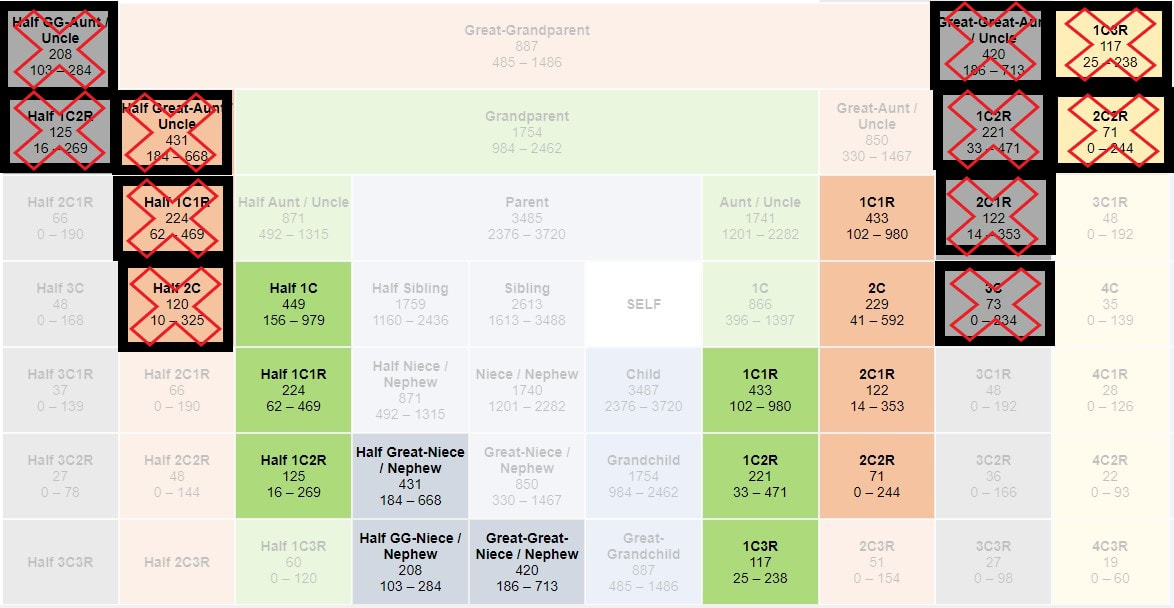 After discovering my match’s and parents’ ages, anything above my generation is also out. I now just need to focus on my match being in my generation and one generation below, with a smaller possibility of being 2 generations below. I am now left with: ½ 1c, ½ 1c1r, ½ 1 c2r, 1c1r, 1c2r, 2c, 2c1r, and 2c2r (½ g niece/nephew not possible). 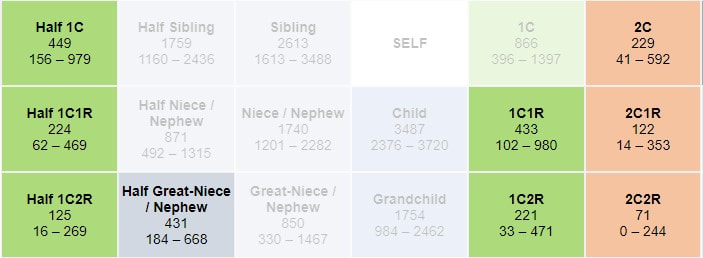 If I also go with the higher probable percentages, then I only have 2c, ½ 1c1r, 1c2r, 2c1r, ½ 1c2r left to work with. 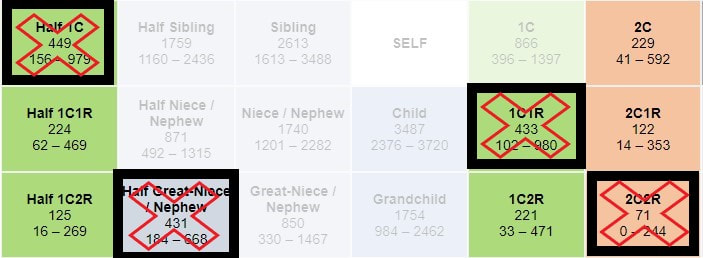 If I focus on my generation and the generation below only (going off my match’s and his parents' ages), then I’m left only with 2c, ½ 1c1r, 2c1r. This narrows it down significantly. 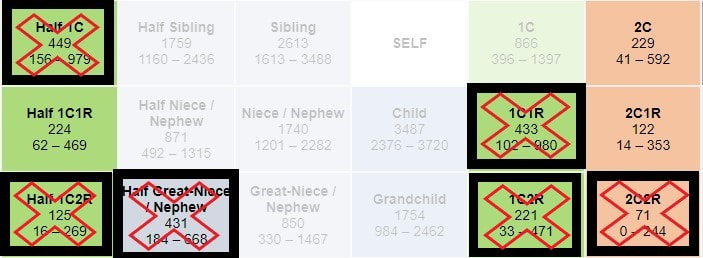 If I check those relationships with the histograms in the DNA Painter Shared cM Tool, there is more of a chance of my match being my 2c, ½ 1c1r (and 1c2r if I go as far as another generation below), but this is just a guide only.
Now I need to work with these findings, along with dates and places of my grandfather and his siblings, compared against the same information needed from my match’s lines. Wow, who knew what a special pumpkin chai latte could accomplish! 😉 Stay tuned for more in Part 6 where I get down to the nitty gritty, and see what I deduce by these comparisons! 😊 Interactive Questions: Have you used DNA Painter Shared cM Tool in your DNA research to help break down brick walls? Let me know in the comments below! Update, December 12, 2021: Part 6 is now here!: Genealogy Brick wall: Another New DNA Mystery Match-Part 6 Follow This Story from the Beginning: Genealogy Brick Wall: Another New DNA Mystery Match-Part 1 More DNA and Genealogy Research Tips and Resources: Find more research tips under the Genealogy Research Tips category, brick wall tips under the Genealogy Brick Wall Cases category, and DNA/genetic genealogy tips under the DNA Simplified category. You can also find some DNA research resources, to help you in your research, on my dedicated Genealogy Resources page. Below you'll find some other genealogy brick wall research cases that may be of interest:
 Genealogy Brick Wall: Another New DNA Mystery Match-Part 4 Genealogy Brick Wall: Another New DNA Mystery Match-Part 4Continued from Part 3 This is the continuing story, continued from Genealogy Brick Wall: Another New DNA Mystery Match-Part 3, of my temporary genealogy brick wall for yet another new DNA mystery match that had just showed up. I call it a temporary brick wall because I have not really exhausted all of my resources, but I had found all the known descendants for those lines (not to mention that I know of that generation’s descendants very well), and he is not one of them. So, a recap of my last steps:
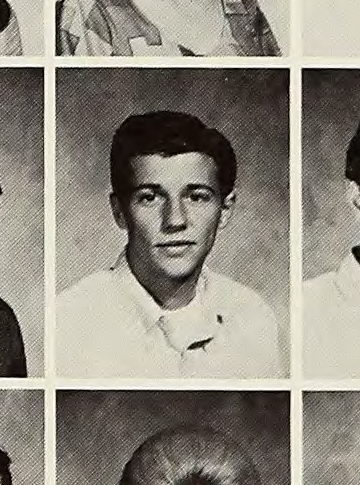
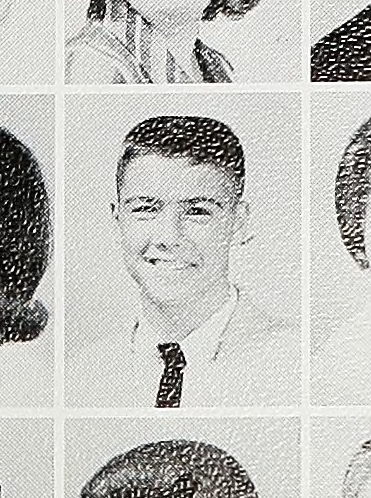
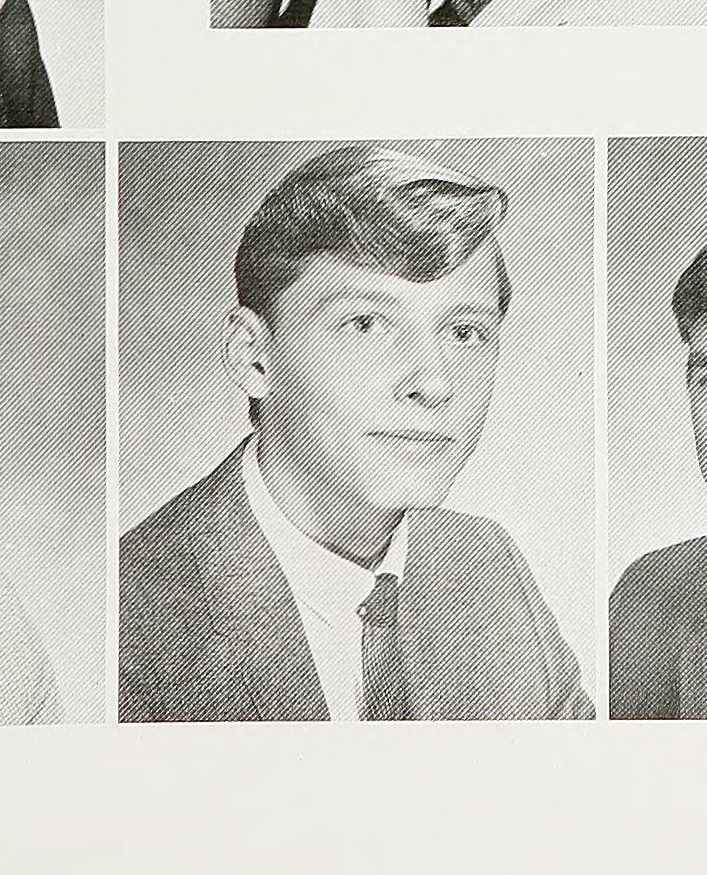
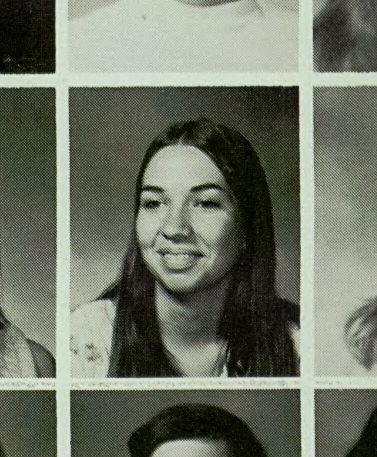
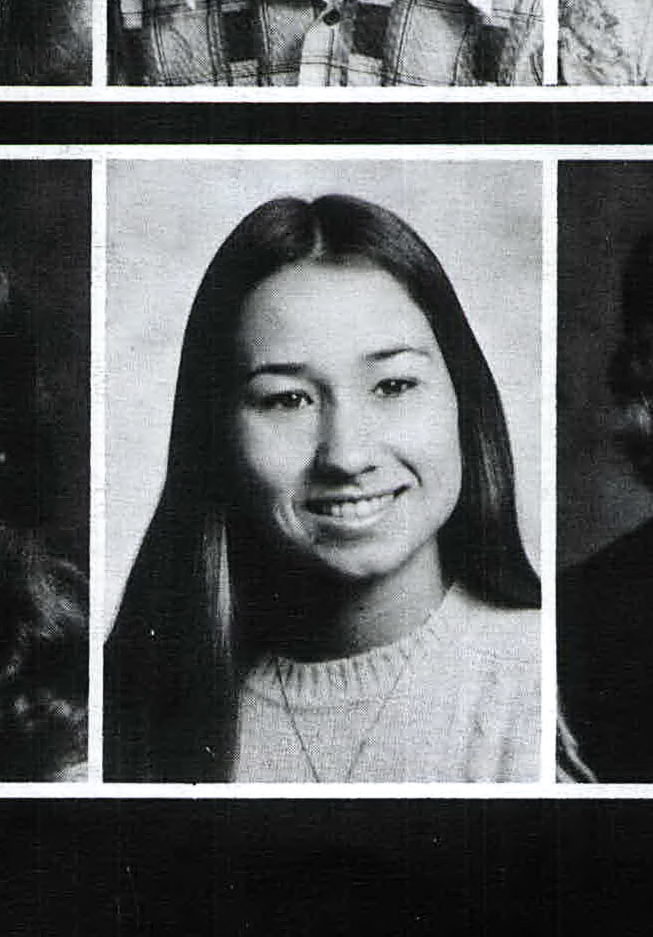
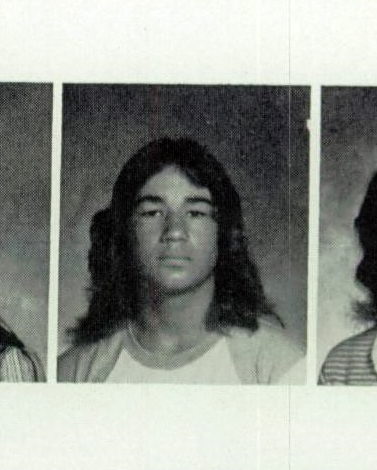
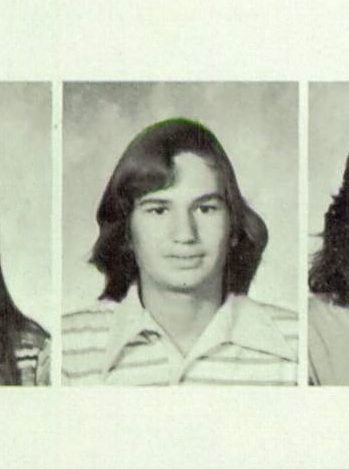
Compare Geographical Areas: Hmmmmmmm, I worked back on his father’s (the only name in his tree) and mother’s (found in public record databases as an associate to his father) lines just to gather only the info needed to solve this, and I am still confused. Usually from this point, I just need to compare the areas of where the match’s lines were from, with my line. His father’s line was in Wichita, Kansas, just as my Steinmans were for a while, and Long Beach, California, just as my Steinmans were for a while! That’s great; I found the connection! Wait, what??!! Not! His mother’s line was in San Antonio/South Gate, Norwalk, Long Beach, and Downey, California, just as my Steinman line! Ugh, back to square one! I need more tea! Wake up! Wake up! Compare Photos: Time to quickly look up some public yearbook pics of some of his family members I had found by fanning out, and try to see if there are any resemblances, to narrow it down to either his mother’s or his father’s side. My grandfather and his siblings below...
My match's father and his siblings below...Hmmmmmm, I don't see much of a resemblance.
My match's mother and some of her siblings below...Hmmmmmm, I see no resemblance.
I have worked a total of 2 hours on this mystery thus far: it’s time to stop because it’s late, my tea is no longer helping, and I need a fresh mind! Stay tuned for more in Part 5 where I’ll narrow down the relationships according to the centimorgans even more by using more deductive reasoning! 😊 Interactive Questions: Have you compared photos in your research to help break down brick walls? Have you sought out photos for your matches in yearbooks, public records or social media? Let me know in the comments below! Update, November 28, 2021: Part 5 is now here!: Genealogy Brick wall: Another New DNA Mystery Match-Part 5 Follow This Story from the Beginning: Genealogy Brick Wall: Another New DNA Mystery Match- Part 1 More DNA and Genealogy Research Tips and Resources: Find more research tips under the Genealogy Research Tips category, brick wall tips under the Genealogy Brick Wall Cases category, and DNA/genetic genealogy tips under the DNA Simplified category. You can also find some DNA research resources, to help you in your research, on my dedicated Genealogy Resources page. Below you'll find some other genealogy brick wall research cases that may be of interest:
 Genealogy Brick Wall: Another New DNA Mystery Match-Part 3 Genealogy Brick Wall: Another New DNA Mystery Match-Part 3Continued from Part 2 Continue with me in my story, from Genealogy Brick Wall: Another New DNA Mystery Match-Part 2, of my temporary genealogy brick wall for yet another new DNA mystery match that had just showed up. I call it a temporary brick wall because I have not really exhausted all of my resources, but I had found all the known descendants for those lines (not to mention that I know of that generation’s descendants very well), and he is not one of them. So, a recap of my last steps:
Fan Out: None of the numbers in any of the public record databases, for my match, were working numbers. Time to fan out! 😊 By searching through public records and seeing other associates and relatives, and their ages, I found that my match’s father’s first wife was not his mother. There was no other record showing that his father and mother were married/ a couple, except being associated in public records, and her Facebook (which I trolled 😉).
I was able to search out his mother’s maiden name in public records. I then added her as his mother to my tree I had built for them, and then added a couple of children to her and his father (one male, one female), once again with no first names or any other info added for the children. I was able to find just one child born to them, a daughter. I then had thought for a moment that maybe she was his stepmother, and that’s why she was associated with him on all his records. Through more Google digging, I had realized that the child I had found born to them was the same person; he had changed gender. I had found a college bio online for their daughter, and in looking at the photo had realized it was my match, who had just recently changed his name and gender. I then added his name in quotations to the daughter I had originally found for them. Any other records I would now look up, would be searched with both names. So far, all his mother’s numbers were non-working as well. In the meantime, while I was trying to get a working number, I decided to work on his mother’s and father’s lines on my tree I made for them, to see what DNA relationships would fit, based off ages and places. Stay tuned for more in Part 4 to see what I had discovered! 😊 Interactive Questions: Have you fanned out in your research to help break down brick walls? Have you sought out your matches in public records or social media? Let me know in the comments below! Update, Novemeber 14, 2021: Part 4 is now here!: Genealogy Brick wall: Another New DNA Mystery Match-Part 4 Follow This Story from the Beginning: Genealogy Brick Wall: Another New DNA Mystery Match- Part 1 More DNA and Genealogy Research Tips and Resources: Find more research tips under the Genealogy Research Tips category, brick wall tips under the Genealogy Brick Wall Cases category, and DNA/genetic genealogy tips under the DNA Simplified category. You can also find some DNA research resources, to help you in your research, on my dedicated Genealogy Resources page. Below you'll find some other genealogy brick wall research cases that may be of interest:
|
Categories
All
Featured
Top Posts
BlogrollEvalogue.Life, Heart of the Family, Molly's Canopy, Climbing My Family Tree, Cami Mayer, Field Genealogist, Ancestor Detective, DNA Breakthroughs, Your DNA Guide, Ancestral Findings, Genealogy Tip of the Day, Family History Daily, Genea-Musings
BlogI hope my family history and genealogy blog on genealogy research tips, resources, events, and more, along with my own genealogy journeys, will help you in your research and in building your family tree to learn more about your ancestors and family history to preserve for future generations to come! 
Come visit me at Know Who Wears the Genes in Your Family if you're interested in starting your family history journey, booking me for your next speaking event, or family history and genealogy heirloom products!
          Archives
July 2024

|
 RSS Feed



HoursM-Su: 8am - 8pm


|
Know Who Wears the Genes in Your Family is dedicated to promoting family history and genealogy, while maintaining commitment to client care and professional service, and adheres to the Code of Ethics and Professional Practices put forth by the Association of Professional Genealogists.
|