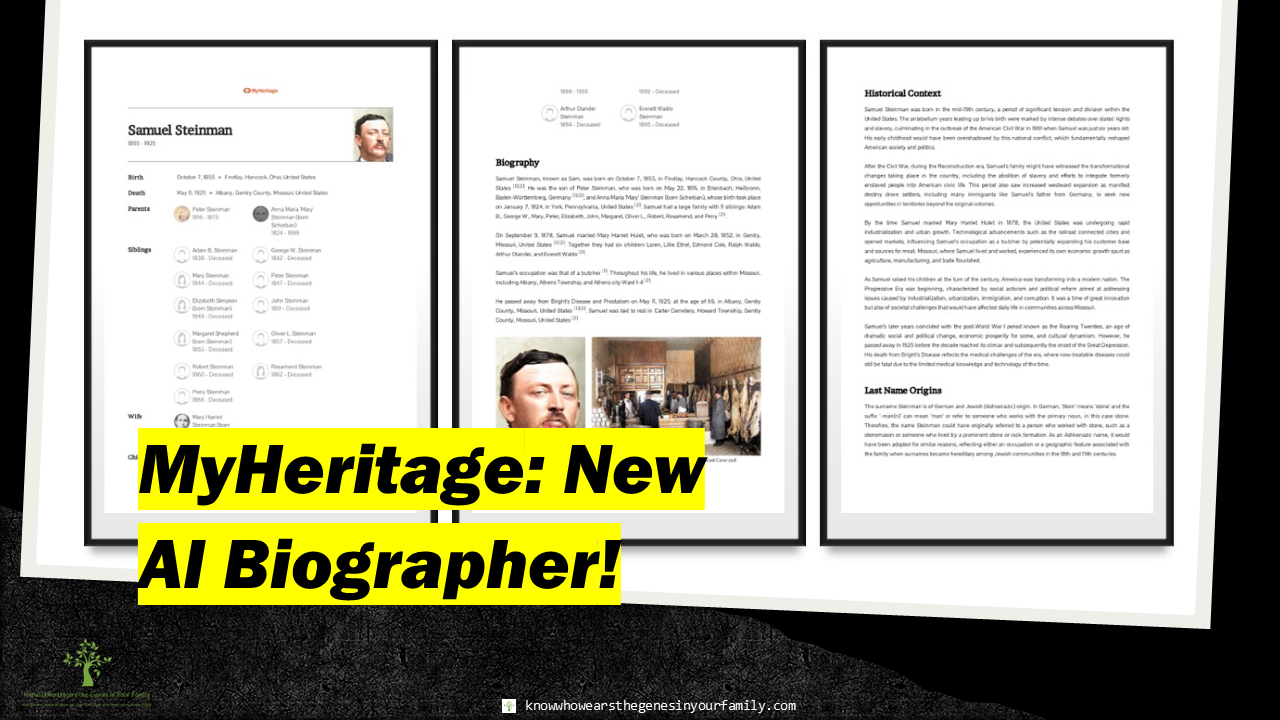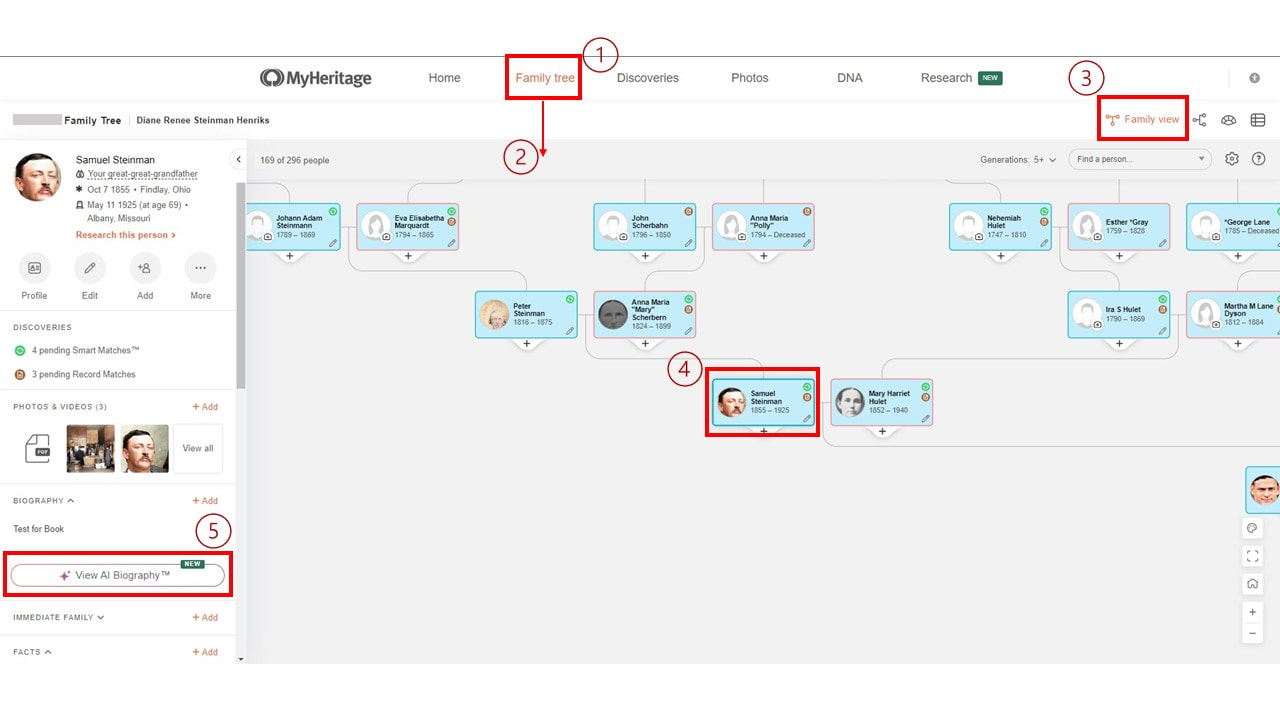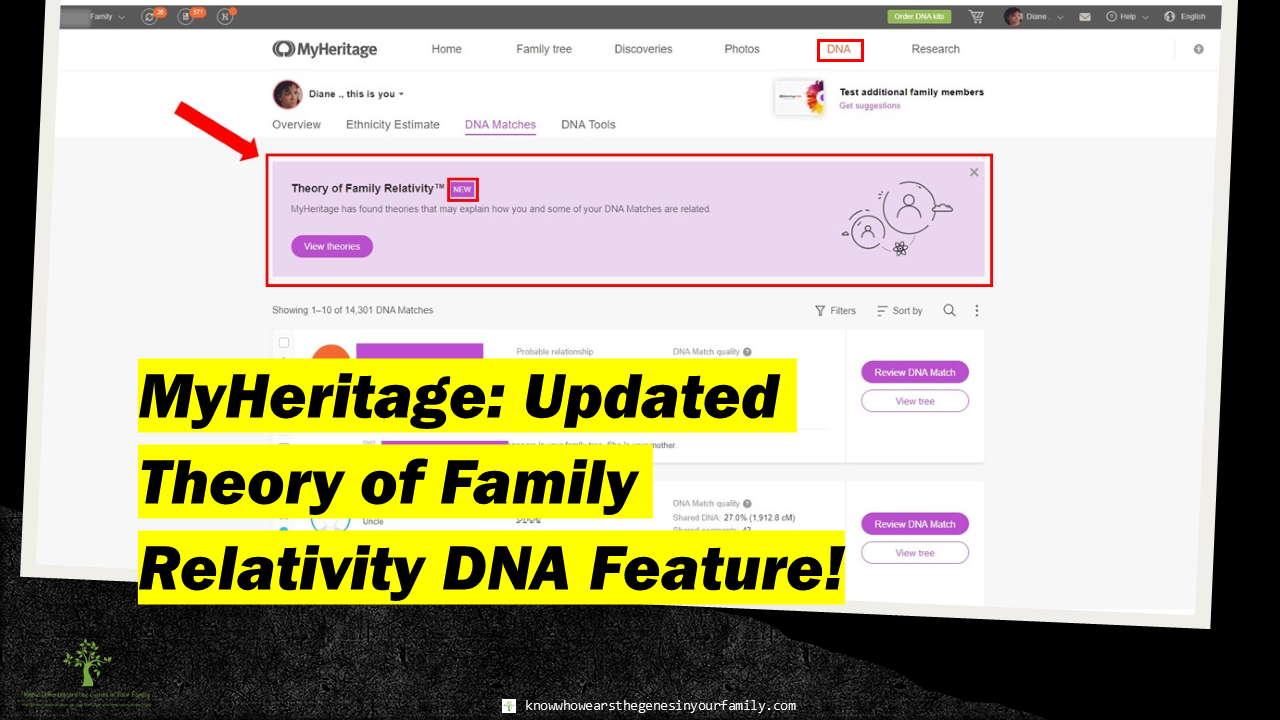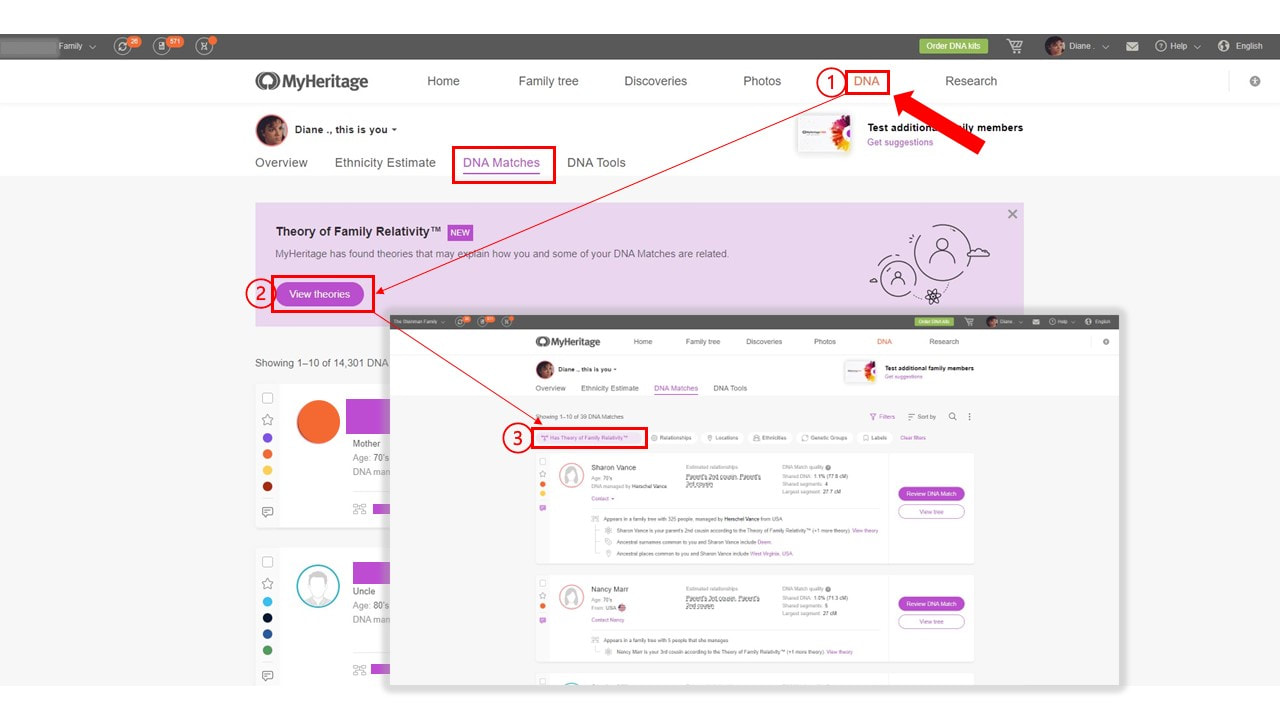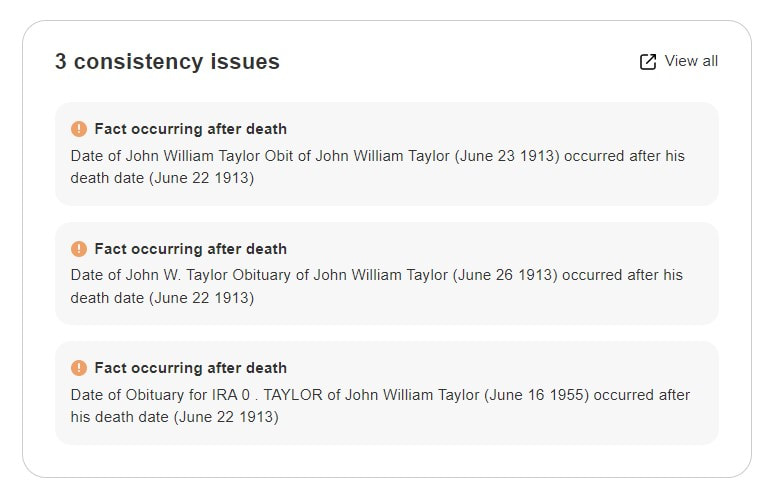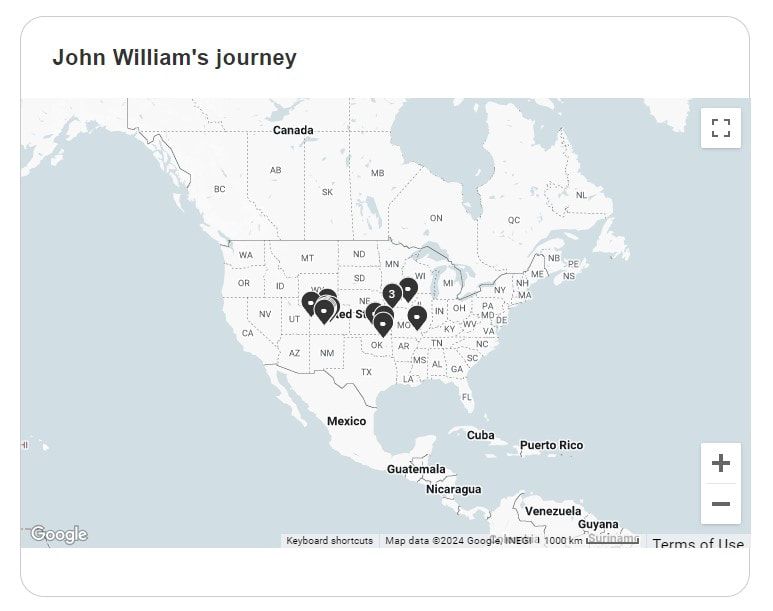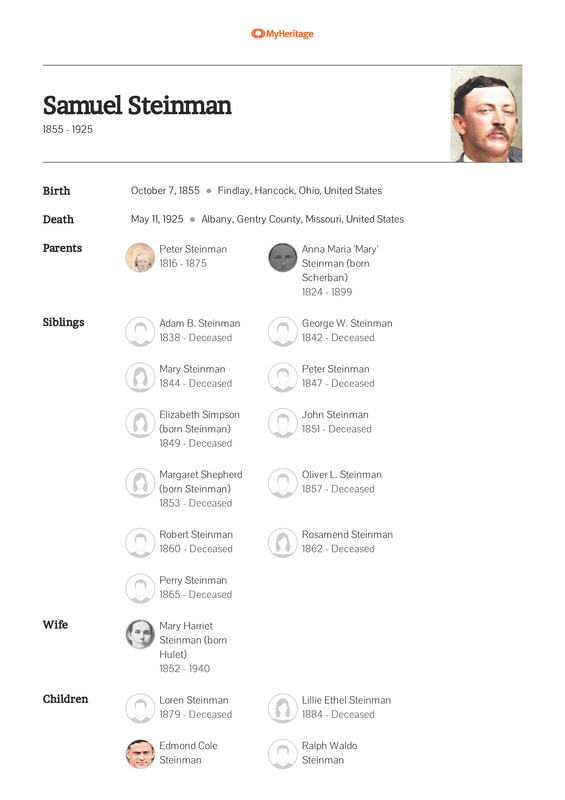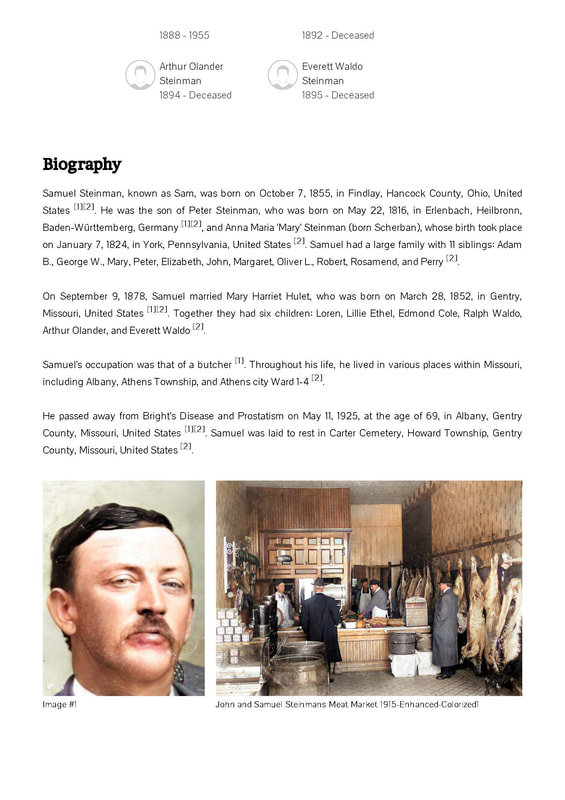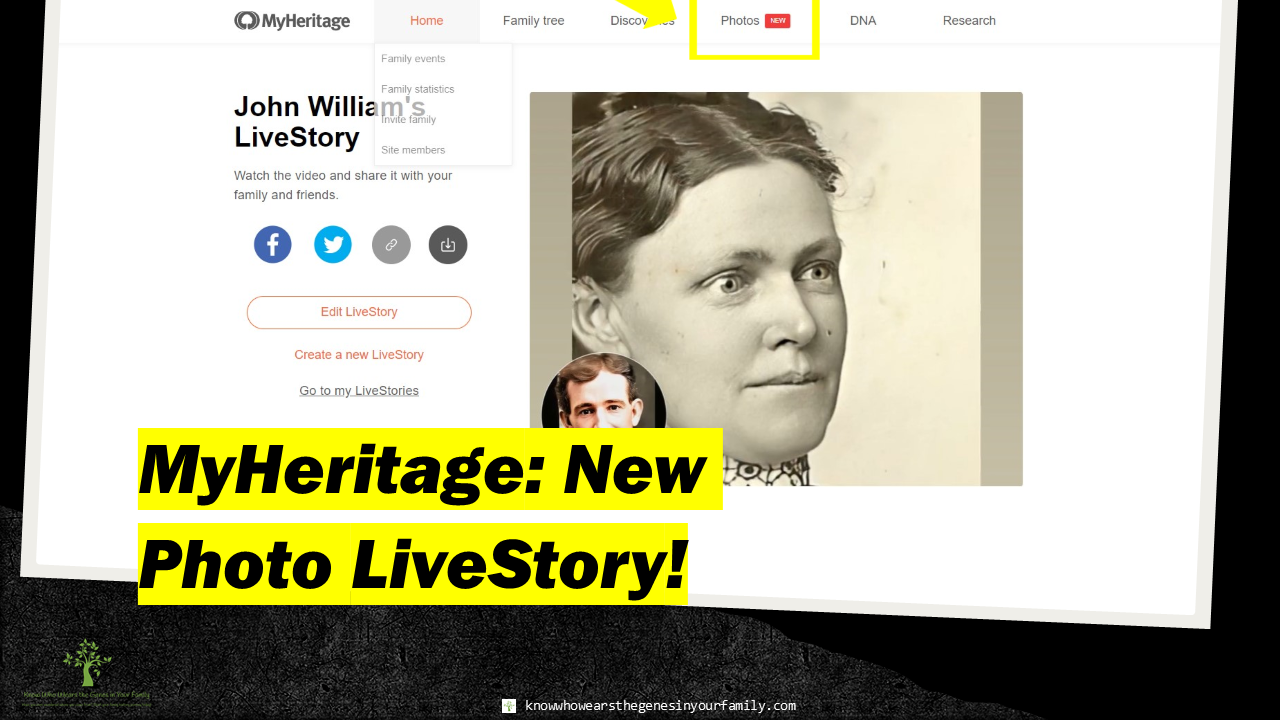
MyHeritage Tribute Reel: Bringing Family Photos Together in a New Way MyHeritage continues to expand its collection of AI-powered photo tools, and in May 2026 they introduced a new feature called Tribute Reel. As someone who enjoys preserving family history and exploring new ways to share it, I decided to give it a try using photos of my mother and grandmother. The results were both fascinating and surprisingly emotional. What Is Tribute Reel? Tribute Reel lets you to combine up to 15 photographs into a single animated video. The tool animates each photo, much like MyHeritage's LiveMemory feature, then seamlessly weaves the images together into a continuous presentation. Users can:
My First Experiments I started by creating several Tribute Reels using photos of my mom. As with many AI photo tools, I quickly discovered that some images work better than others. Certain photos produced natural-looking movements, while others generated results that felt less realistic. After a few attempts, I selected the images that animated most successfully and created a version I was happy with. Next, I experimented with photos of my grandmother. Again, I tested multiple versions, swapping photographs in and out and trying different music selections to see which combinations worked best. The ability to easily recreate the reel encouraged experimentation, and I found myself refining the project several times before settling on a final version. A Genealogist's Perspective Because I personally knew both my mother and grandmother, of course, I viewed the videos with a different perspective than someone seeing them for the first time. Some of the facial expressions and movements felt familiar and believable. Others did not reflect how they actually moved or expressed themselves. This is important to remember when using any AI animation tool: the animations are generated interpretations, not authentic recordings of a person's behavior. As genealogists and family historians, we should always be careful not to confuse AI-generated content with historical reality, and mark them as so. That said, the overall effect can still be powerful. The Emotional ImpactWhat surprised me the most was the reaction from others. Several people who watched the Tribute Reel commented on how moving it was. One person said: "I don't even know you and that brought tears to my eyes. Well done!" That response reminded me that family history is ultimately about people and connections. While we spend countless hours researching records, building family trees, and analyzing DNA matches, tools like Tribute Reel offer another way to share those stories in a format that resonates emotionally with family members. For relatives who may never read a lengthy research report or family history book, a short video can sometimes create an immediate connection to the past. Final ThoughtsOf Course, Tribute Reel is not a replacement for traditional genealogy research, nor should its animations be viewed as historically accurate representations of our ancestors. However, as a storytelling tool, it offers an engaging way to showcase family photographs and create meaningful presentations for relatives. Like many AI tools, the quality of the final product depends on the photographs you choose, so don't be afraid to experiment with different images and settings. After creating reels for both my mom and grandmother, I found the feature really easy to use, fun to experiment with, and capable of producing some surprisingly touching results. For family historians looking for new ways to share treasured photographs and preserve memories, Tribute Reel may be worth exploring. Have you tried MyHeritage Tribute Reel yet? I'd love to hear about your experience and see how you've used it to bring your family history to life. More MyHeritage and Genealogy ResourcesLearn about more MyHeritage updates, tips, tools, and features and other family history and genealogy resources under the MyHeritage and the Genealogy Resources categories of my blog and on my dedicated Genealogy Resources page.
6 Comments
When MyHeritage introduced Scribe AI at RootsTech 2026, it promised something genealogists have long hoped for: an AI tool capable of analyzing historical images, transcribing difficult handwriting, interpreting gravestones, and even providing insights about old family photographs. Naturally, I wanted to see how well it actually performs in real genealogy research. So instead of testing it on a few easy examples, I deliberately ran Scribe AI through a series of challenging records, including Hebrew gravestones, faded and water damaged German Bible entries, messy Spanish handwriting, a blurry newspaper screenshot, an 1848 probate letter, historical photographs, and even a degraded German parish marriage record preserved only as an old photocopy. The results were surprisingly impressive. Scribe AI is designed to analyze several types of historical images, including:
One thing that quickly became clear during my testing is that Scribe AI is not simply a transcription tool. In addition to transcribing text, the system also analyzes the image itself and provides genealogically useful insights based on the type of record being uploaded. In many cases, these insights were just as valuable as the transcription itself. The tool automatically identifies key information, historical context, and research suggestions without requiring any prompting. This is particularly useful for genealogists because the output often highlights details that might otherwise be overlooked during a quick review of a document or image. Rather than testing only one or two examples, I selected records that would challenge the system in different ways. For each example below, I am showing the Scribe AI output generated by the tool. Test 1: Jewish HeadstoneThe first test involved a Jewish headstone from a current client case. Jewish gravestones often contain valuable genealogical information such as Hebrew names, patronymics (the name of the father), and traditional Hebrew phrases or abbreviations. Scribe AI Output *Click to view Result Scribe AI successfully transcribed the Hebrew inscription and identified the structure of the information on the stone. For genealogists researching Jewish ancestry, tools like this could be especially helpful when Hebrew inscriptions contain details not found in civil records. Test 2: Blurry Jewish HeadstoneNext, I intentionally uploaded a blurry image of a Jewish headstone to test how well the system could handle poor image quality. In real genealogy research, gravestone photos are often taken under less-than-ideal conditions and may be slightly out of focus. Scribe AI Output *Click to view Result Even with the reduced image clarity, Scribe AI still produced a usable transcription of the inscription. This was an encouraging result, since many genealogy images are not perfectly photographed. Test 3: German Family Bible EntryFor the next test, I uploaded very old handwritten German entries from my 3rd great-grandfather’s family Bible. The writing was extremely challenging to read due to faded ink, messy handwriting, and water damage. Scribe AI Output *Click to view Result Scribe AI produced a strong attempt at transcribing the text. While a few names (there were 3 pages, in which only one is shown) were incorrect, the system clearly identified portions that were illegible rather than attempting to guess. This is actually a positive feature, since it prevents researchers from relying on potentially incorrect interpretations. Test 4: Spanish Handwriting on a Dark PhotocopyAnother test involved a document written in old Spanish handwriting, preserved only as a very dark photocopy from the 1960s. The background of the image is extremely dark, making it difficult to read even with the naked eye. Scribe AI Output *Click to view Result Despite the poor image quality, the transcription generated by Scribe AI was remarkably accurate and readable. Test 5: 1848 Probate LetterI also tested Scribe AI with an 1848 handwritten probate letter from one of my client cases. Older legal documents are often written in cursive styles that modern transcription tools struggle to interpret. Scribe AI Output *Click to view Result Scribe AI handled the handwriting extremely well and produced a clear transcription of the document. Test 6: Blurry Newspaper ScreenshotFor another test, I intentionally uploaded a blurry phone screenshot of a newspaper article, from another client case, to see how the system handled degraded newspaper print. Scribe AI Output *Click to view Result Despite the lower image quality, the transcription was essentially flawless. Test 7: Benchmark Death CertificateOne document I frequently use to evaluate transcription tools is my 2nd great-grandfather’s death certificate. This record contains a mixture of printed fields, handwritten entries, and medical terminology, which makes it a good test for transcription accuracy. Scribe AI Output *Click to view Result Scribe AI produced the most accurate transcription I have seen so far for this document. The only differences were the registrar’s middle initial and the word duplex in the cause of death, which was interpreted as a variation of “double.” Everything else was transcribed correctly. Test 8: Historical Family PhotographScribe AI also analyzes historical photographs, generating contextual insights about the image. I tested this feature using a photo of my 2nd great-grandmother with several of her daughters, including my great-grandmother. Scribe AI Output *Click to view Result The system generated a detailed description of the photograph and provided contextual insights about the scene and the individuals pictured. This feature could be especially helpful when analyzing unidentified or poorly documented family photos. Test 9: German Parish Marriage RecordThe most impressive result came from a German parish marriage record for my 4th great-grandparents. The image I uploaded was a very poor photocopy from the early 1980s that my father received after hiring a German researcher to extract records directly from parish registers. The page itself presents several challenges:
Scribe AI Output *Click to view Result Scribe AI transcribed nearly the entire entry correctly. The only notable differences were in my ancestor’s surname being incorrect and interpreting his father’s occupation as master mason instead of master cartwright. Considering the poor image quality and age of the record, the accuracy was impressive. Beyond Transcription: Genealogical InsightsOne of the most impressive aspects of Scribe AI is that the results go well beyond simple transcription. Depending on the type of image uploaded, the system generates different categories of analysis designed specifically for genealogical research. During my tests, the outputs included several types of insights. Gravestones For gravestone images, Scribe AI generated sections such as:
Foreign Language Documents For records written in another language, Scribe AI produced:
Documents in the User’s Language For documents written in the user interface language, the output still included:
Newspapers When analyzing newspaper articles, the system also provided:
Historical Photographs When analyzing family photographs, Scribe AI generated insights including:
Final ThoughtsAfter running Scribe AI through a wide range of real genealogical records, I came away genuinely impressed. What makes this tool particularly interesting is that it goes well beyond simple transcription. In addition to extracting text, Scribe AI analyzes the record itself and provides contextual insights, historical background, and research suggestions that are directly relevant to genealogical research. During my tests, it handled a wide variety of challenging genealogical materials including:
Of course, as with any AI tool, the results should always be reviewed carefully and verified against the original record. AI should assist genealogical research — not replace careful analysis. However, as a research assistant for extracting information and identifying clues within historical records, Scribe AI shows a great deal of promise. I will certainly continue testing it as I encounter new records in my research. For a limited time, you can try MyHeritage's Scribe AI for free. What Do You Think?AI tools are evolving rapidly in genealogy research, and Scribe AI is one of the newest tools designed specifically to help analyze historical records and images. Have you tried MyHeritage’s Scribe AI yet? If so, what types of records did you test it with? Did you find the results accurate? I would love to hear how it performs with other types of historical documents. More AI Tips, Tools, and FeaturesLearn about more AI in Genealogy tips, tools, features, and resources under the AI in Genealogy category. More MyHeritage and Genealogy ResourcesLearn about more Ancestry updates, tips, tools, and features and other family history and genealogy resources under the MyHeritage and the Genealogy Resources categories of my blog and on my dedicated Genealogy Resources page.
I’m thrilled to share some major news from MyHeritage: as of today, MyHeritage is the first major consumer DNA company to adopt whole genome sequencing (WGS) for its DNA test kits. In partnership with Ultima Genomics and processed at the Gene by Gene lab, this transition marks a turning point in how consumer DNA testing is done — with far richer data and greater potential for discovery. What Is Whole Genome Sequencing, and Why It MattersTraditional consumer DNA tests (including MyHeritage until now) use genotyping arrays that read about 700,000 selected positions (single-nucleotide polymorphisms, SNPs) in your genome. In contrast, WGS reads almost the entire human genetic code — roughly 3 billion base pairs (nucleotides). In short: much more data. Here’s why that matters:
MyHeritage confirms that kits already processed via the older genotyping method will not be reprocessed by WGS. Only new kits (or ones currently in the lab pipeline) will use the new approach. Customers whose kits are WGS-based will receive the full genome download automatically. Importantly, MyHeritage emphasizes that it will not license or sell customer data to third parties — privacy and data protection remain core commitments. What to Expect — Practical Tips & PerspectiveAs genealogists, this development is exciting but also calls for careful expectations and informed use. Here are a few thoughts and tips:
Why This Is a Milestone for Genetic GenealogyFrom a genealogical perspective, breaking the barrier of genotyping into full-genome territory is a major turning point. Over the years, we’ve been limited by how many SNPs a chip can assay; we’ve faced missing segments, “no-call” zones, unclear matches. WGS offers the possibility to detect smaller shared segments, rare variants, and genealogical clues previously inaccessible. Also, having access to full-genome downloads totally empowers serious users and researchers to layer in their own analyses, cross-compare results, or use emerging tools as they come online. It also encourages the DNA testing industry to raise the bar for accuracy, transparency, and data quality. This is why I believe today’s announcement is more than a marketing move — it marks a shift in expectations for how consumer DNA can support meticulous genealogy. What You Can Do Right Now
I’ll be watching closely as users unpack how WGS changes what we can do in genetic genealogy. Stay tuned — more insights will emerge as this unfolds! More Genetic Genealogy/DNA ResourcesFind more DNA genealogy resources, tips, news, and updates under the Genetic Genealogy and DNA Category. More MyHeritage and Other Genealogy ResourcesLearn about more MyHeritage Features and tools, along with other family history and genealogy resources under the MyHeritage and Genealogy Resources categories of the blog and on my dedicated Genealogy Resources page.
Earlier this year, I shared the exciting news about MyHeritage’s Cousin Finder™ in Discover Your Cousins Without a DNA Test: MyHeritage's New Cousin Finder Tool, a feature that helps you discover and connect with blood relatives—all without a DNA test. Since then, it has quickly become a favorite tool among genealogists for uncovering new family connections. And now, MyHeritage has announced an important update that makes Cousin Finder even more powerful! What’s New? With this new update, you’re no longer limited to running Cousin Finder for yourself. You can now explore cousin results for any individual in your family tree. That means you can:
Why This Matters This new functionality adds a fresh layer of depth to Cousin Finder. Instead of only seeing your own connections, you can now: ✔ Target specific ancestors or family lines when focusing your research. ✔ Complement DNA testing by identifying cousins who haven’t tested but share your ancestor. ✔ Simplify Smart Matches™ by filtering them into a clear list of true cousins. ✔ Strengthen collaboration by connecting with relatives who share your research interests. How to Access the Update The update is available now and is free to use. Just go to the profile page of any individual in your family tree and select Cousin Finder™. You’ll then see a list of their cousins, complete with relationship paths and options to connect. As always, contacting relatives requires a MyHeritage subscription, but viewing the cousin lists is free. Final Thoughts This update makes Cousin Finder an even more versatile genealogy tool. Whether you want to confirm a line of research, explore your spouse’s side of the family, or connect with cousins from a distant branch, you now have a focused way to do it. If you haven’t tried Cousin Finder yet, now is a perfect time to start. And if you’re already using it, this new feature will open even more doors for collaboration and discovery. Who knows which cousins—and stories—you’ll uncover next? More MyHeritage and Other Genealogy ResourcesLearn about more MyHeritage Features and tools, along with other family history and genealogy resources under the MyHeritage and Genealogy Resources categories of the blog and on my dedicated Genealogy Resources page.
6/29/2025 LiveMemory™ Now Available on the MyHeritage Website: Bring Your Photos to Life—Right From Your DesktopRead Now If you’ve ever wished you could step inside a treasured family photograph, MyHeritage is making that dream even more accessible. After a successful launch on the MyHeritage mobile app last November, LiveMemory™—a tool that transforms still photos into short, lifelike video clips—is now available directly on the MyHeritage website. As part of the MyHeritage Friends program, I had the opportunity to preview the new web-based version of LiveMemory™ ahead of its release. I’m excited to now share that this powerful feature is officially available for everyone to use--no mobile app required! What Is LiveMemory™?LiveMemory™ uses advanced AI to animate entire scenes from old photographs. Unlike earlier tools that focused on facial animation alone, LiveMemory™ takes it to the next level by bringing movement and subtle action to the whole scene. A photo of your grandmother at her sewing machine, a child at the beach, or a birthday celebration frozen in time—LiveMemory™ reimagines those moments in motion. Since its launch, over half a million animations have been created by users all over the world. It’s been moving, emotional, and inspiring to see family memories animated with such heart. What’s New with the Web Version?The newly released desktop version of LiveMemory™ includes several exciting additions:
How to Use LiveMemory™ on the WebGetting started is simple:
A Few of My Own LiveMemory™ TrialsAs part of the MyHeritage Friends group, I had early access to LiveMemory™ and tested it out on a variety of photos—some with more natural results than others. I found that clear, close-up portraits tended to work best with the AI animations, especially when the subjects were facing the camera. Here are a few examples from my own family photo collection that I tried using the new web-based version of LiveMemory™: Grandma with Her Two Young Sons (Circa 1944) This sweet black-and-white photo features my grandmother holding my father and uncle on her lap. The LiveMemory™ animation gently brought out movement in my grandmother’s expression and added a lifelike quality to the scene—like stepping into a quiet afternoon in the 1940s. A Visit with Santa (Circa 1955–1957) This charming snapshot shows my mother as a child sitting on Santa Claus’s lap at a department store during the holidays. The LiveMemory™ animation gave the scene a subtle sparkle of holiday magic—adding a little laughter and movement as if he were asking her want she wanted for Christmas. Christmas Morning (Circa 1962) Here’s one from my mother’s teenage years—she’s about 14 in this photo, sitting in front of the family’s Christmas tree with her three younger brothers. This busy holiday snapshot translated surprisingly well with LiveMemory™, adding a flicker of excitement and animation to what was clearly a joyful, gift-filled morning. Three Generations in One Frame (Circa early 1950s) This family group photo includes my father as a boy of about 10, along with his older sister, her husband and their baby, my grandfather, and one of my dad’s older brothers. The LiveMemory™ animation added subtle gestures that made it feel like a candid moment from a family gathering rather than just a posed portrait. Why Try LiveMemory™?LiveMemory™ isn’t just a novelty—it’s an emotional, sometimes breathtaking experience. For genealogists, family historians, and anyone curious about the past, it offers a new way to connect with ancestors and loved ones on a deeper level. Whether you’re creating clips to share at a family reunion or using them to inspire the next generation’s interest in family history, this tool adds something fresh and powerful to your storytelling toolbox. Final ThoughtsThe new web release of LiveMemory™ makes this feature more accessible than ever before. Whether you’re revisiting photos you’ve animated before or trying something new with one of the creative effects, it’s the perfect time to explore how technology can deepen our connection to the past. Give it a try on the MyHeritage website, and don’t forget to share your results using #MyHeritage and #LiveMemory. I’d love to hear what moments you’ve brought to life! More MyHeritage, AI, and Other Genealogy ResourcesLearn about more MyHeritage, AI in Genealogy, and other family history and genealogy resources under the MyHeritage, AI in Genealogy, Genealogy Resources category and on my dedicated Genealogy Resources page.
One of the biggest joys in genealogy is making connections—finding long-lost relatives, collaborating with family members, and discovering shared ancestry. MyHeritage has just made that process even easier with their newest tool, Cousin Finder. This innovative feature helps you identify and connect with relatives who share your ancestors—all without taking a DNA test! What Is Cousin Finder? Cousin Finder is a brand-new feature exclusive to MyHeritage that uses the power of family tree matches to identify your blood relatives. It builds upon MyHeritage’s Smart Matches, which compare your family tree with millions of others to find overlapping ancestors. But rather than leaving you to sift through endless matches, Cousin Finder does the work for you, automatically pinpointing the relatives who share a direct ancestral connection with you. How Does It Work? To take advantage of Cousin Finder, you’ll need a family tree on MyHeritage that includes Smart Matches with other trees. The more detailed your tree, the better your results will be! Here’s how it works:
Why This Matters for Genealogists For years, DNA testing has been a key tool in identifying unknown relatives. But not everyone has taken a DNA test, and not every match provides a clear relationship path. Cousin Finder fills this gap by using well-researched family trees to build connections based on documented lineage. Here’s why it’s a game-changer: ✅ Find cousins who haven’t taken a DNA test – Many genealogists have extensive trees but haven’t tested their DNA. Now, you can connect with them based on shared ancestry alone. ✅ See exactly how you’re related – Unlike DNA matches, which can sometimes be unclear, Cousin Finder provides a definitive relationship path based on family trees. ✅ Collaborate with newfound relatives – Once you find a cousin, you can message them (with a MyHeritage subscription) to share information, exchange records, and fill in missing branches of your tree. ✅ Expand your tree faster – Learning from relatives who have researched different branches of your family can help you uncover new generations, stories, and connections. How Is It Different from Smart Matches and DNA Matches? While Smart Matches highlight possible connections between trees, they can be overwhelming because of the large amount. Cousin Finder simplifies the process by extracting only your confirmed relatives, making it easier to focus on meaningful connections. Unlike DNA matches, which rely on genetic relationships, Cousin Finder works from family trees. While tree-based research requires verification, it offers a clearer picture of exactly how you’re related—something DNA alone can’t always provide. Getting Started with Cousin Finder You'll find Cousin Finder under the Discoveries drop-down, and it's free to use for all MyHeritage users, though reaching out to matches requires a subscription. It’s currently available on the MyHeritage website and mobile browsers, with app support coming soon. If you already have a tree on MyHeritage, now is the perfect time to explore Cousin Finder and see just how many cousins you have waiting to be discovered. And if you don’t have a tree yet—what are you waiting for? This tool makes it easier than ever to build, grow, and connect your family history. Have you tried Cousin Finder yet? I’d love to hear your thoughts and experiences—drop a comment below! More MyHeritage and Other Genealogy ResourcesLearn about more MyHeritage and other family history and genealogy resources under the MyHeritage and Genealogy Resources category and on my dedicated Genealogy Resources page.
Have you ever wondered where your deep ancestral roots lie beyond the last few centuries? MyHeritage has just introduced an exciting new DNA feature: Ancient Origins. This tool provides a fascinating look at your genetic connections to ancient civilizations, giving you a glimpse into where your ancestors may have lived thousands of years ago. What Is Ancient Origins?The Ancient Origins feature analyzes your MyHeritage DNA results and compares them to DNA found in archaeological remains from different historical populations. By doing this, MyHeritage can estimate which ancient groups your ancestors were connected to—helping you see how your lineage may have traveled and evolved over time. How Does It Work?
What You’ll Get in Your Ancient Origins Report This feature goes beyond just showing you ancient populations—it offers multiple reports to help you better understand your deep ancestry:
Why This Feature Is Exciting
Things to Keep in Mind
Final Thoughts The Ancient Origins feature is a fascinating way to explore the distant past of your lineage. If you’ve already taken a MyHeritage DNA test, check out your results and see where your ancient ancestors may have lived, and if you haven't yet, now is the perfect time. It’s just one more way to bring history and family heritage together! Have you explored your Ancient Origins results yet? What did you discover? Let me know in the comments! More MyHeritage, DNA, and Other Genealogy ResourcesLearn about more MyHeritage, AI in Genealogy, and other family history and genealogy resources under the MyHeritage, Genetic Genealogy and DNA, Genealogy Resources category and on my dedicated Genealogy Resources page.
MyHeritage Ethnicity Estimate v2.5: A Game-Changer in DNA Ethnicity Estimates The long-awaited update to MyHeritage’s DNA ethnicity model is finally here! Ethnicity Estimate v2.5 has officially launched, bringing a higher-resolution breakdown of ethnic origins and nearly doubling the number of ethnicities identified—from 42 to 79. As a MyHeritage Friend, I was granted early access to test this update before its public release, and I’m excited to share my thoughts and personal experience with my new results. What’s New in Ethnicity Estimate v2.5? The new model is a major leap forward from the previous version (v0.95), which had been in use for years. Here are some of the key highlights:
Why the Update Took So Long MyHeritage initially planned to roll out an updated model (v2) in mid-2024 but chose not to fully launch it after early feedback revealed areas for improvement. Instead, they went back to the drawing board, refined their algorithms, and developed v2.5. The extra time paid off, as user feedback on v2.5 has been significantly more positive compared to both v0.95 and the incomplete v2 model. While no ethnicity model is ever perfect, MyHeritage is committed to continued improvements and acknowledges that some ethnicities, such as Maasai and Sierra Leonean, were removed due to insufficient training data. However, these could make a return in future updates as more reference samples become available. My Old vs. New Ethnicity Estimates Before updating to Ethnicity Estimate v2.5, my results were as follows: After opting into the new model, my updated results changed to: My Thoughts on My New Estimates The update brought some interesting changes to my results! One of the most noticeable differences is the complete disappearance of my African ancestry, which was previously estimated at 6.3% (North African and Nigerian). I never fully agreed with that high percentage in the first place, but since every other DNA testing company shows 1-2% for me and my mom, and I see similar levels of African ancestry in matches from one particular line on my mom’s paternal side, I expected to still see a trace of it. Its absence makes me question whether the new model overcorrected or whether my original result was inflated. Another significant change is the sharp increase in my Scottish and Welsh percentage, now at 36.6%, making it my largest category. While I do have strong Scottish ancestry, I wasn’t expecting it to be that dominant compared to my English percentage, which has now dropped from 49.1% to 24.3%. I’m also intrigued by the introduction of Breton (3.6%) and Dutch (5.3%), which weren’t detected in my earlier results but could align with known migration patterns in my family history. As for my family, my mom’s new results seem fairly accurate, and my uncle’s estimate looks spot on. But for my own ethnicity estimate, I’m still on the fence. I love the increased regional specificity, but I’m not entirely convinced by some of the percentage shifts. One feature I particularly appreciate is the ability to switch between v0.95 and v2.5 at any time. This flexibility is helpful for those who may feel attached to their previous results while still allowing them to explore the new data. My mom's old estimates vs her new estimates: My uncles's old estimates vs his new estimates: How to Update Your Ethnicity Estimate If you’re a MyHeritage DNA user, here’s how to access your new ethnicity estimate:
Final Thoughts The launch of Ethnicity Estimate v2.5 is an exciting milestone for MyHeritage users, offering a more refined, detailed, and accurate picture of their ancestral origins. Whether you’re new to DNA testing or a seasoned genealogist, this update enhances the depth and accuracy of your family history research. Have you updated to Ethnicity Estimate v2.5 yet? What did you think of your new results? Let’s discuss in the comments! PS: Did You Know that MyHeritage Generates a Cool Video for Your Ethnicity Results?Check out my ethnicity video below! More MyHeritage, DNA, and Other Genealogy ResourcesLearn about more MyHeritage, AI in Genealogy, and other family history and genealogy resources under the MyHeritage, Genetic Genealogy and DNA, Genealogy Resources category and on my dedicated Genealogy Resources page.
Reliving Family Memories with MyHeritage’s LiveMemoryWhen it comes to family history, photographs hold incredible power. They capture moments frozen in time, allowing us to get a glimpse into the lives and stories of our loved ones. But what if those moments could come alive, offering a richer and more emotional connection to the past? That’s exactly what MyHeritage’s newest feature, LiveMemory, aims to do. This AI-driven tool breathes life into still photos, animating scenes to create short video clips that feel like stepping back in time. As an early tester, I couldn’t wait to dive in and see how it worked with some of my cherished family photos. While the results varied, the emotional impact was undeniable. Here are a few examples from my collection, along with thoughts on this exciting new feature. Bringing My Family’s Photos to Life *Note: Next to each photo, I’ve included the animated video created with MyHeritage LiveMemory so you can see the transformation in action. The results showcase the potential of this new feature to turn still moments into dynamic memories. 1. Boxing Brothers (Circa 1950) One of my favorite photos of my father and his brother captures a playful moment in their childhood. Wearing boxing gloves and sparring in the yard, the scene is full of energy and sibling camaraderie. With LiveMemory, the photo was transformed into an animated clip that reimagined the movement of their playful punches and added a dynamic, lively feel to this treasured memory. 2. Lunch Counter Vacation (Circa 1950-1951) This one shows my grandparents with my aunt as a toddler, seated on bar stools at what looks like a lunch counter during a family vacation. My grandparents’ smiles and my aunt’s curiosity shine through the still image, but with LiveMemory, the scene was reanimated with subtle movements—my aunt wriggling slightly on her stool and my grandmother gesturing mid-laugh. It was as if I’d been transported to that moment in their lives. 3. A Fountain of Laughter (Circa 1951-1952)Another treasured photo shows my father as a mischievous boy, goofing off by my great-grandmother’s front-yard fountain—a fountain notorious in the family for its ability to “christen” grandchildren who fell into it. LiveMemory turned this snapshot into a whimsical video clip, capturing the joy and silliness of my father’s antics. 4. Beachside Bliss (Circa 1972-1973) One of my most nostalgic family photos features my mother, my sister, and me at the beach. My sister and I, then six and three, were savoring ice cream cones while taking a break from playing in the sand. The LiveMemory animation brought this scene to life with happenings in the background and a touch of movement as we posed mid-lick with our cones. How did MyHeritage know that my sister was full of mischievous antics, always picking on me, haha?! 5. Coffee Shop Elegance (1981) This final photo is a personal favorite of my mom, seated at a coffee shop in an outfit that made her look like a businesswoman, even though she wasn’t. With her coffee cup in hand and an air of casual sophistication, the LiveMemory animation enhanced the scene with her chatting away, while drinking her cup of coffee. The result was subtle but deeply moving, especially since she just passed away a few years ago and I miss her deeply. The Hits and Misses of LiveMemoryLiveMemory isn’t perfect—yet. While some animations were magical, others were more humorous surprises. For example, in one animation, the AI misinterpreted my photo, replacing my father and uncle with children of a completely different ethnicity! While it was amusing, it underscored that this feature is still in its early stages. Despite these quirks, I found LiveMemory to be a compelling tool with immense potential. It’s clear that as the technology improves, the results will only get better. Why You Should Try LiveMemoryIf you’re passionate about family history, LiveMemory is a must-try. It offers a unique way to engage with your photos, sparking nostalgia and deepening your emotional connection to your ancestors. Plus, it’s a fantastic tool for sharing your family stories with others, whether at reunions, online, or in your personal genealogy projects. Here’s how to get started and try it for FREE:
Final Thoughts While LiveMemory is still a work in progress, it’s an inspiring glimpse into the future of genealogy tools. It’s a reminder of how technology can bring our family histories closer, making the past feel detailed and alive. I can’t wait to see how this feature evolves and what stories it will help us tell in the years to come. Have you tried LiveMemory yet? I’d love to hear about your experience and see your animated memories! Try It for FREEThere is currently an unspecified number of free LiveMemory trys for anyone who wants to try out this new groundbreaking feature! So, give it a try at: MyHeritage LiveMemory (app downloads available) More MyHeritage, AI, and Other Genealogy ResourcesLearn about more MyHeritage, AI in Genealogy, and other family history and genealogy resources under the MyHeritage, AI in Genealogy, Genealogy Resources category and on my dedicated Genealogy Resources page.
Exciting News: MyHeritage and FamilyTreeDNA Announce New Collaboration!I am excited to share some fantastic news for all you genealogy enthusiasts and DNA researchers! MyHeritage and FamilyTreeDNA, two biggies in the genealogy world, have launched a new collaboration that will bring even more value to your family history research. What’s New? Seamless Family Tree Transfer: FamilyTreeDNA users can now transfer their family trees to MyHeritage for free! This integration allows you to continue building and expanding your family tree on MyHeritage, taking advantage of its super powerful genealogy tools and features. Access to MyHeritage’s Robust Tools: By transferring your family tree to MyHeritage, you gain access to a wide range of advanced genealogy tools and technologies that are not available on FamilyTreeDNA. This includes tools for record matching, automatic matches to other family trees, photo enhancements, and much more. Voluntary Transfer: While transferring your tree data to MyHeritage is voluntary, it is HIGHLY encouraged. FamilyTreeDNA will officially phase out their family tree builder on September 9, 2024. After this date, family trees on FamilyTreeDNA will become read-only, although you can still transfer them to MyHeritage. Focus on DNA Testing: This collaboration allows FamilyTreeDNA to focus on what they do best – DNA testing services and reporting – while providing their users with access to MyHeritage’s top-notch family tree tools. How to Transfer Your Family Tree
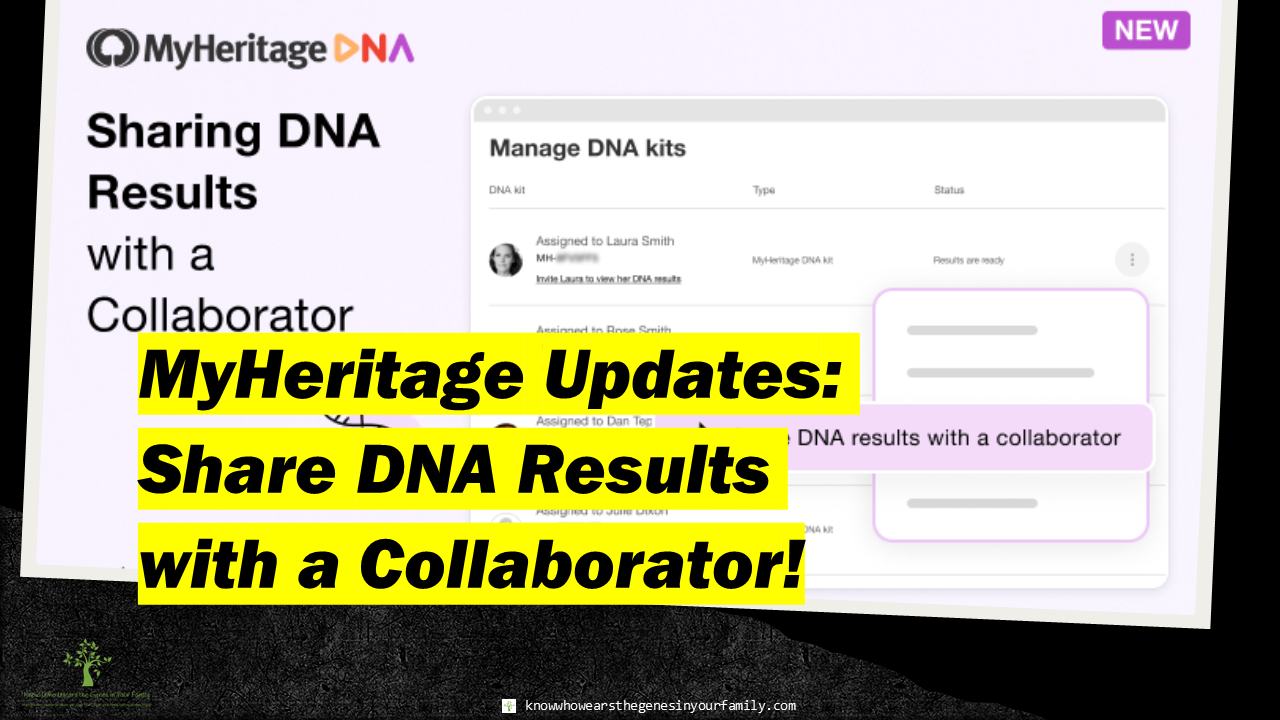
Why Transfer Now? Transferring your family tree data as soon as possible ensures you won’t lose any functionality when FamilyTreeDNA phases out their tree builder. Plus, early transfer gives you immediate access to all the fantastic tools MyHeritage offers. For more details about this exciting integration, check out the official blog post on MyHeritage. Let’s spread the word and make the most of this new collaboration to enhance our genealogy research! Happy researching! More MyHeritage Update, Tools, and FeaturesLearn about more of the latest MyHeritage updates, tools, and features under the MyHeritage category. More Genealogy ResourcesLearn about more family history and genealogy resources under the Genealogy Resources category and on my dedicated Genealogy Resources page.
|
Details
Welcome to the BlogWelcome to Know Who Wears the Genes in Your Family! Here you'll find genealogy research tips, family history resources, DNA insights, technology and AI tools, genealogy news, and stories from my own research journey. Whether you're just starting your family tree, exploring your ancestry, or tackling a challenging brick wall, my goal is to help you discover, understand, and preserve your family's story. Categories
All
Top PostsBlogrollEvalogue.Life, Heart of the Family, Molly's Canopy, Climbing My Family Tree, DNA Breakthroughs, Ancestral Findings, Genealogy Tip of the Day, Family History Daily, Heart of the Family Blog Party, Genea-Musings, Best of the Genea-Blogs, Genealogy à la carte, Empty Branches on the Family Tree, Our Growing Family Tree, AI Genealogy Insights, Family Locket, Beaumont Genealogy-AI
Archives
August 2026
|
RSS Feed