
 The Top Gifts to Give Guide: The Best Family History and Genealogy Gifts The Gift that Keeps on Giving: Family History and GenealogyIf you are looking for a meaningful and memorable present for your loved ones this holiday season, consider giving them a family history gift. A family history gift is one of the most personalized and thoughtful gifts you can give that keeps on giving! Spread the joy of genealogy, while helping others discover who they are and where they came from! Whether it is a book, a photo album, a DNA test, or a family tree, a family history gift is the perfect gift to help others connect with their past and inspire their future! The Best Family History and Genealogy Gifts
More Genealogy ResourcesLearn about more family history and genealogy resources under the Genealogy Resources category and on my dedicated Genealogy Resources page.
10 Comments
 Unlock Your Family's Genealogy with Family History Interviews! The holidays are a great time to reconnect with your family and learn more about your ancestors. One of the best ways to do that is by interviewing your relatives and asking them about their memories, stories, and experiences. Interviewing your family can help you discover new information, fill in the gaps, and preserve your heritage for future generations. But how do you conduct a successful family history interview? Here are some tips to help you prepare, conduct, and document your interviews. How to Prepare for a Family History InterviewIf you are planning to interview your family members about your genealogy during the holidays, you need to do some preparation beforehand. Here are some steps that you can follow to make sure your interview goes smoothly and productively.
By following these steps, you can prepare yourself for a successful genealogy interview that will help you learn more about your family history and heritage. Some Questions to Ask during a Family History Interview
Interviewing your family is a rewarding and enriching experience that can help you uncover your roots and connect with your past. By following these tips, you can make the most of your interviews and discover new aspects of your family history and genealogy!
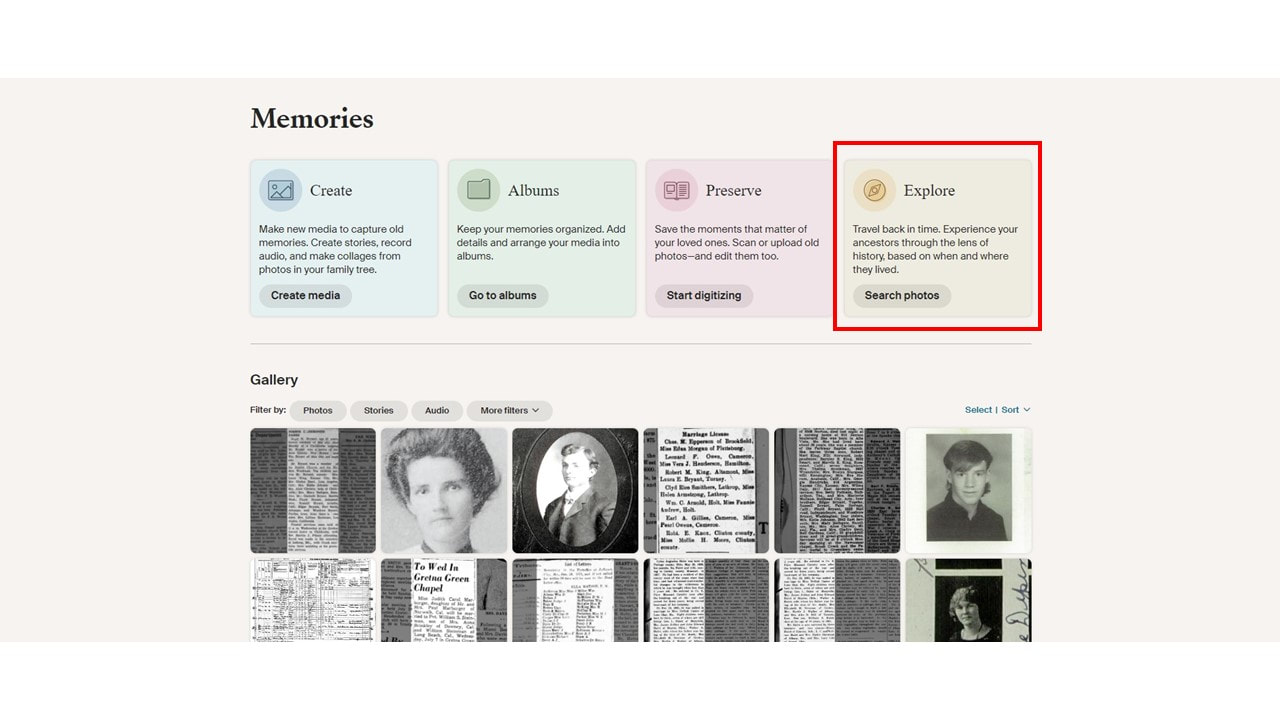
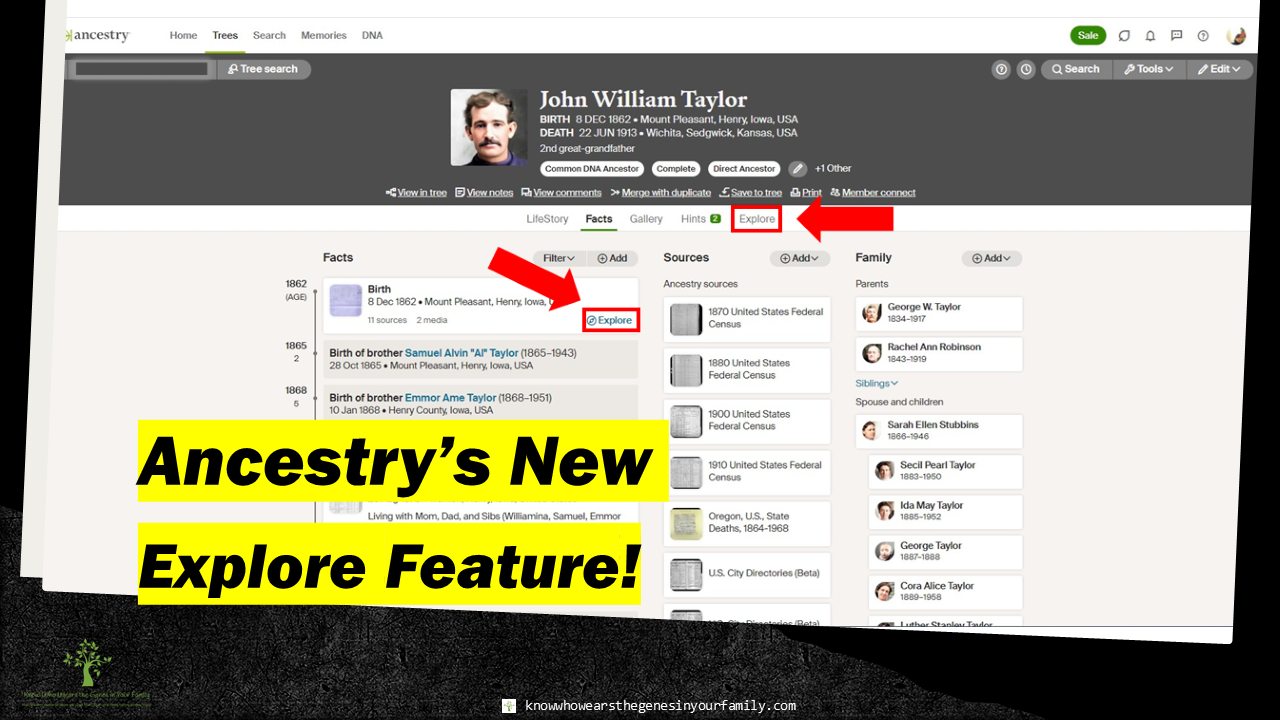 Ancestry's New Explore Feature! Explore Your Ancestors through Media!As mentioned, a few weeks ago, in “New at Ancestry: The Explore Feature in Storymaker Studio!”, Ancestry had come out with a new BETA feature they were testing out, Explore, where you can explore the times your ancestor lived in, through media, giving you yet another way to enhance your family history and genealogy! Then, as quickly as it had appeared, it had disappeared, only a few days later. They had then revamped their whole Storymaker Studio and changed the name to Memories, which is the same name under FamilySearch, and the short lived Explore feature vanished. All of these changes, along with the new Memories page was mentioned in, “Ancestry’s New Dedicated Media Hub, Memories!”. Well, the Explore feature is back! This feature lets you explore images that other members have in their public trees, that may have to do with either a particular ancestor of yours or a certain place and time period that you may be researching. How to get to Ancestry's New Explore FeatureThere are 5 ways to get to Ancestry's new Explore feature , in which you will get slightly different results.
They seem to be making it super easy to get to, by giving you many ways to get to it. 😉 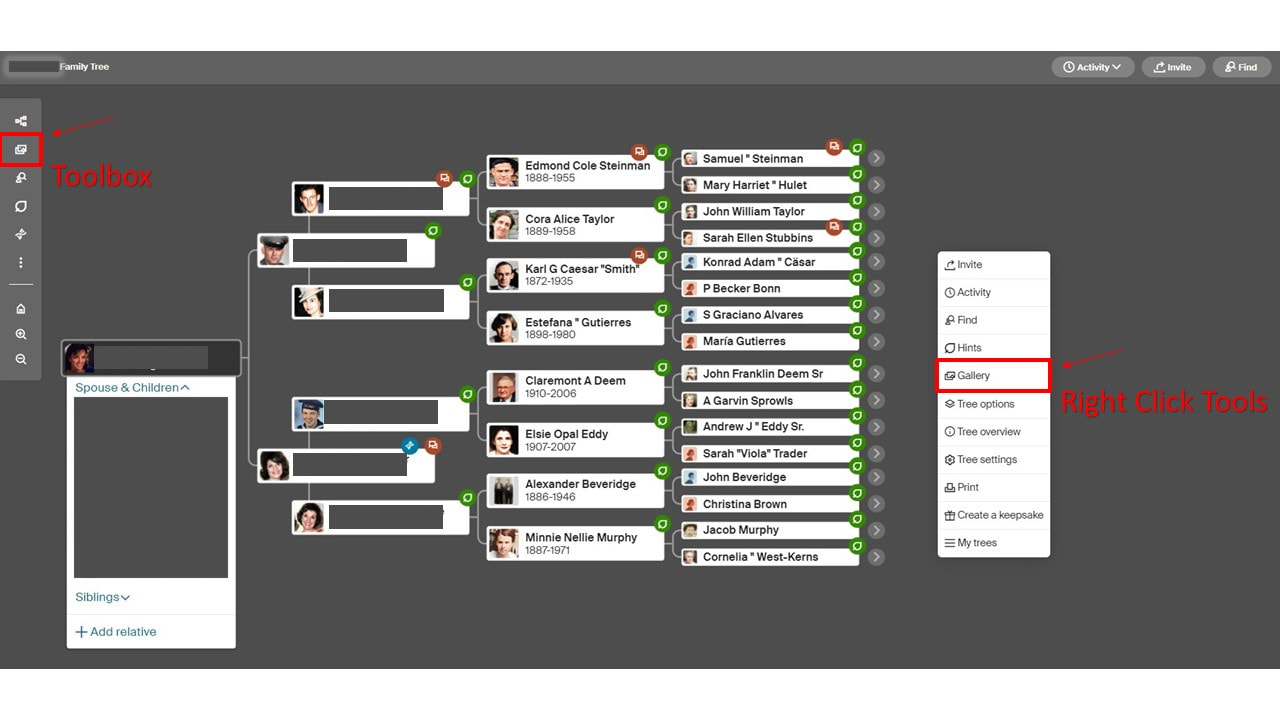 How to Get To Ancestry's Explore Feature from Pedigree View 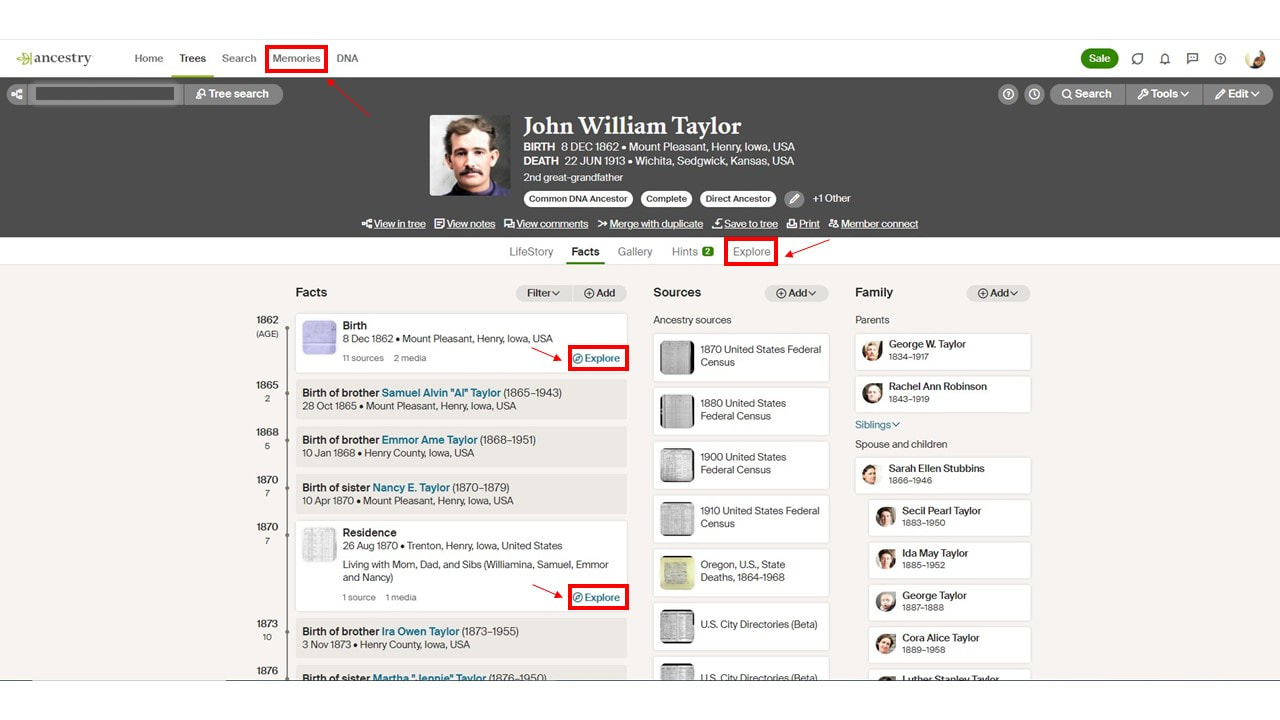 How to Get To Ancestry's Explore Feature from an Ancestor Profile Ways to Explore from the Memories Tab or Gallery Icons
 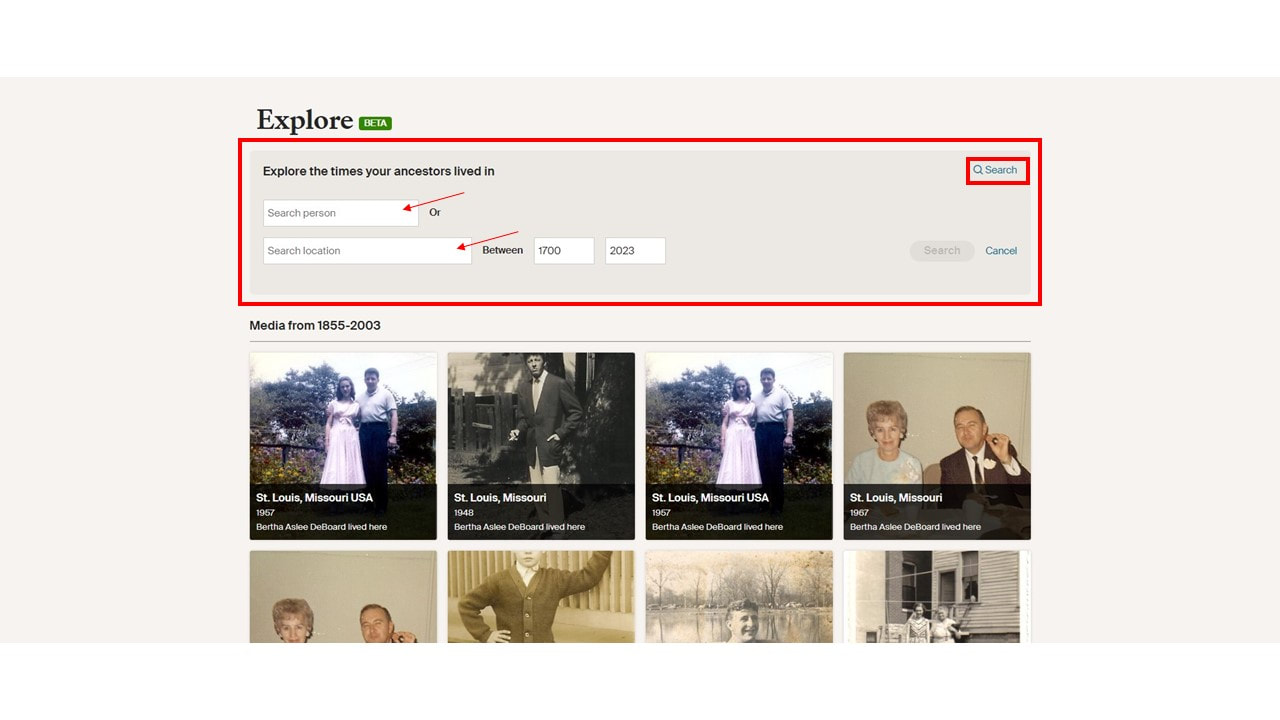 Ways to Explore from an Ancestor Profile
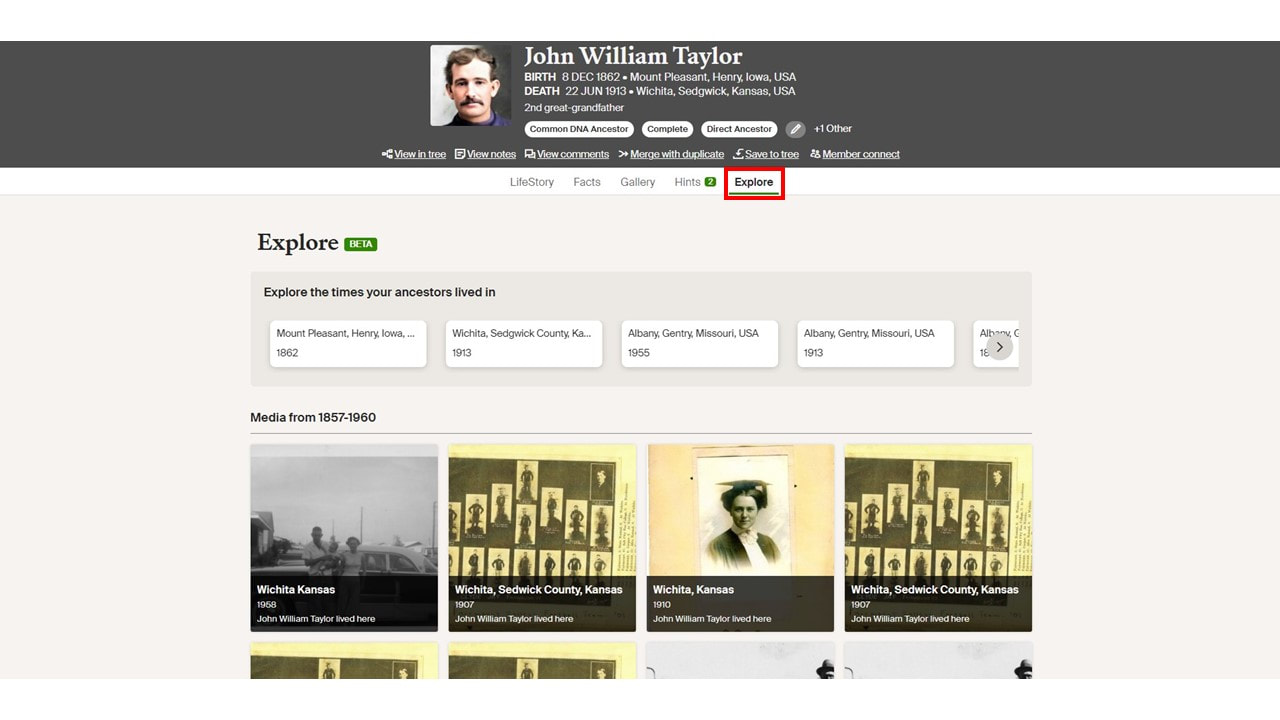 Explore Your Ancestor from Their Profile
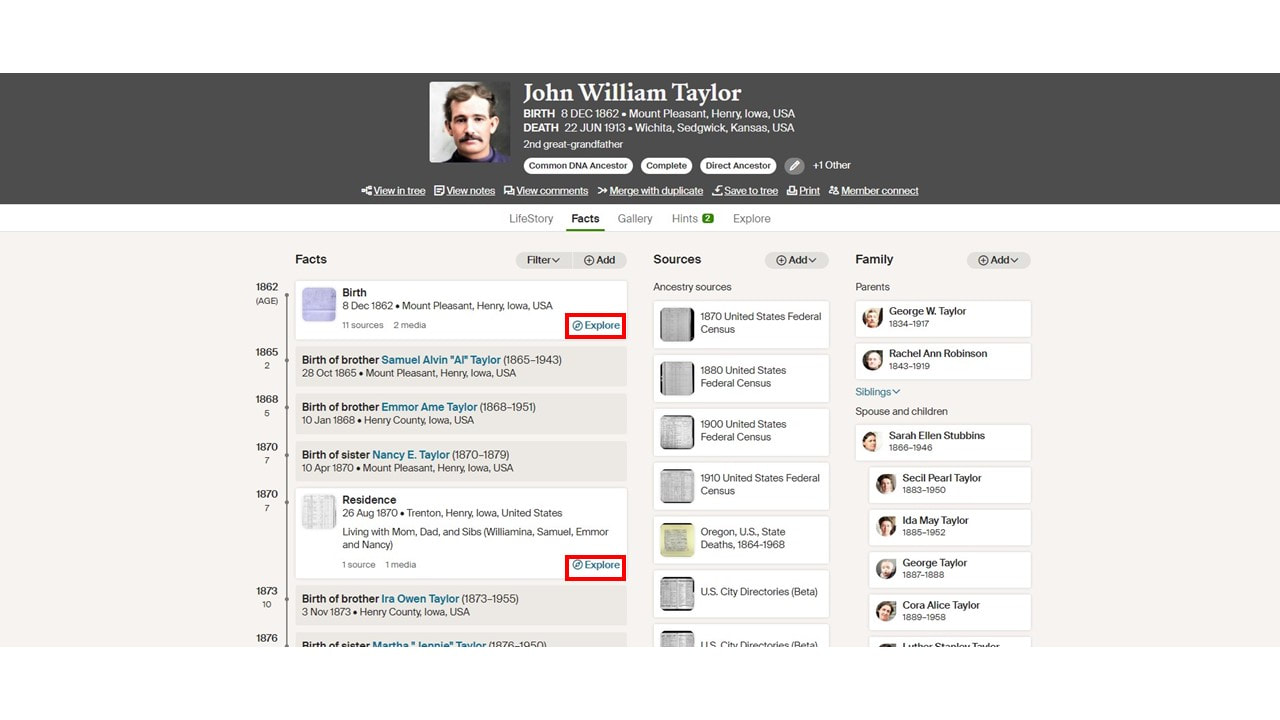 Explore Your Ancestor From Their Facts Timeline-Example 1 & 2 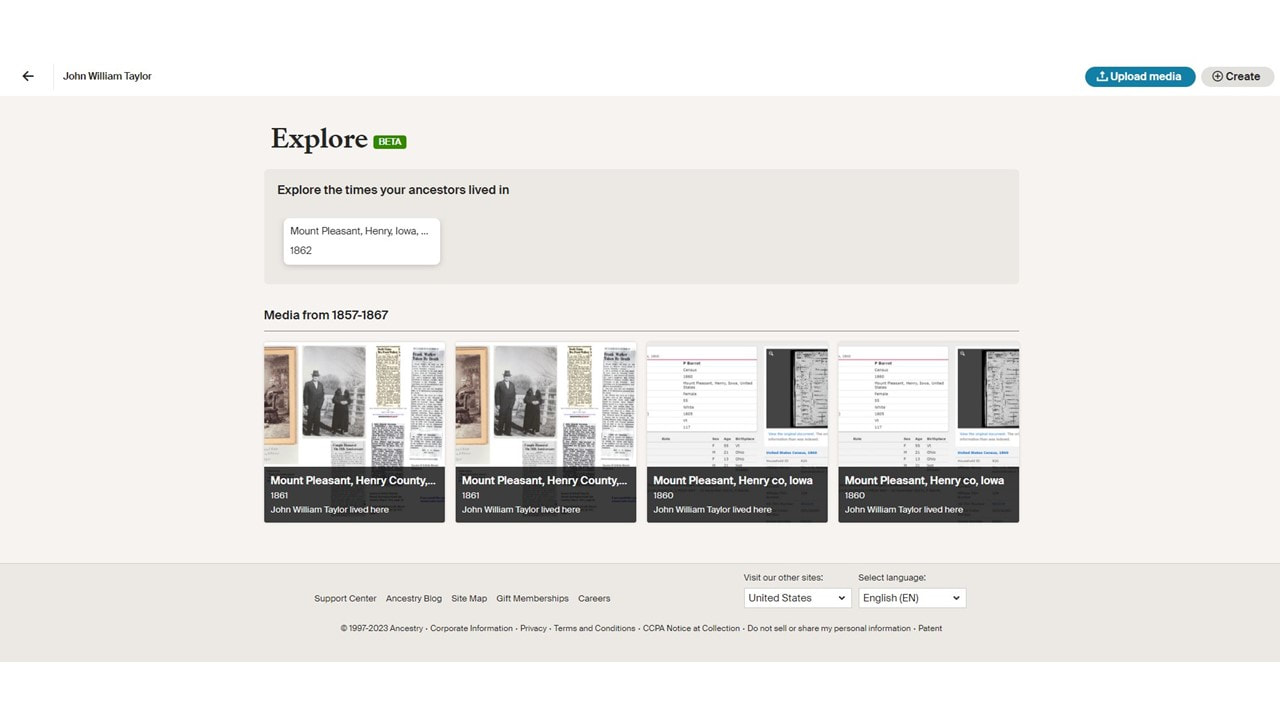 Explore Your Ancestor From Their Facts Timeline-Example 1-1 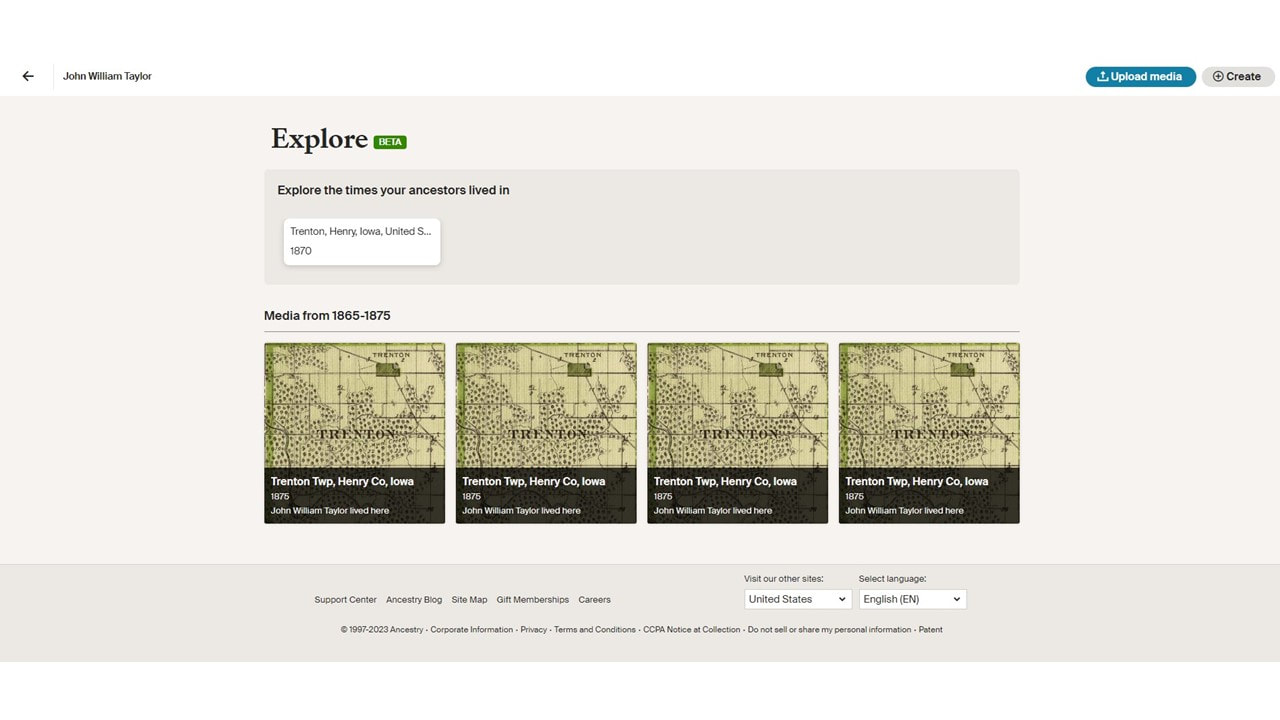 Explore Your Ancestor From Their Facts Timeline-Example 2-1 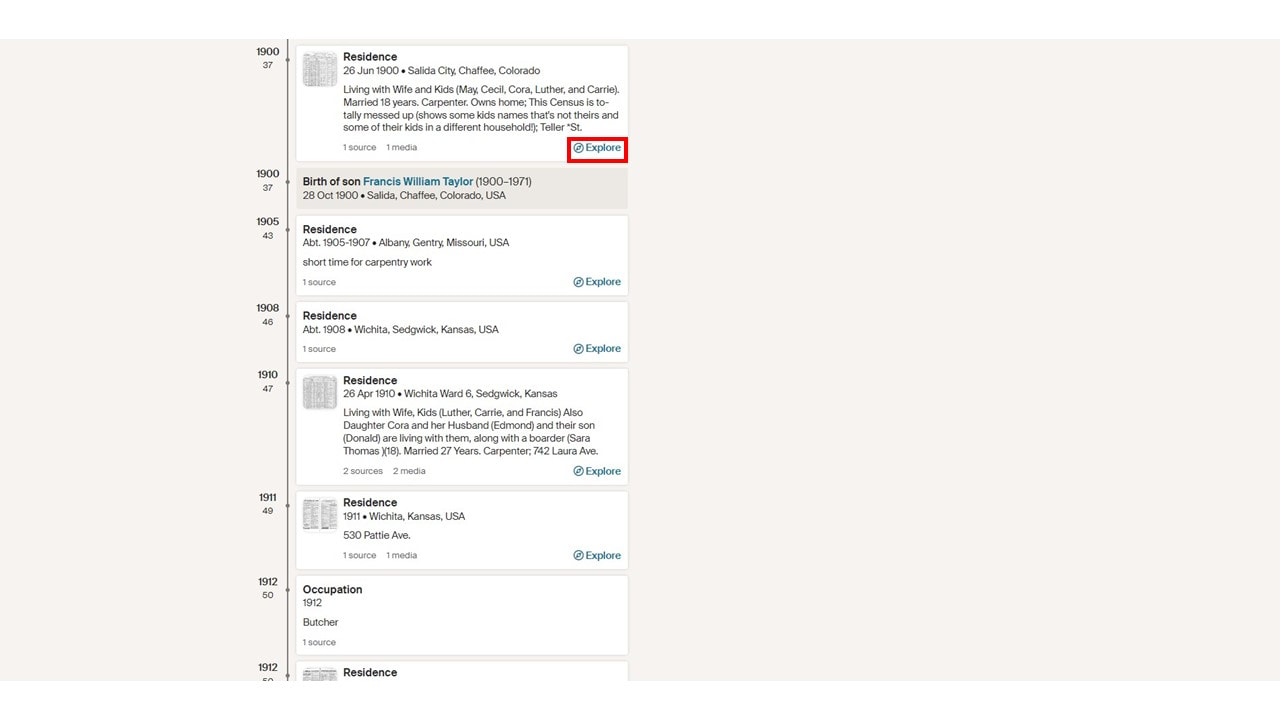 Explore Your Ancestor From Their Facts Timeline-Example 3 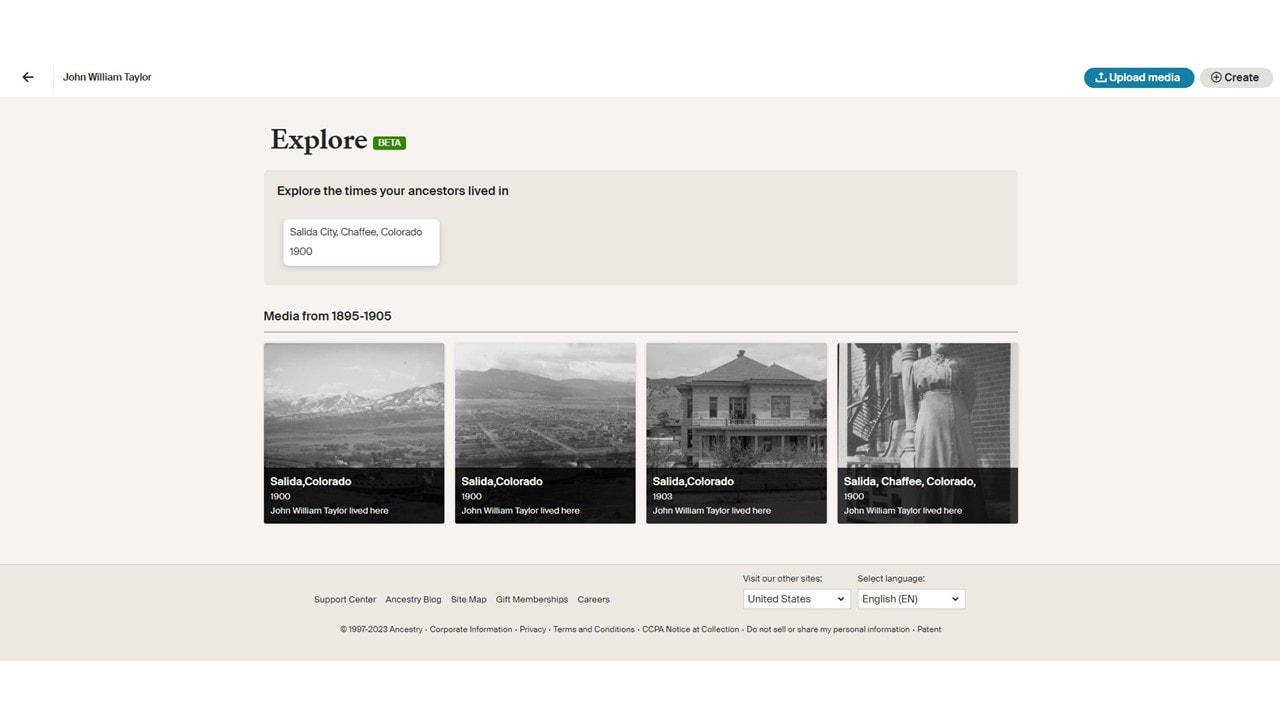 Explore Your Ancestor From Their Facts Timeline-Example 3-1 As mentioned in “New at Ancestry: The Explore Feature in Storymaker Studio!”, I find that “exploring” an ancestor is the same as the image hints you get for that ancestor, under the hints on an ancestor’s profile page, but you cannot currently search for places and times under the hints, so this adds to that capability. Keep in mind that exploring places and times does not necessarily mean it actually has to do with that place and time, it may just be more public ancestor Images of a person who also lived in that place. More Ancestry and Genealogy ResourcesLearn about more Ancestry updates, tips, tools, and features and other family history and genealogy resources under the Genealogy Resources category and on my dedicated Genealogy Resources page.
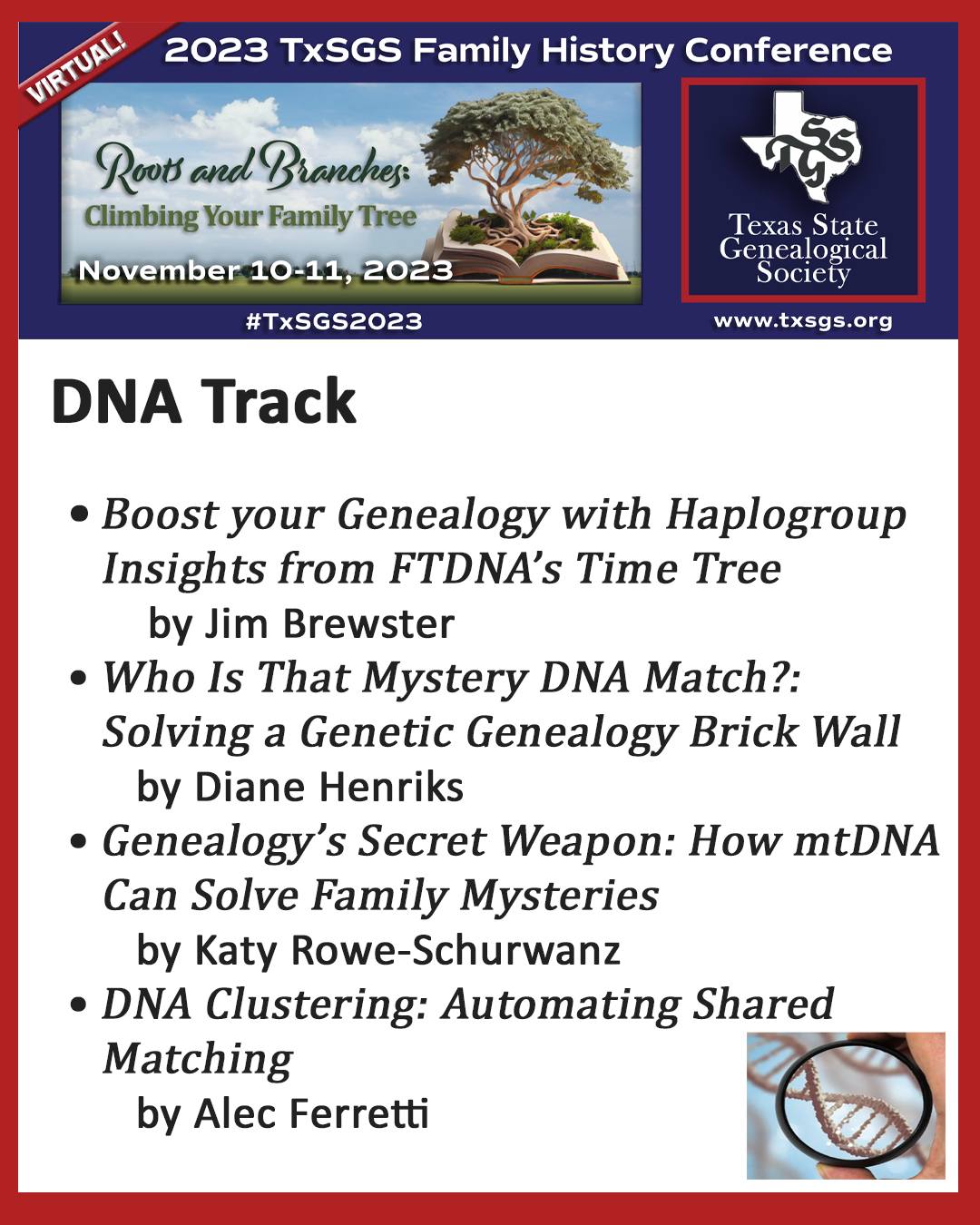
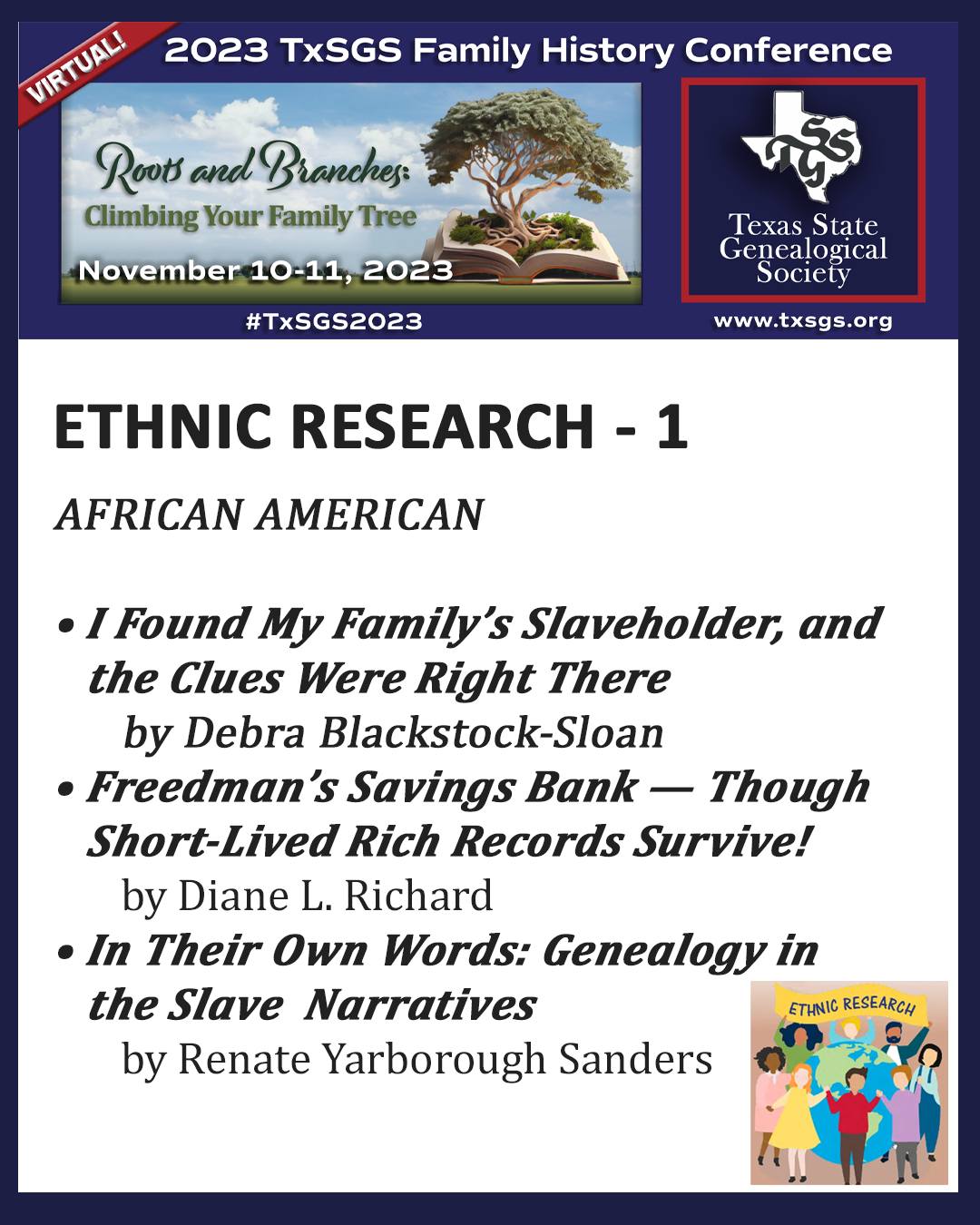
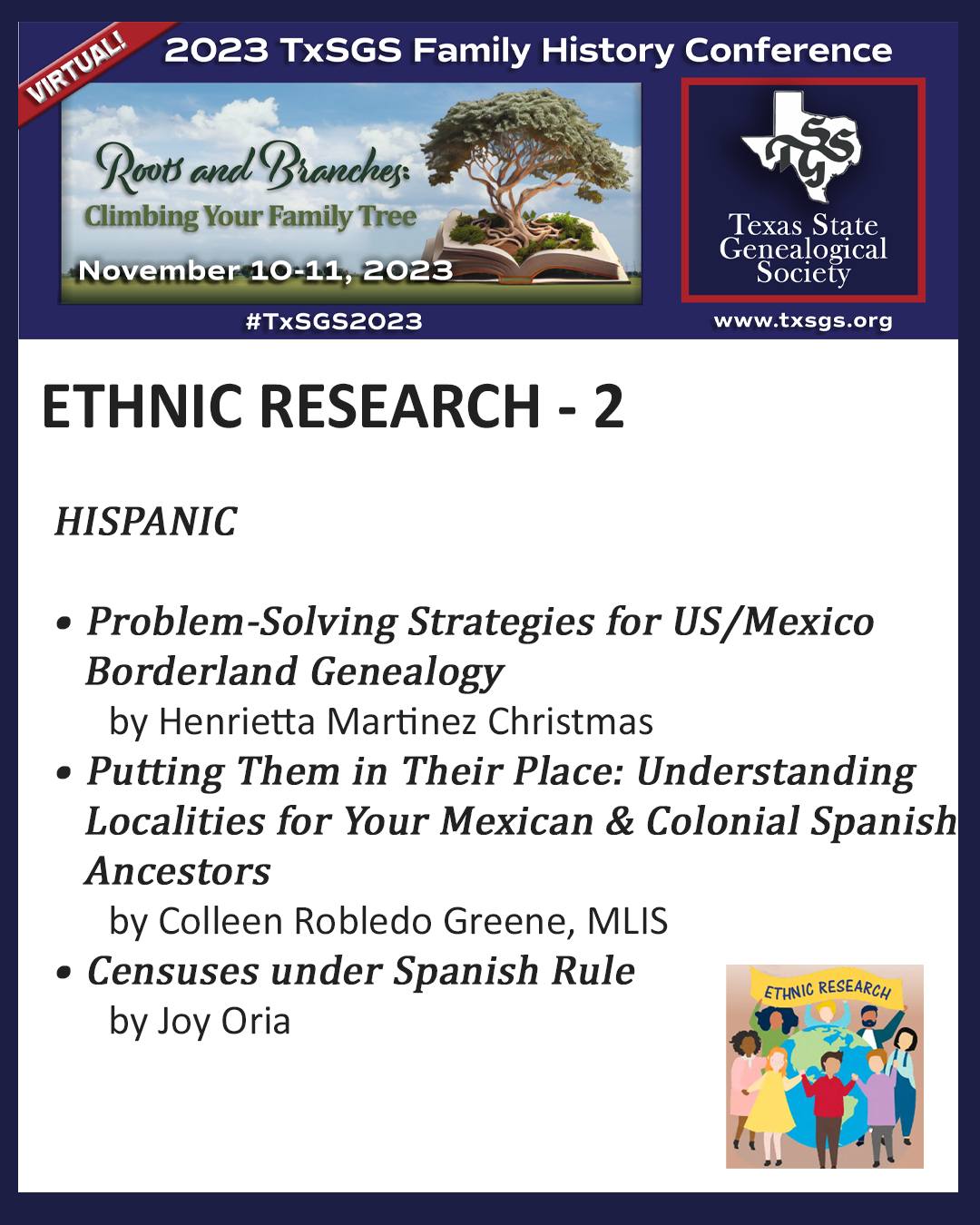
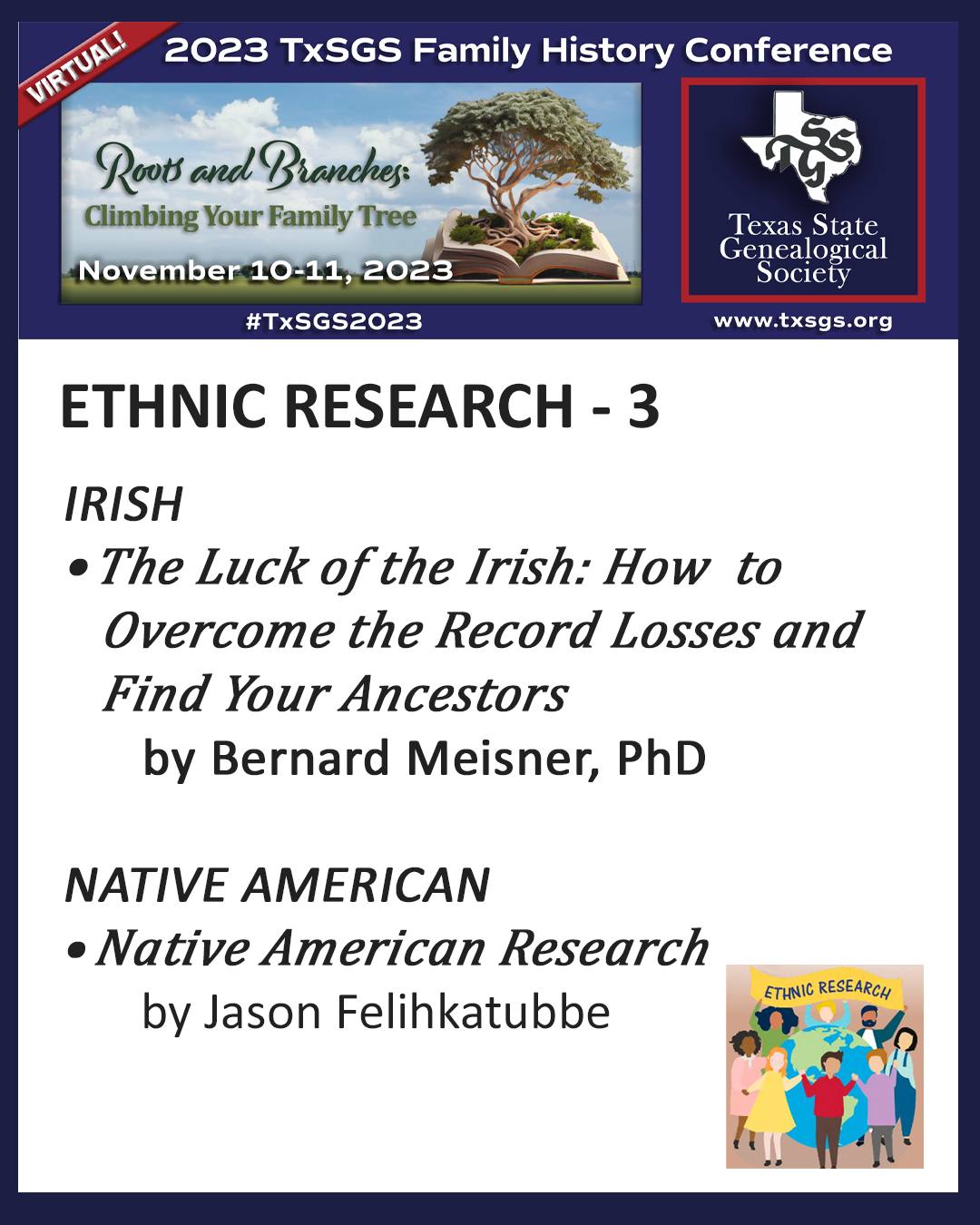
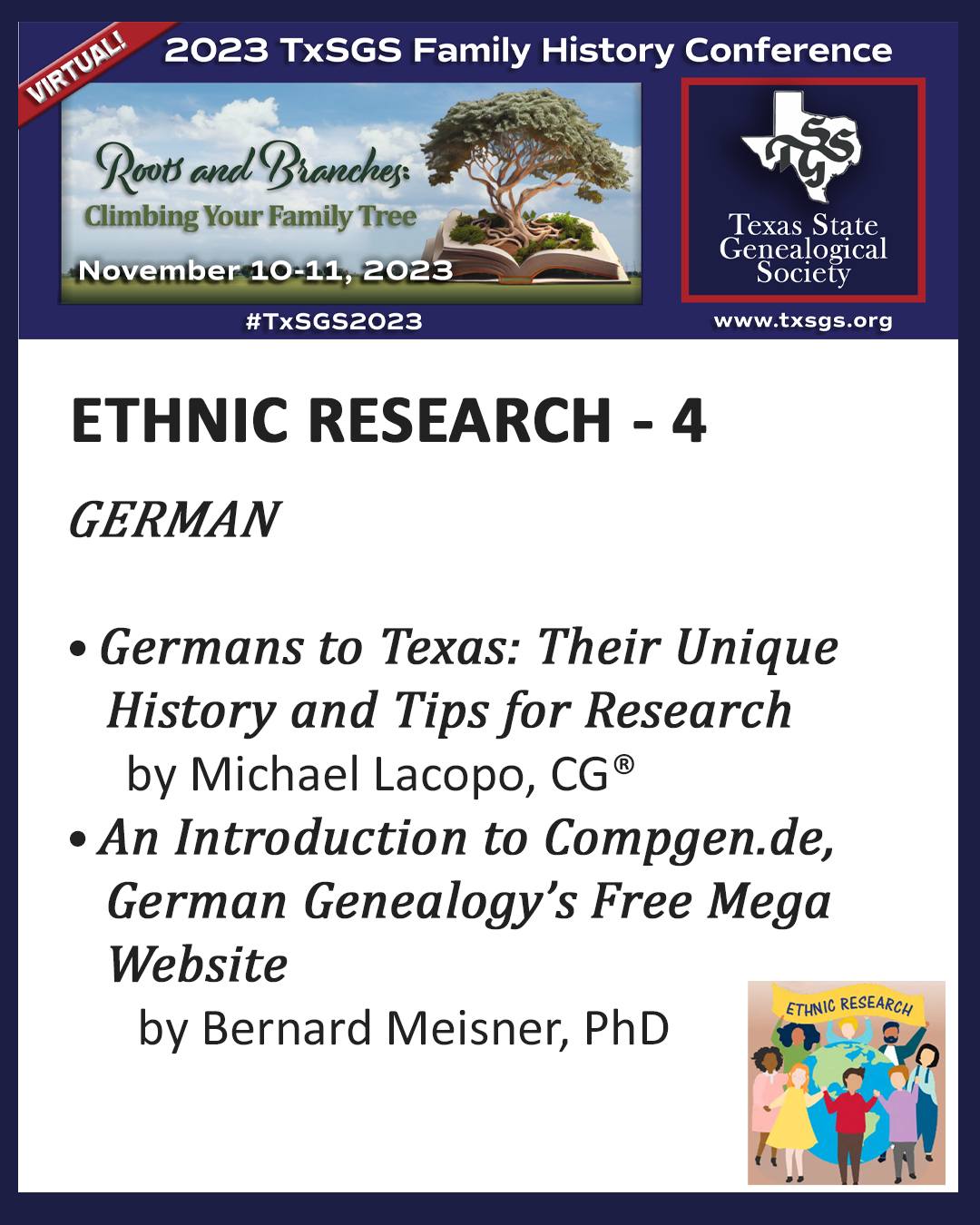
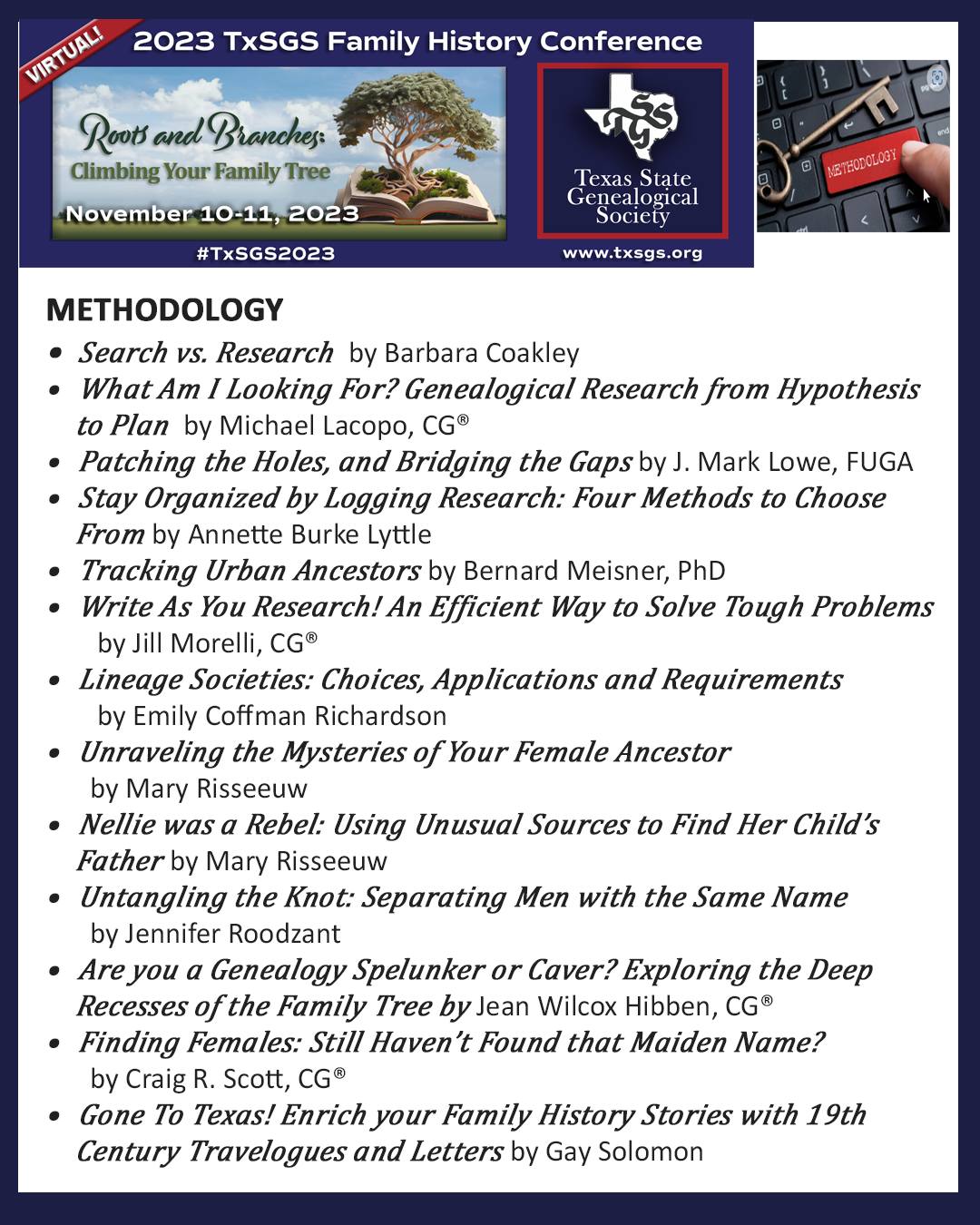
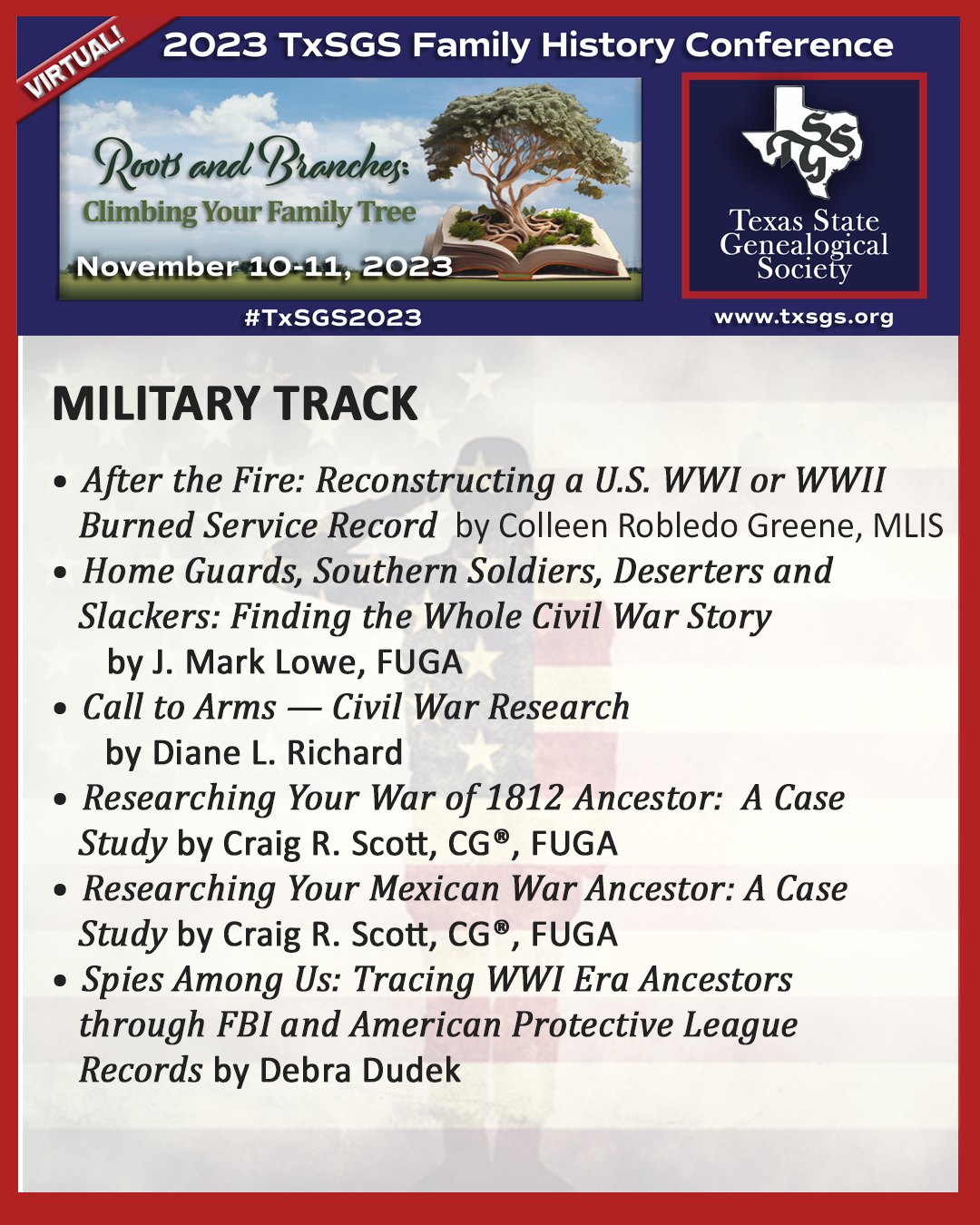
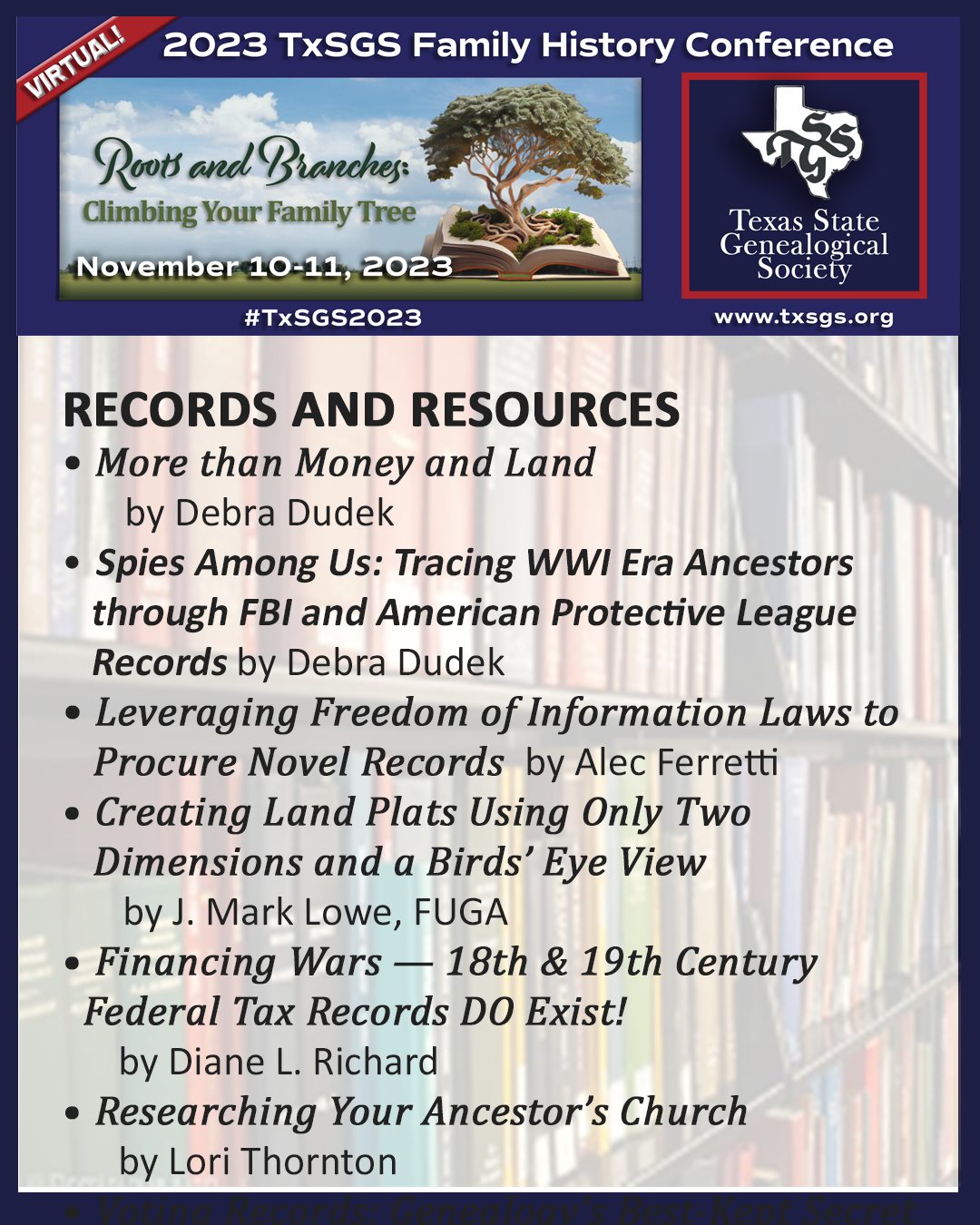
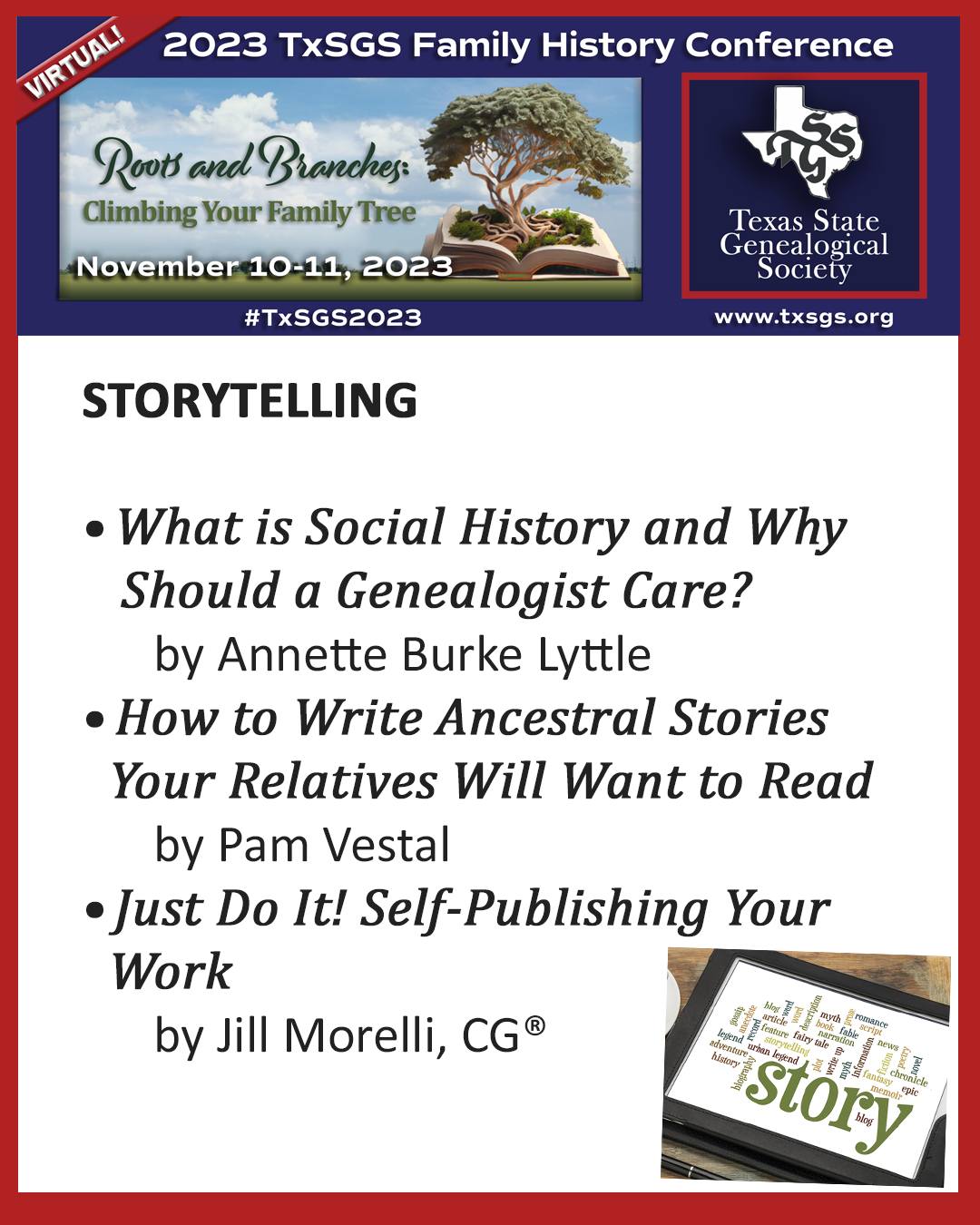
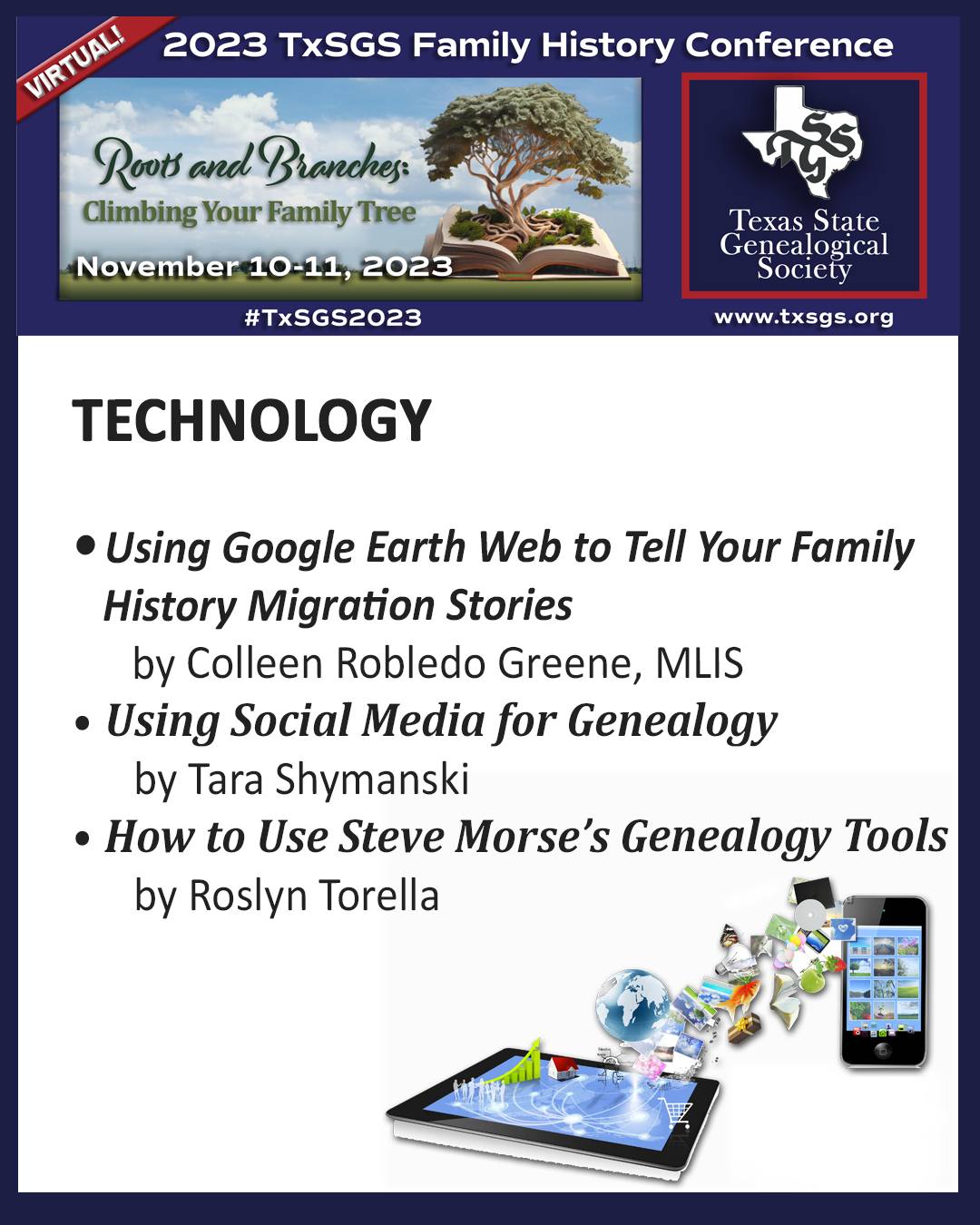
Those Texans Sure Know How to Throw a Genealogy Conference!Those Texans sure know how to throw a party! TxSGS definitely held up to one of Texas’ well-known sayings, “Everything’s bigger in Texas”! What a fantastic, fun filled, 2-day, live event of top-tier genealogical education that was! The genealogical presentations, on a wide variety of topics and by so many well-known speakers, were top notch! They also had some fantastic hosts, sponsors, and exhibitors for the event! But wait, that wasn’t, nor is, all there is to their outstanding genealogical event of the year! They kicked off their event 5 days earlier with pre-conference fun! Using the Whova all-in-one event management platform, which was my first time ever experiencing it. With this platform, the event hosts were able to set up some pretty cool features that dramatically enhanced their program, from challenges, games, networking, photo galleries, expo hall, and more! The coolest part, the majority stay up forever, so you can continue networking! And it’s nowhere near being over! TxSGS Live had 10 live sessions with Q&As, but that was nowhere near the only part of the event! There are still the other 36 pre-recorded, just for this event, sessions that start today, 2 days after the live portion, and available until February 10th! So, this event is really a 14 week-long, fun-filled, fantastic, all-in-one event! I am so honored to have been able to speak for them! If I hadn’t, I may never have known how amazing this event is! What Did We Get to Do in the Whova Platform and at This Event?
Which Sessions Were at the Live Portion of the Event?
And, since unlike many other events where presentations overlap and these did not, I got to watch them all! All the Presentations/Tracks for This EventSadly, I have to say that I most likely will not have time to watch all the other 36 presentations by well-known speakers, including my own (“Who Is That Mystery DNA Match?), as I’m not sure I have that kind of time. I will, however, carefully choose what seems to be the most useful to me.
If you missed this fantastic event, there is always next year, and trust me, you do not want to miss out on this opportunity! 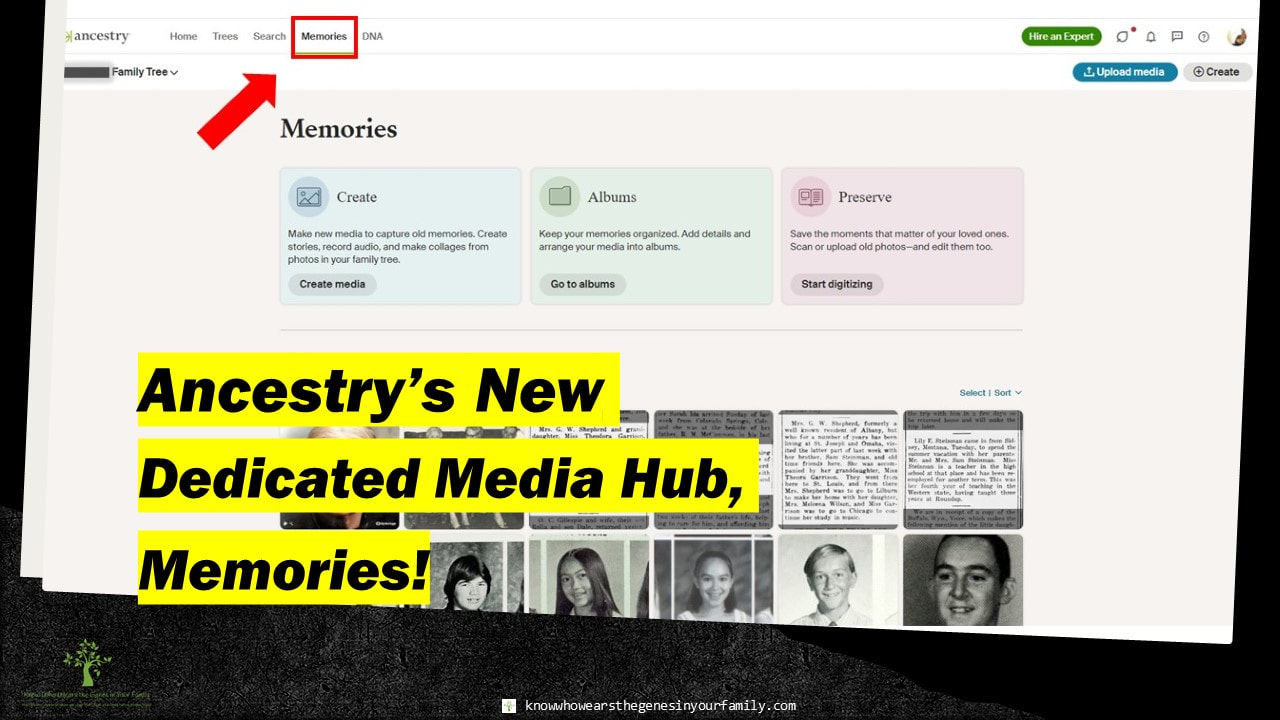 Ancestry's New Dedicated Media Hub, Memories! Out with the Old and in with the NewHelp future generations remember or discover people in your family tree through photos and stories with Ancestry’s new one-stop media hub to view all your media in your tree! As mentioned last week in New at Ancestry: The Explore Feature in Storymaker Studio!, Ancestry came out with a new BETA feature, Explore, in their Storymaker Studio. Well, it seems to have been short lived, as after only a few days, they revamped their whole Storymaker Studio and have now changed the name to Memories, along with adding some some new features. Memories Media Hub Categories
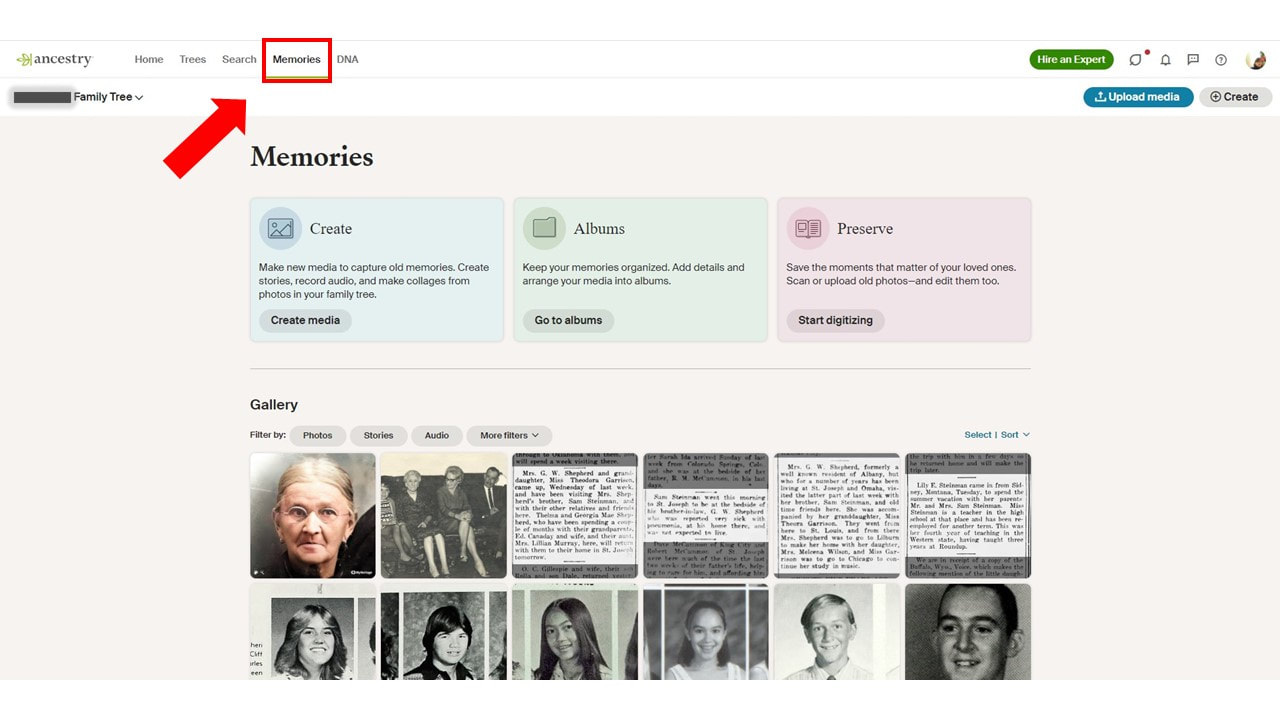 Ancestry's Memories Media Hub Categories and How to Get To Memories Media Hub- Example 1 What Can You Do in Memories?
Create MediaCreate stories, create slideshows, upload audio recordings, create albums, make photoline collages, create tree collages, and enhance your photos by colorizing, sharpening, filtering, or adding stickers from photos in your family tree. 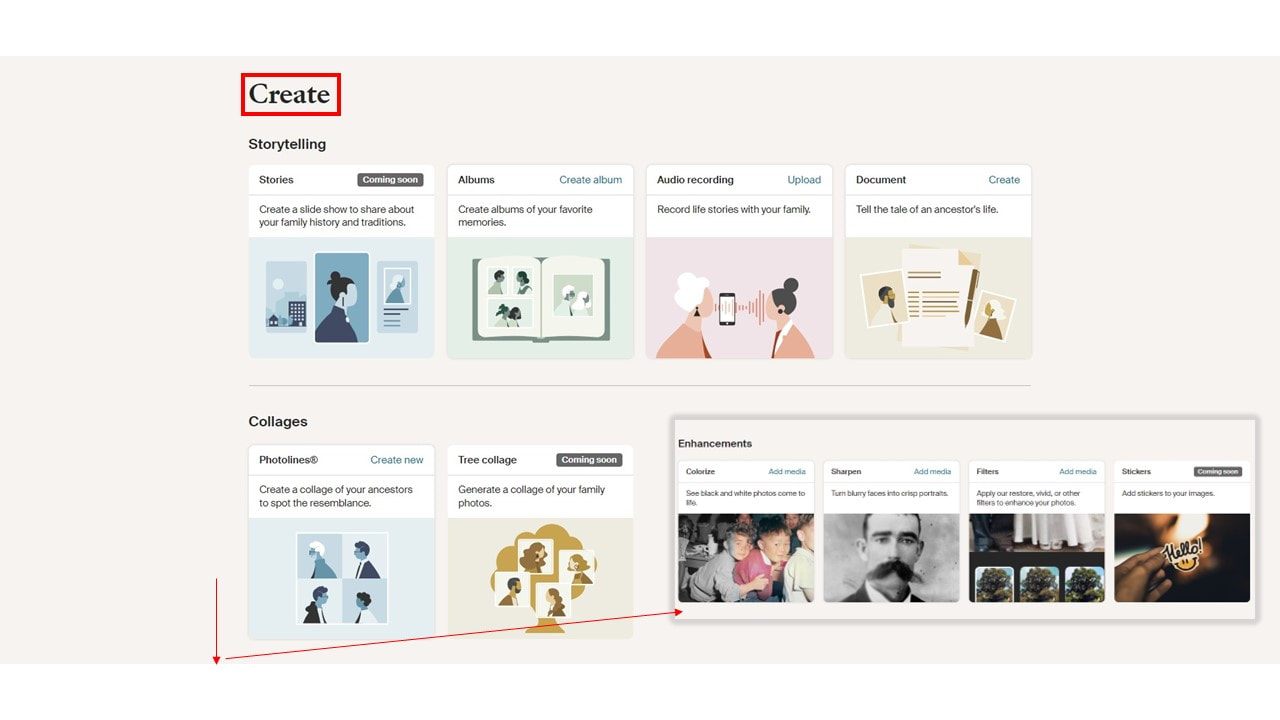 Ancestry's Memories Media Hub Category, Create Organize Your MediaArrange all your media into albums and add details to your media, such as tags, dates, locations, and descriptions. 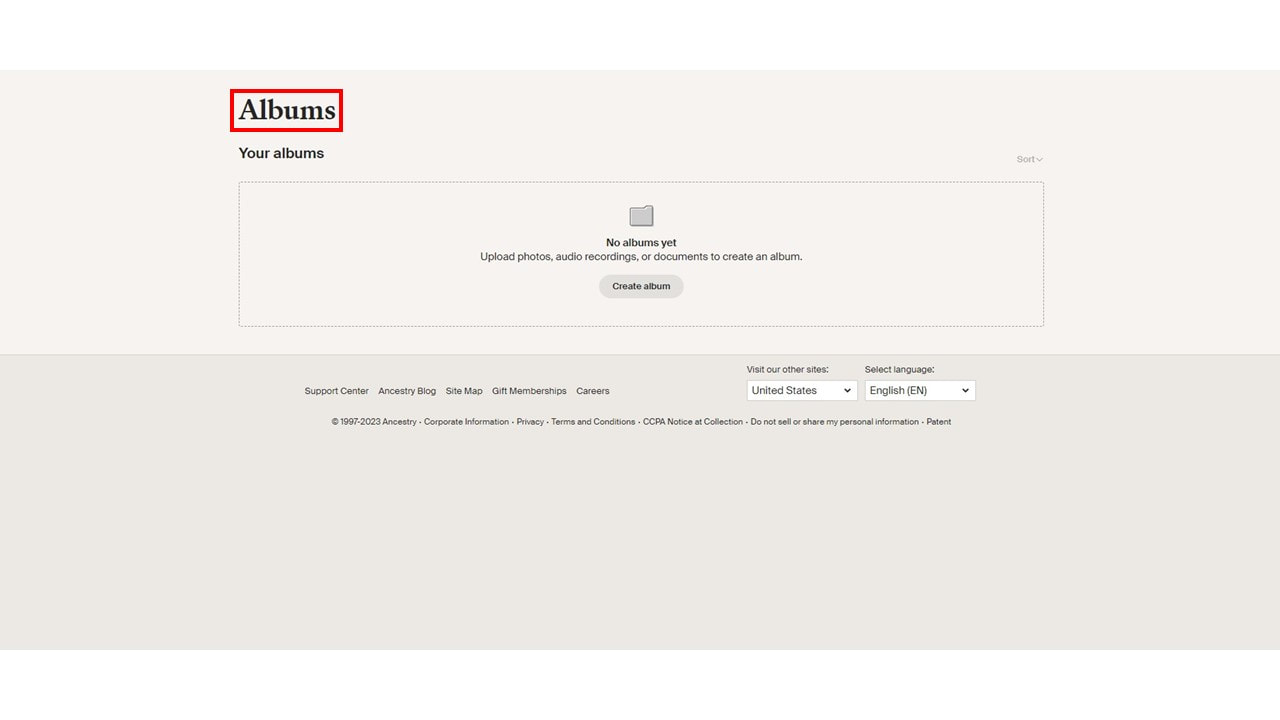 Ancestry's Memories Media Hub Category, Albums As you can see, I haven't created any albums yet. Preserve Family MemoriesHelp future generations remember or discover people in your tree through photos and stories by preserving your family history. Scan or upload media, then edit your family photos by adjusting, colorizing, sharpening, cropping, rotating, or filtering them. From there, you add tags, dates, locations, and descriptions to your photos. 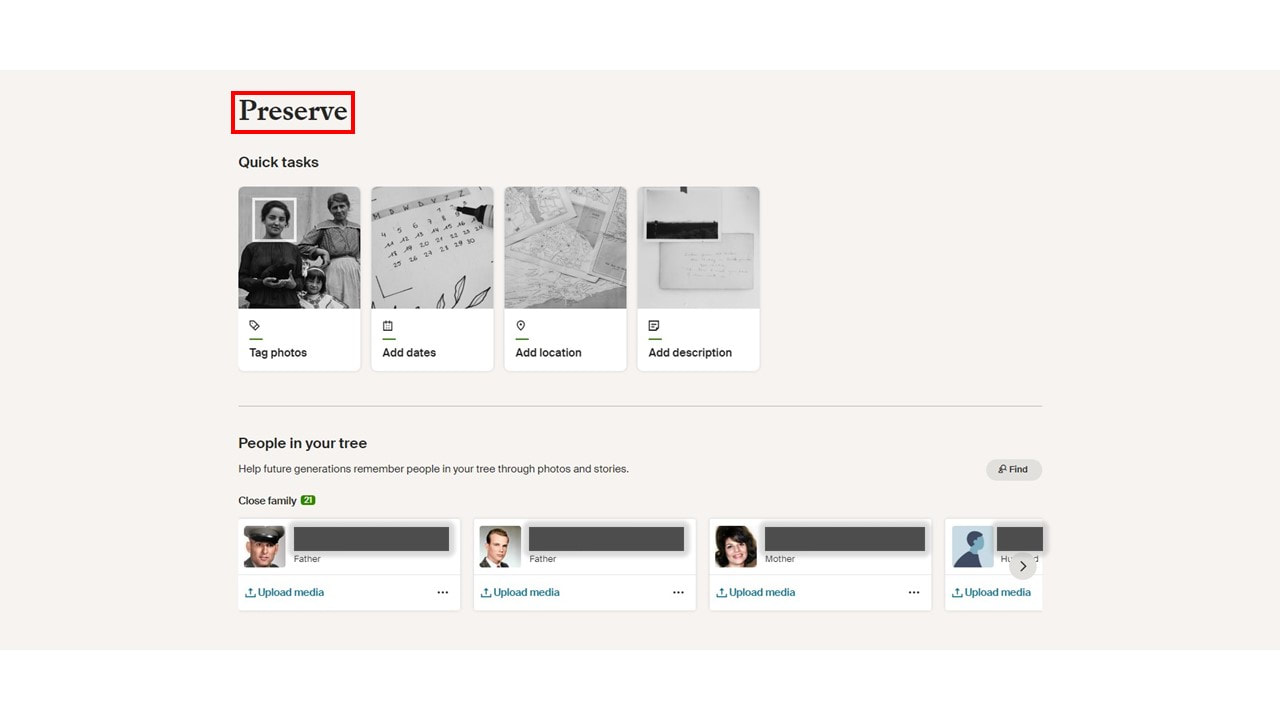 Ancestry's Memories Media Hub Category, Preserve Scan or Upload MemoriesScan or upload old photos and add details to them. SearchSearch for your photos, stories, audio, and videos quickly in your media Gallery by filtering what you are looking for. 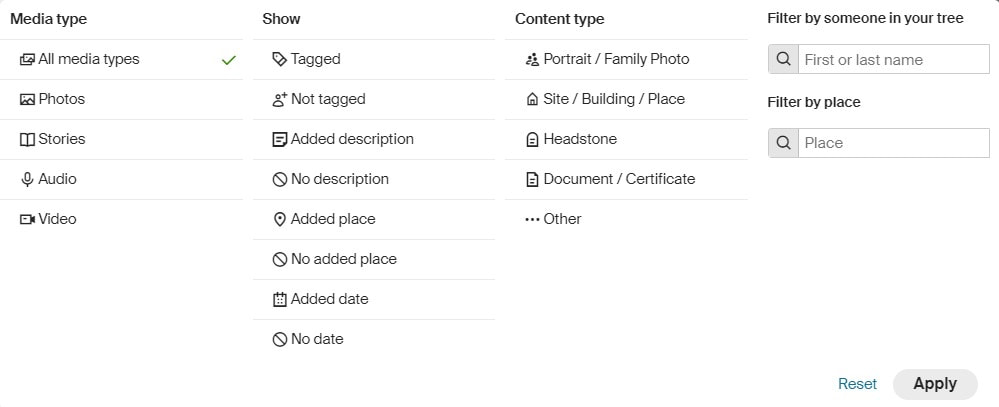 ExploreExplore historical photos through the eyes of your ancestors. Many of these features go hand in hand; therefore, you can do some of the same tasks under each category. 😉 How to get to Memories
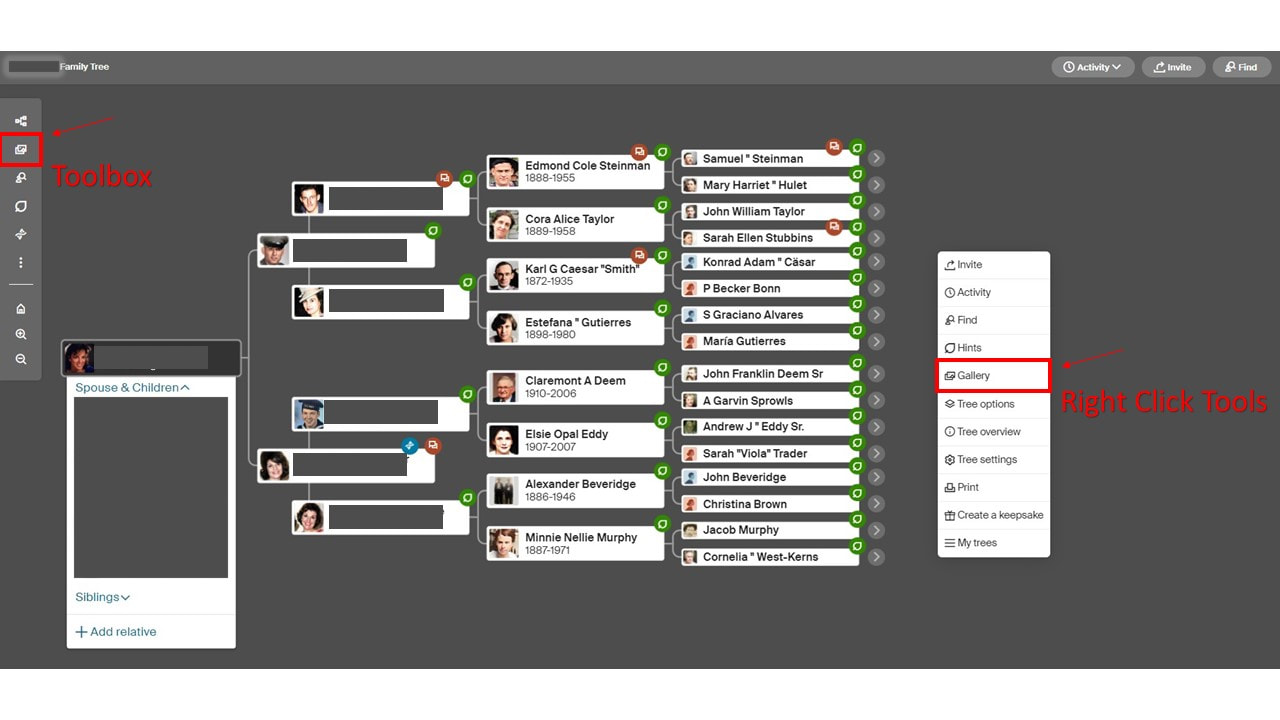 How to Get To Ancestry's Memories Media Hub- Example 2 *Note: They don’t seem to have all the kinks worked out yet, but I’m sure it’s another work in progress. Currently there is no smooth way to get back to the main page from each feature or category. The feature that I mentioned in my last post, Explore, is advertised in the pop up for the new Memories media page, but I haven’t seen it yet. Some of these features/tools just take you to your ancestor’s profile page gallery allowing you to be able to do the same things you have already been able to do. Some of the go back button or arrows take you back to places that have nothing to do with what you were doing or where you were. 😉 More Ancestry and Genealogy ResourcesLearn about more Ancestry updates, tips, tools, and features and other family history and genealogy resources under the Genealogy Resources category and on my dedicated Genealogy Resources page.
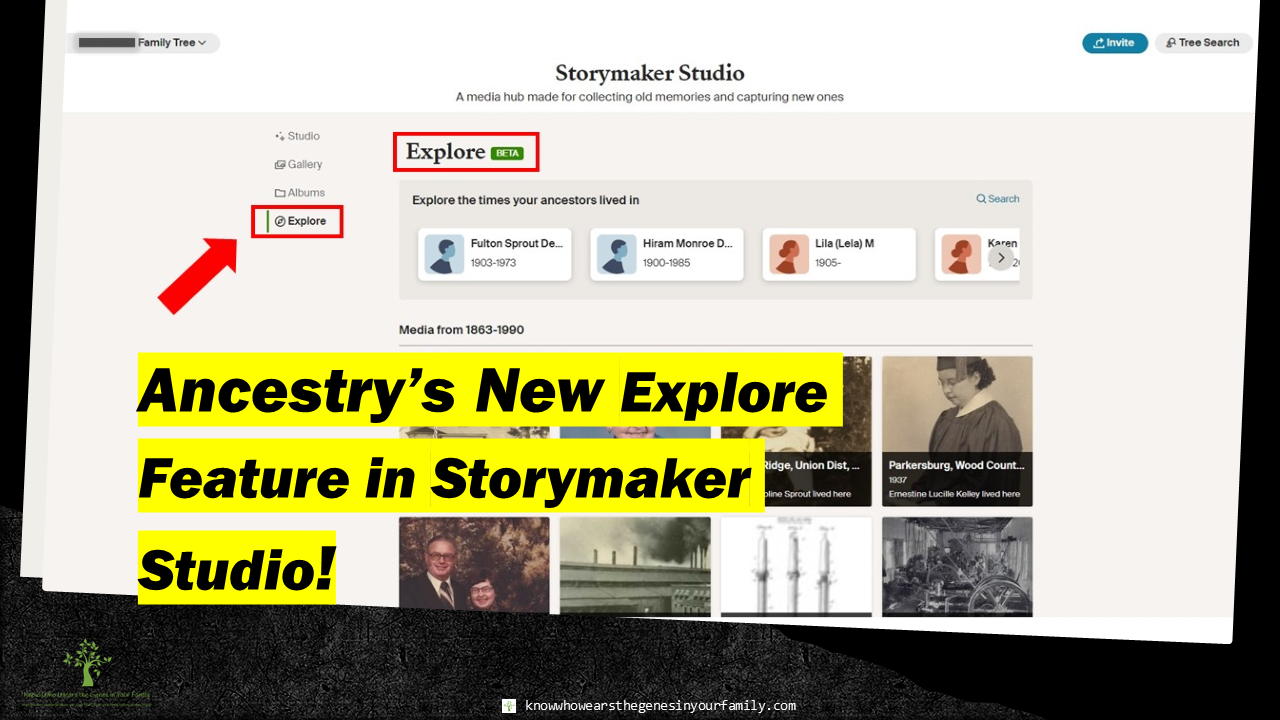 Ancestry's New Explore Feature in Storymaker Studio Ancestry's New Explore FeatureExplore the times your ancestor lived in, through media! Ancestry has a new Beta feature they’re testing out to help enhance your family history and genealogy, Explore, in the Storymaker Studio. This feature lets you explore images that other members have in their public trees, that may have to do with either a particular ancestor of yours or a certain place and time period that you may be researching. How to get to the Explore Feature
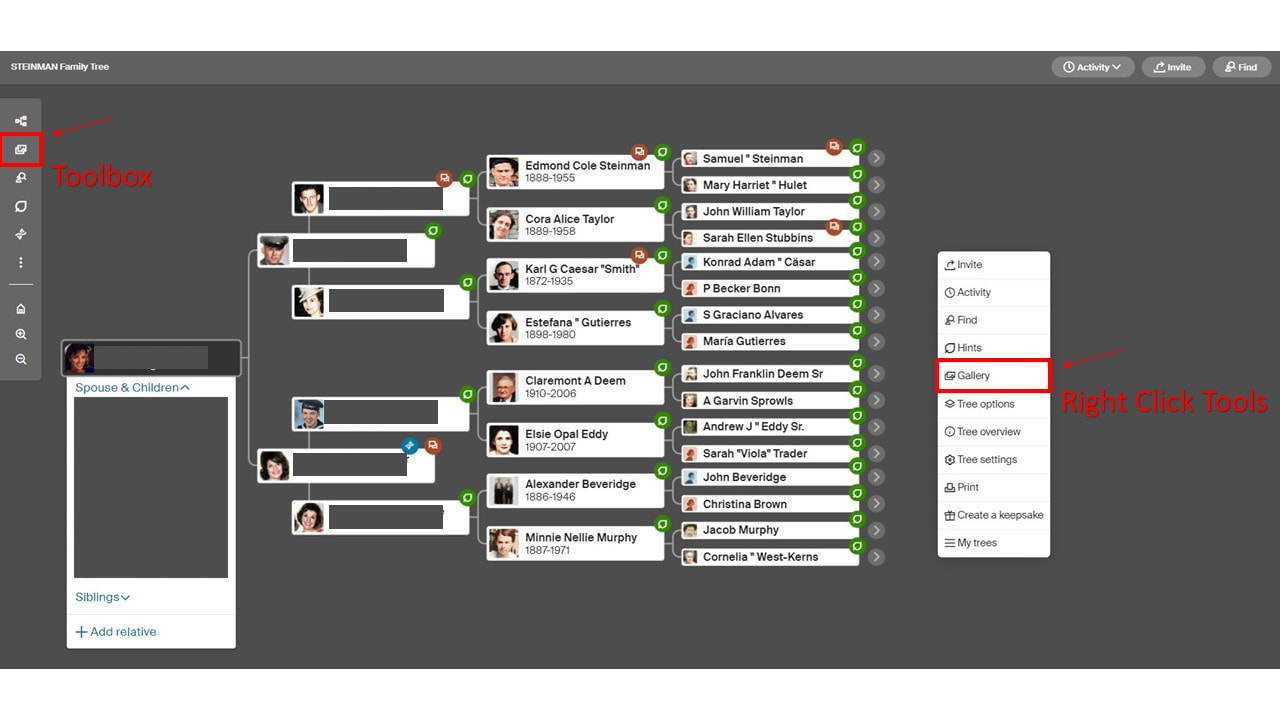 How to Get to the Explore Feature in Ancestry Storymaker Studio- Step 1 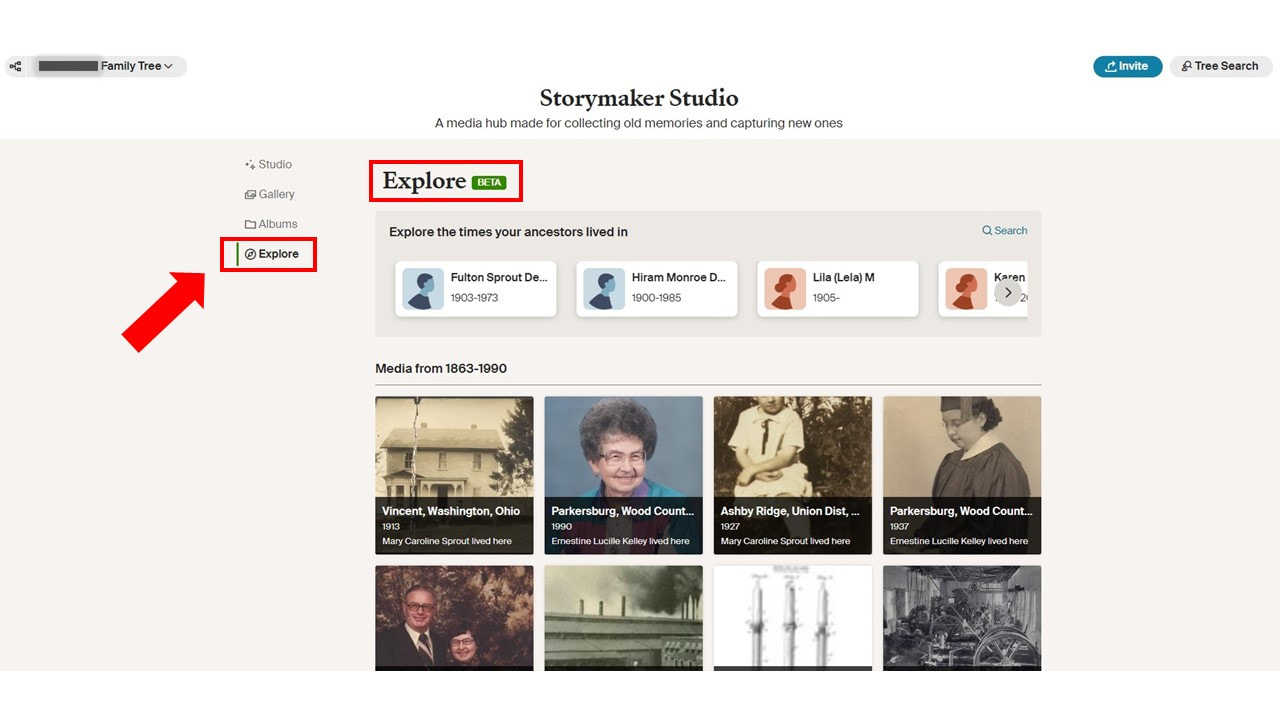 How to Get to the Explore Feature in Ancestry Storymaker Studio- Step 2 Ways to Explore
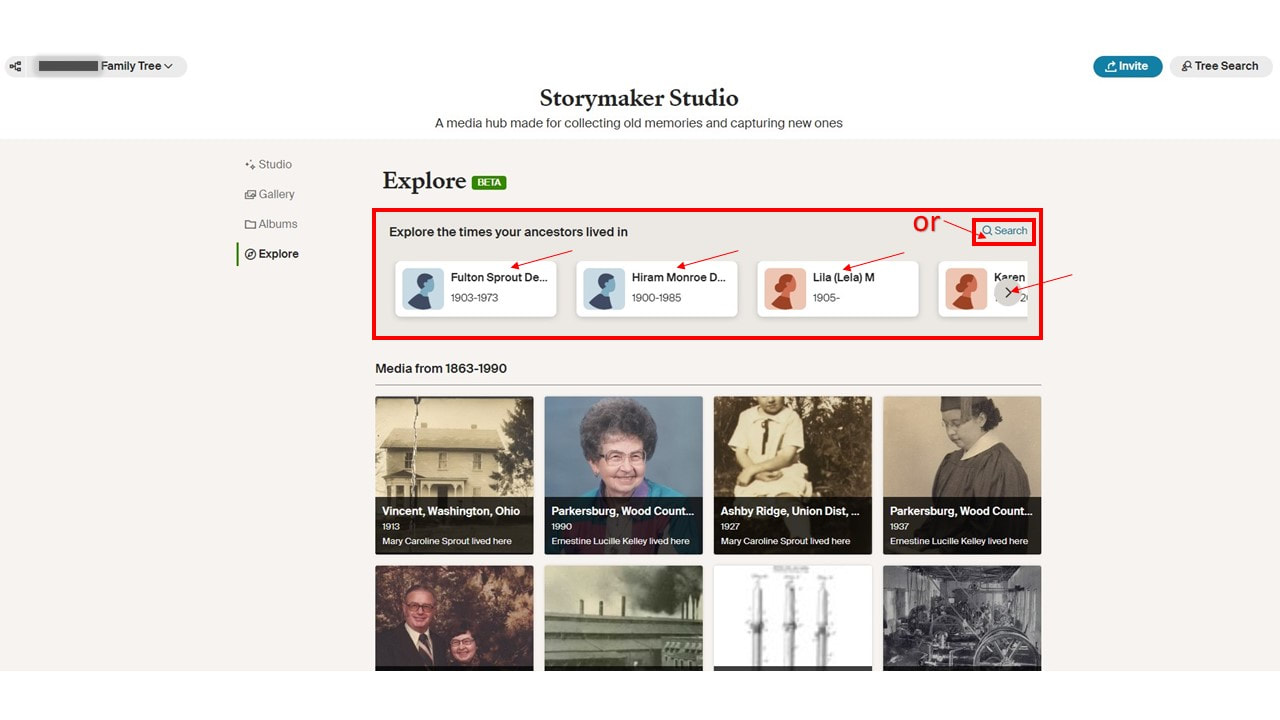 Way to Explore with the Explore Feature in Ancestry Storymaker Studio- Example 1 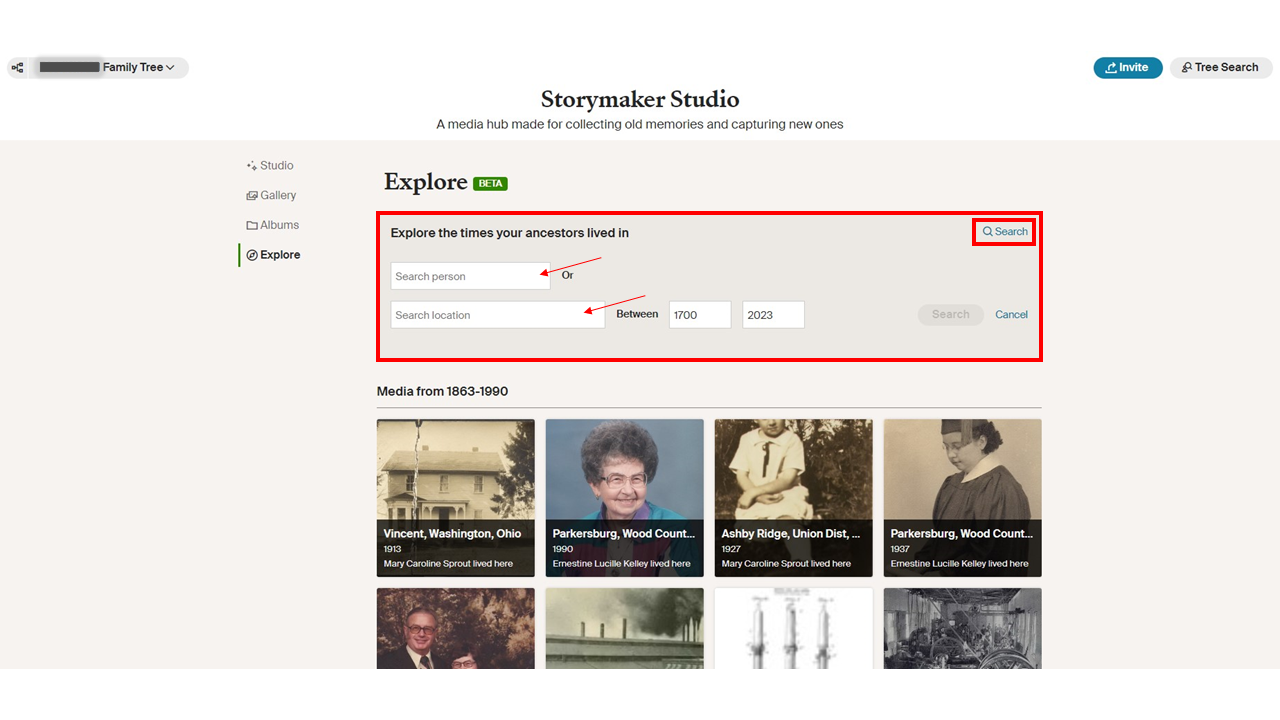 Way to Explore with the Explore Feature in Ancestry Storymaker Studio- Example 2 Exploring a Particular Ancestor in Ancestry Storymaker Studio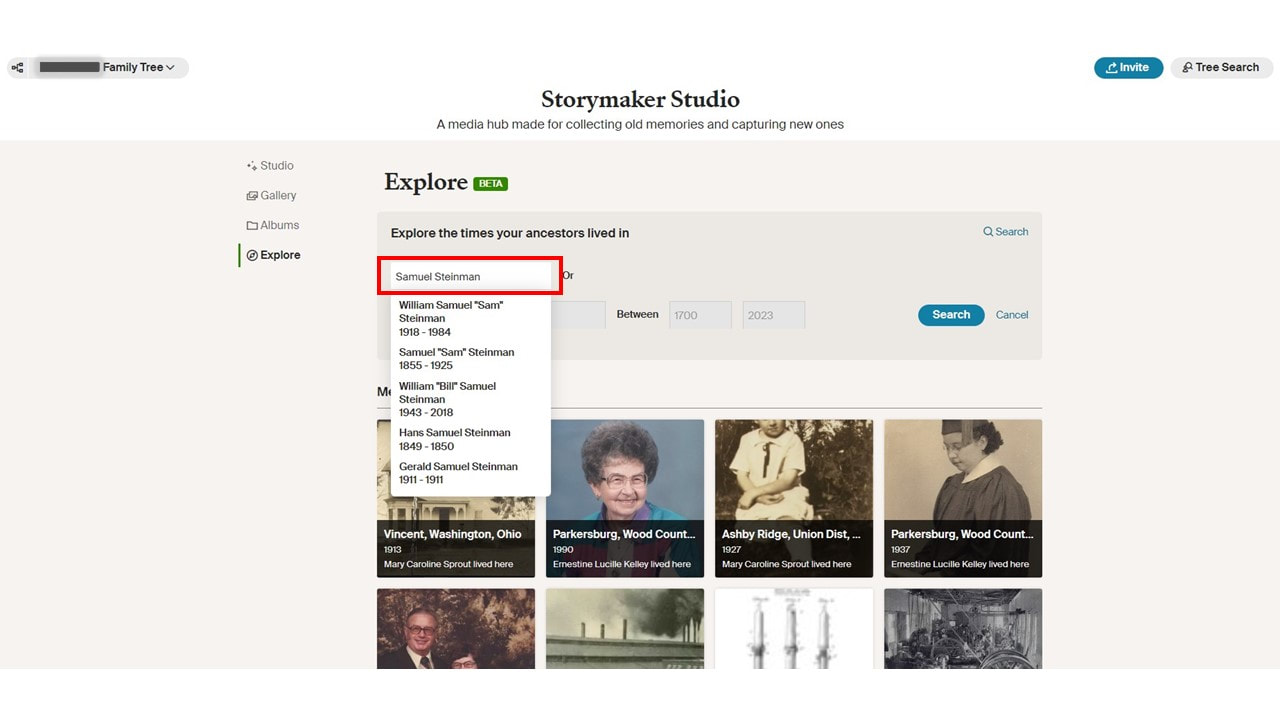 Exploring a Particular Ancestor in Ancestry Storymaker Studio- Example 1 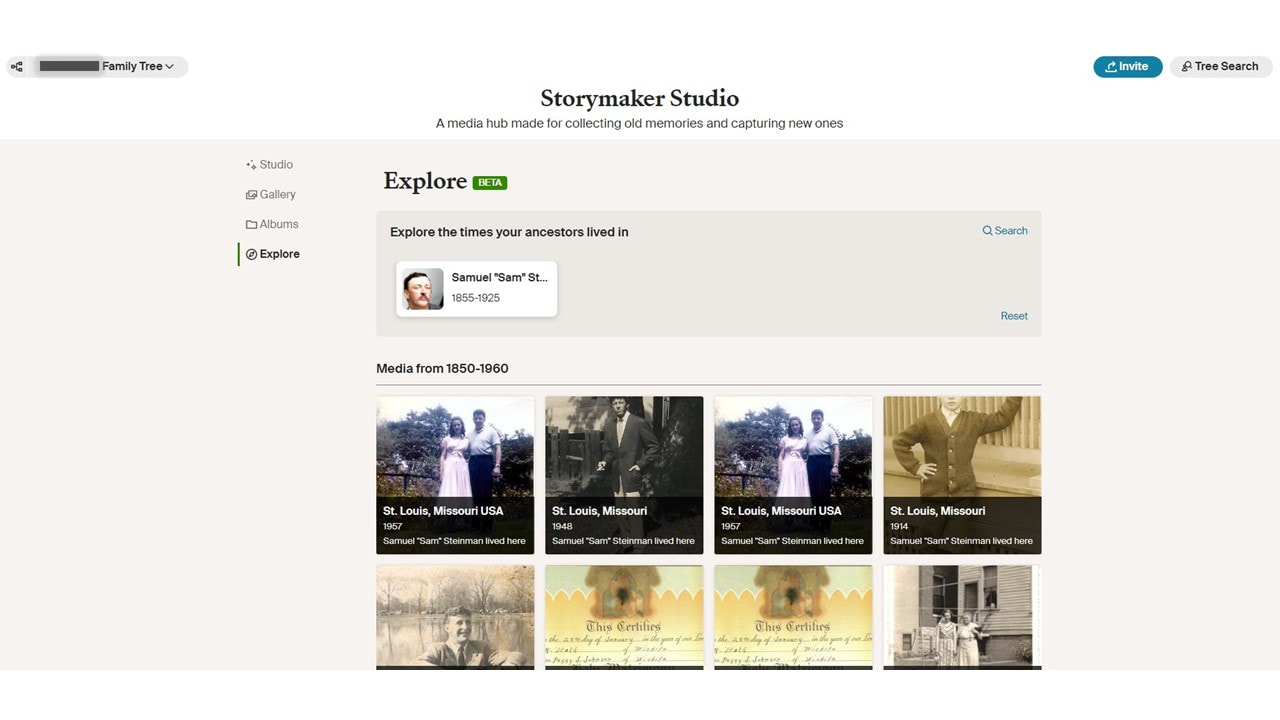 Exploring a Particular Ancestor in Ancestry Storymaker Studio- Example 1-2 Exploring a Particular Place and Time in Ancestry Storymaker Studio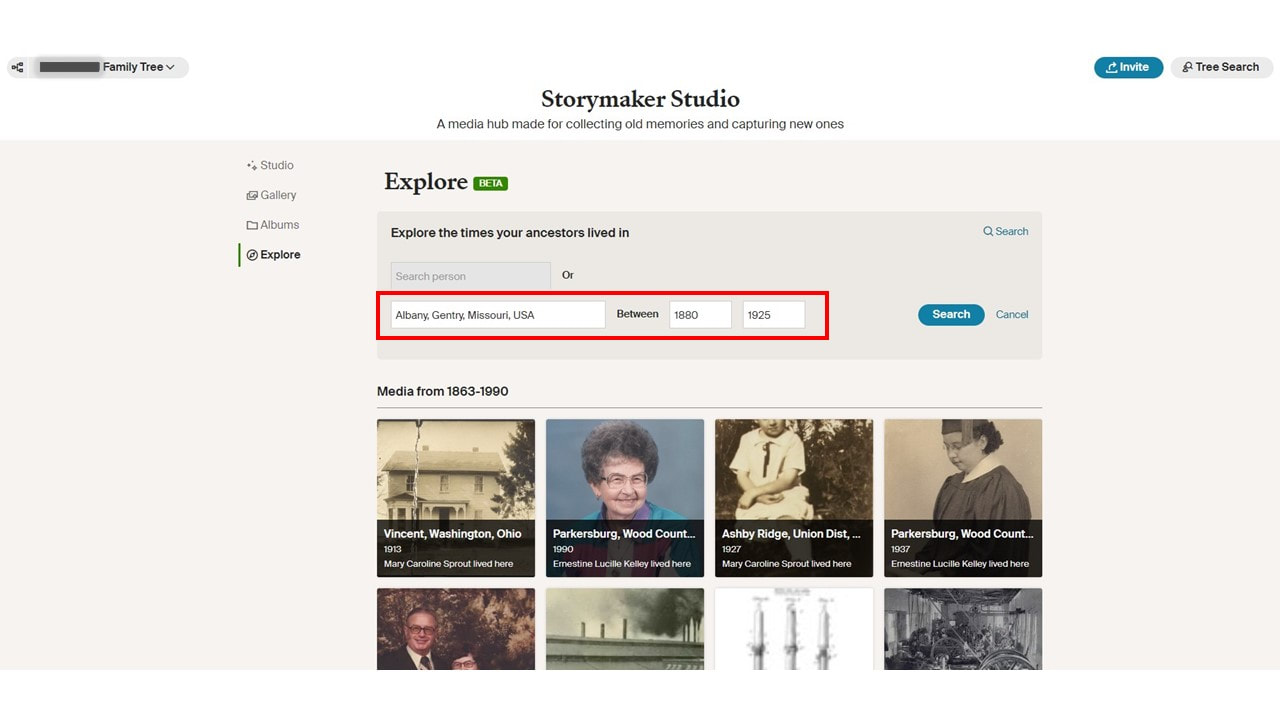 Exploring a Particular Place and Time in Ancestry Storymaker Studio- Example 1 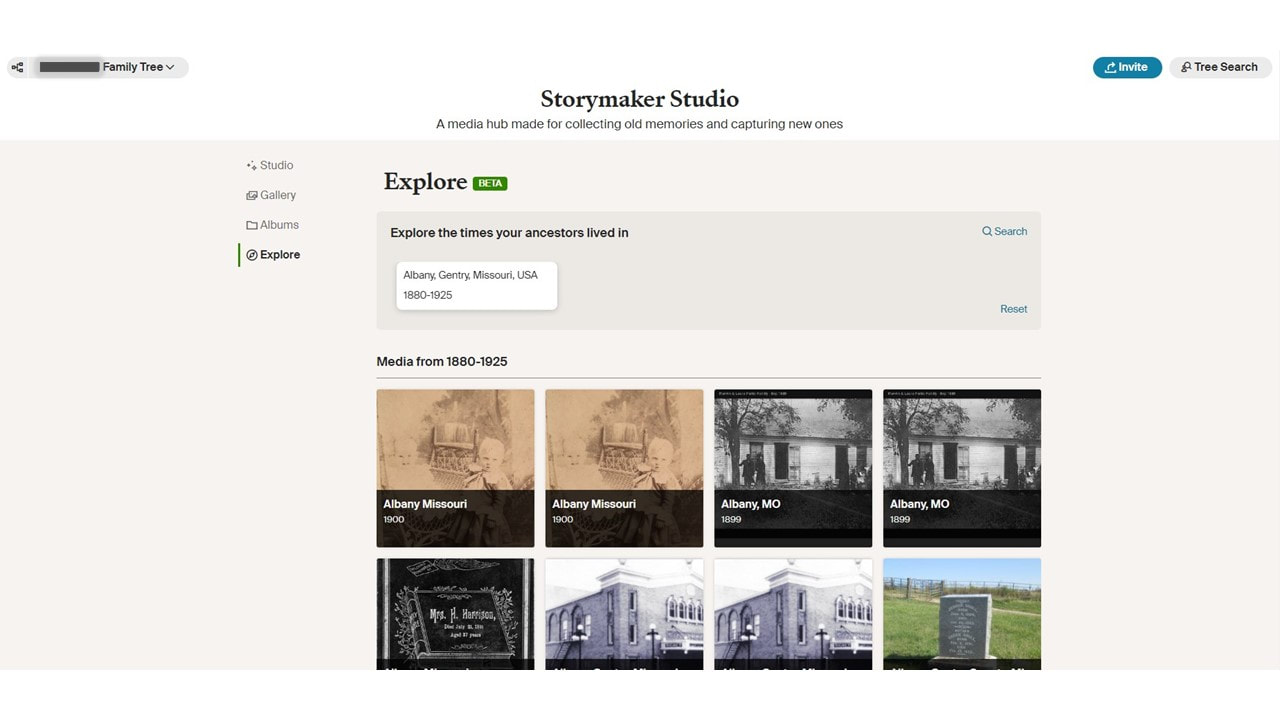 Exploring a Particular Place and Time in Ancestry Storymaker Studio- Example 1-2 I find that “exploring” an ancestor is the same as the image hints you get for that ancestor, under the hints on an ancestor’s profile page, but you cannot currently search for places and times under the hints, so this adds to that capability. Keep in mind that exploring places and times does not necessarily mean it actually has to do with that place and time, it may just be more public ancestor Images of a person who also lived in that place. More Ancestry and Genealogy Resources: Learn about more Ancestry updates, tips, tools, and features and other family history and genealogy resources under the Genealogy Resources category and on my dedicated Genealogy Resources page.
10/22/2023 The Ultimate Genealogy Guide to Celebrating Your Ancestry during Family History Month!Read Now The Ultimate Genealogy Guide to Celebrating Your Ancestry during Family History Month! October is Family History Month, a time to celebrate and explore your roots. Whether you are a seasoned genealogist or a beginner, there are many ways to learn more about your ancestors and connect with your relatives. Here are some ideas for how to celebrate Family History Month:
This list could go on forever! 😉 Family History Month is a great opportunity to honor your ancestors and celebrate your heritage. By following these tips, you can make the most of this month and have fun with your family history research! 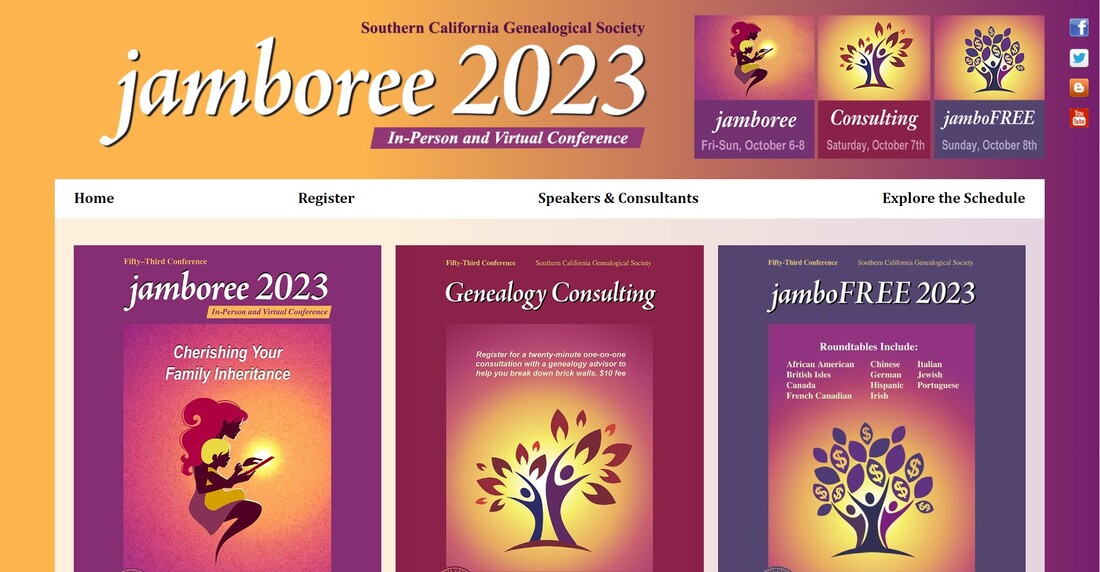 Genealogy Jamboree 2023 Well, Genealogy Jamboree 2023 has come to an end, but the learning has not! If you were a registered attendee, you still get access to any speakers you missed during the weekend, or rewatch them again!
Jamboree is the largest "single society" conference in the U.S. and draws family historians and professional genealogists from all over the world! Usually held yearly at the Burbank Marriott in Burbank, CA, but following the first ever virtual event during the beginning of the pandemic, this year's conferences were hybrid (virtual and/or in-person) and were held separately. The Genetic Genealogy conference was held in the spring, and the Genealogy Jamboree conference was held this past weekend, in the fall. After 53 years, they may no longer be at the Burbank Marriott and be smaller, but they are certainly still mighty! Day 1 of Jamboree started off virtually with a fun-filled social hour; the keynote speaker, Michael D Lacopo; and presentations by Daniel Horowitz from MyHeritage and Michael Provard, from FamilySearch! Day 2 of Jamboree was either in-person or virtual, but if you wanted a chance to bring in up to 25 photos to be scanned for free on their FamilySearch scanner then given to you on a free pen drive, you needed to be there in-person, along with those $10 (ONLY) consultations in a variety of topics! I was one of the consultants for AncestryDNA and brick wall research. 😉 There were 8 presentations to join on Day 2, but of course you wouldn’t have been able to see them concurrently, so you had to choose just 4. No worries though; they will all be available in their webinar library so you can watch the ones you missed! I will definitely have to do that, as I only had time for 3. 😉 I was able to catch German Research for Those Who Don’t Read German, by Jean Wilcox Hibben; Work Your Way to Ireland Using American Records, by Sheila Benedict; and Introduction to U.S. Naturalization, by Sara Cochran. They were all fantastic presentations, given by great speakers, but I’ve got to say that my fave was Sara Cochran’s! This was the one I joined at the end thinking that I really wasn’t going to join either of the end ones, as I don’t have Italian ancestry, nor have I ever had a client with Italian Ancestry. Also, Sara’s was on beginning immigration, and since I am a professional, I thought it would not be useful. Boy was I wrong! She pointed out so many details that I was aware of, but not to that length! This was a very useful presentation for beginners, intermediate, and advanced! She really should retitle it, so that others don’t miss out thinking it’s just the basics. 😉 Day 2 also included a yummy, boxed lunch from Corner Bakery; delicious! Day 3 of Jamboree, the last day of Jamboree, was a virtual day of different ethnic round tables that included British Isles, French Canadian and Canada, Portugues, Italian, Irish, Hispanic, Jewish, African American, German, and Chinese! At the end of the day, they even included tours and book sales! If you missed this educational and fun-packed genealogical event, there’s always next year! 😉 Stay on the lookout from the host, the Southern California Genealogical Society or right here at Know Who Wears the Genes in Your Family! Learn about more fantastic genealogy events, classes and presentations under Genealogy Events. 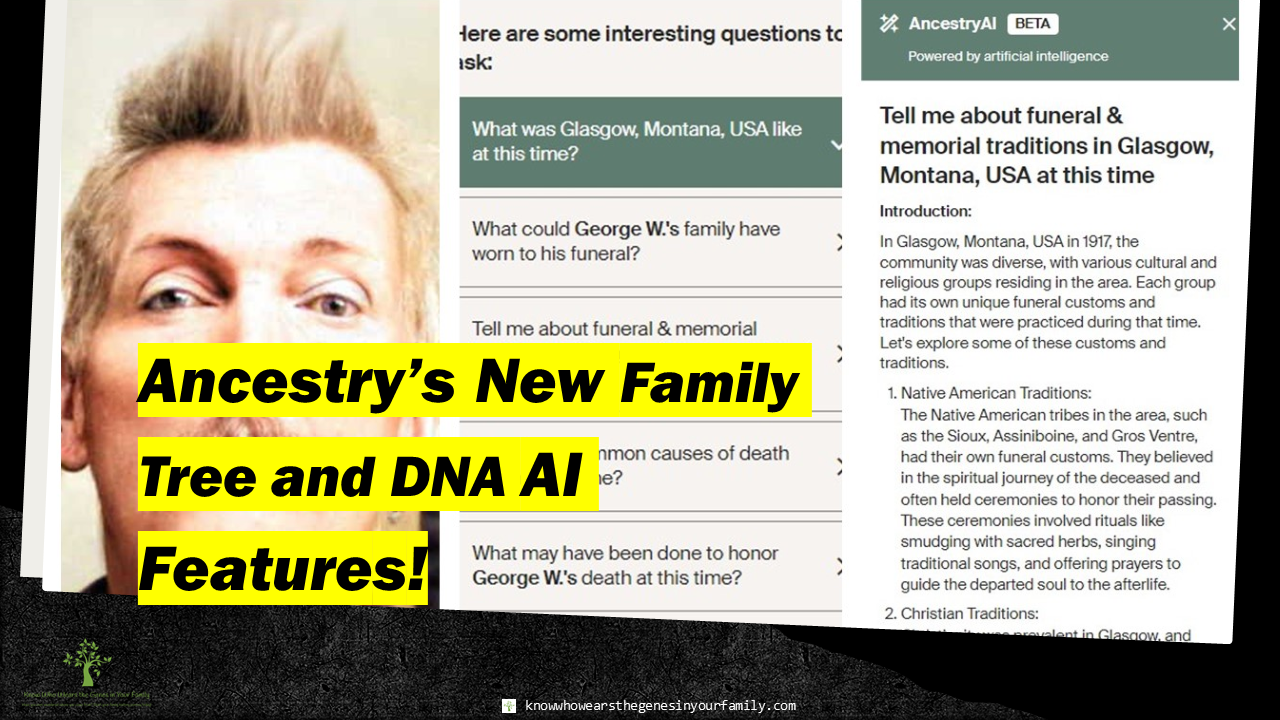 Ancestry's New AI Family Tree and DNA Features Ancestry's New AI Features for Your Family Tree and DNA Ancestry seems to be on a major roll right now, consistently churning out new features one on top of the other! They have just released 2 new AI features to enhance your family history and genealogy, 1 for your family tree, and one for your DNA! These new features are in BETA mode, which means not all may have it; they could tweak it, add to it, delete some of the questions or features; or they may decide to delete it all together. AI to Enhance Your Ancestor’s StoryLearn about your ancestor in a fun, engaging, and educational way with the new AI feature for your family tree! With the new feature, you can learn about birth, marriage, death, and residence events during your ancestors’ lives. Categories and Questions:
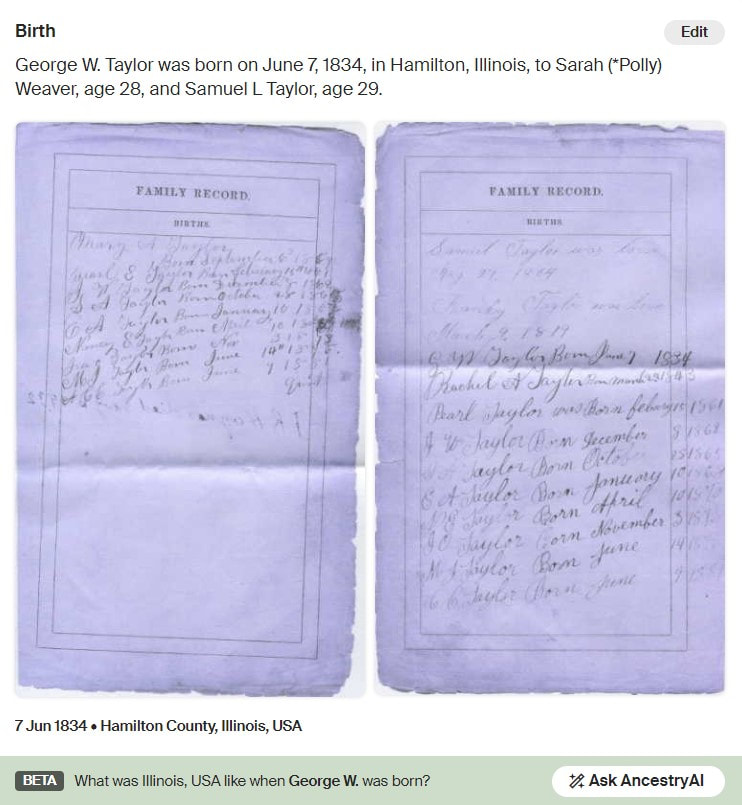
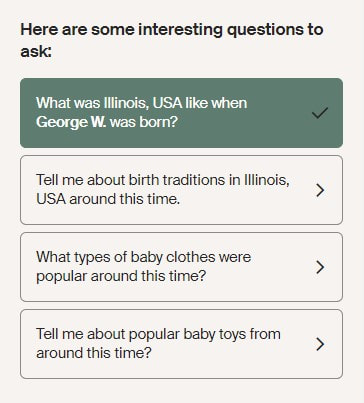
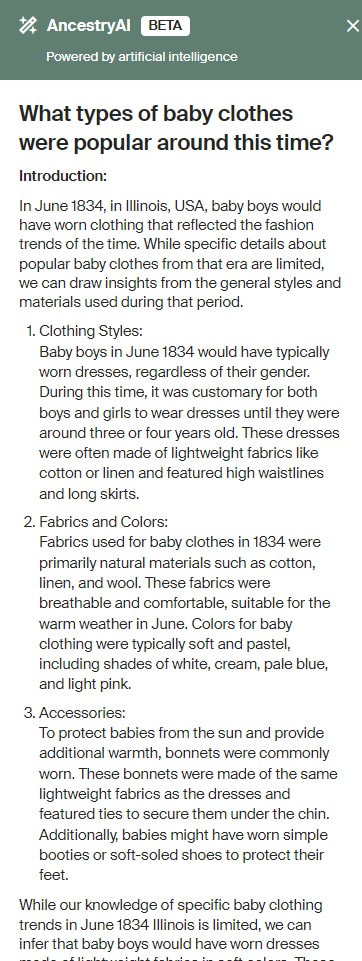
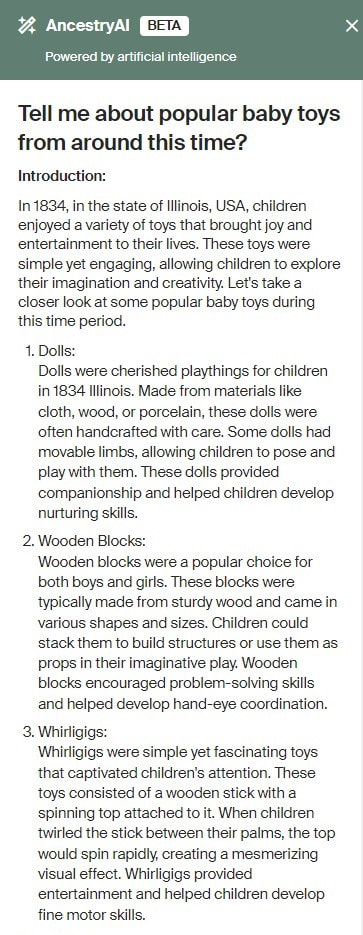
AI Ancestor Birth Questions Samples
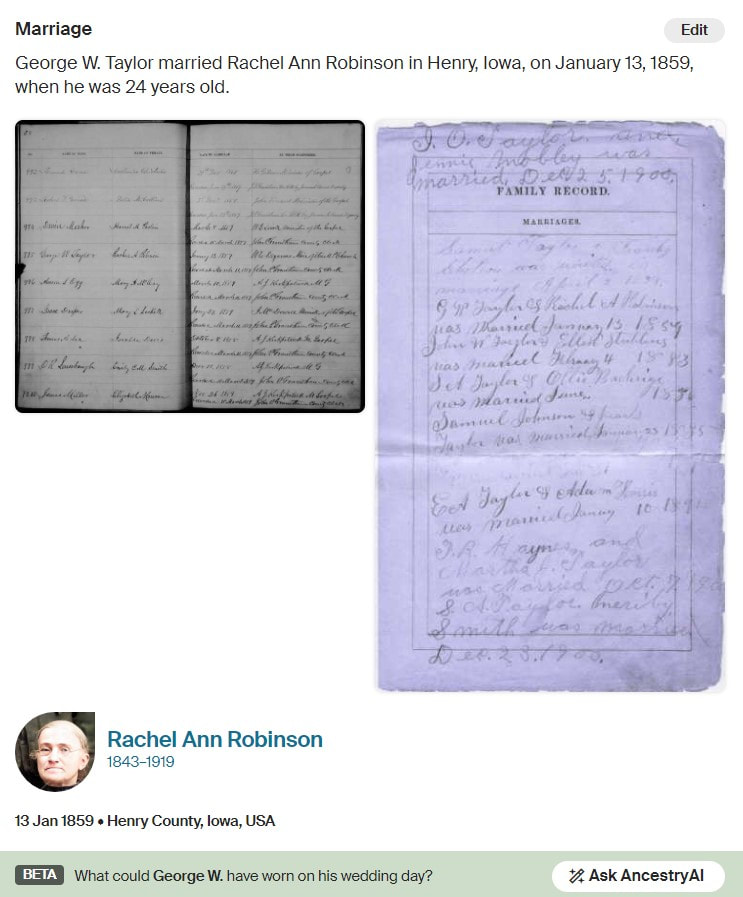
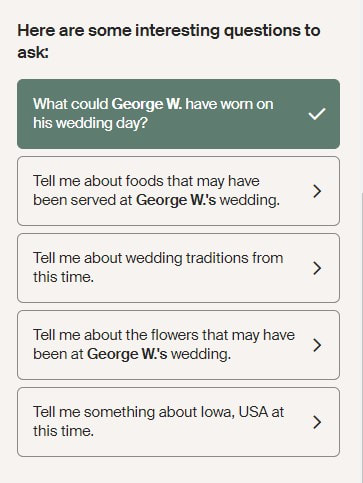
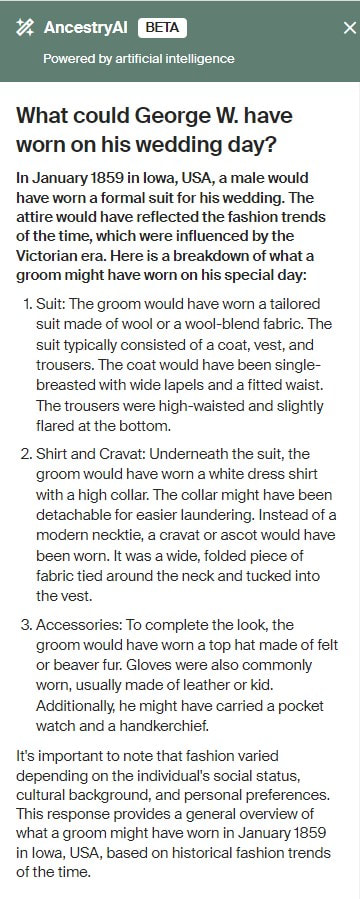
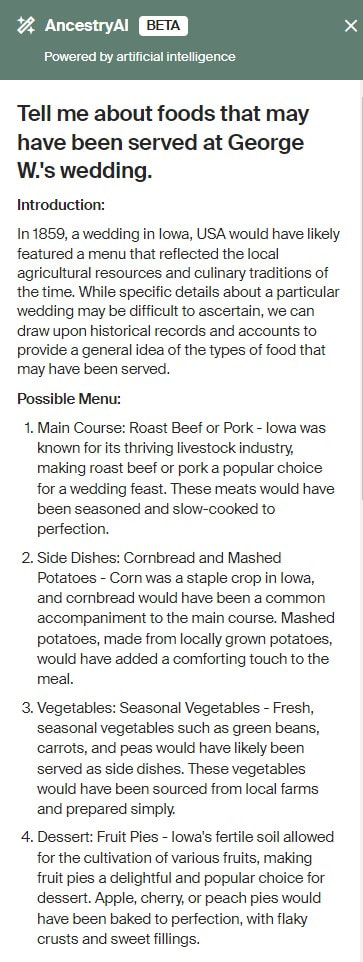
AI Ancestor Marriage Questions Samples
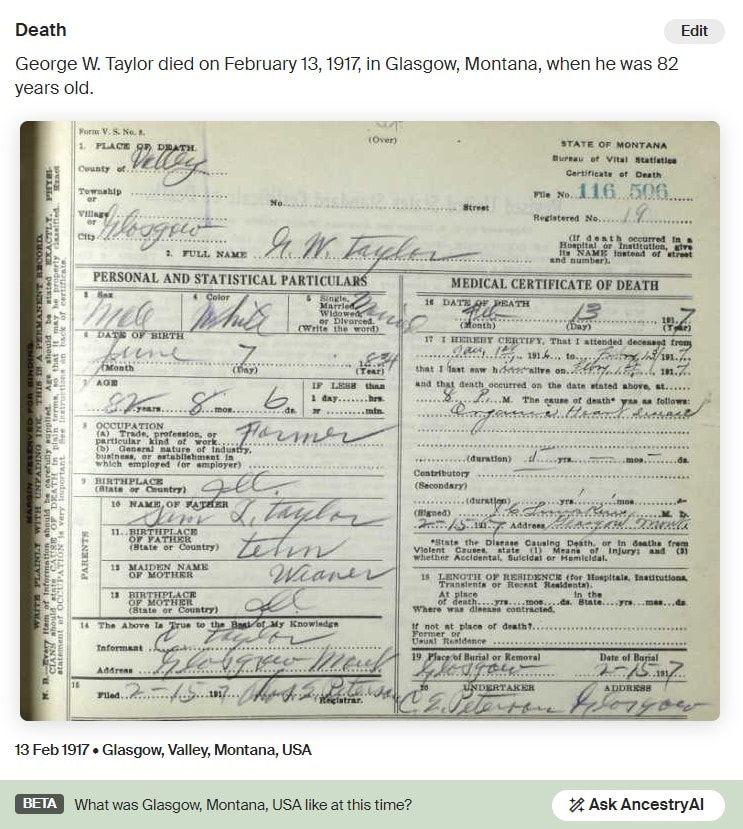
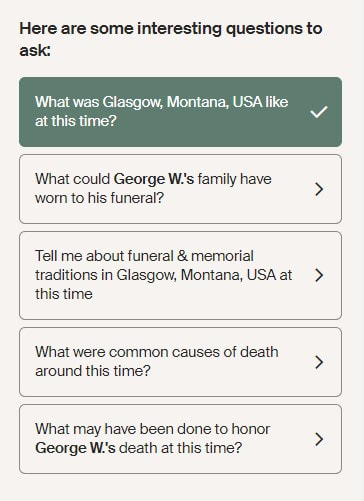
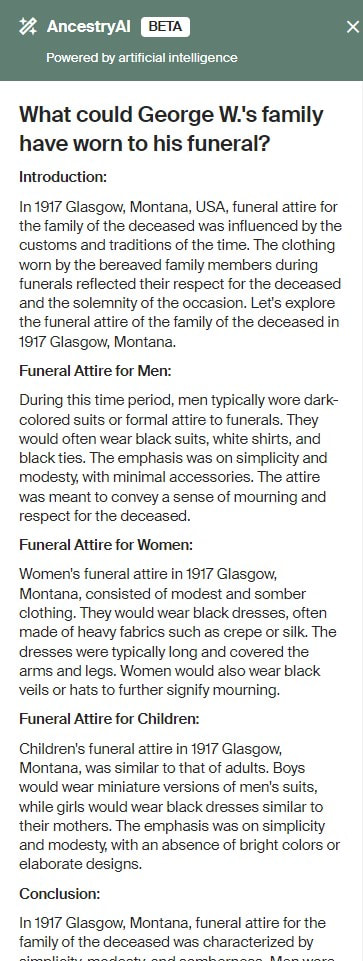
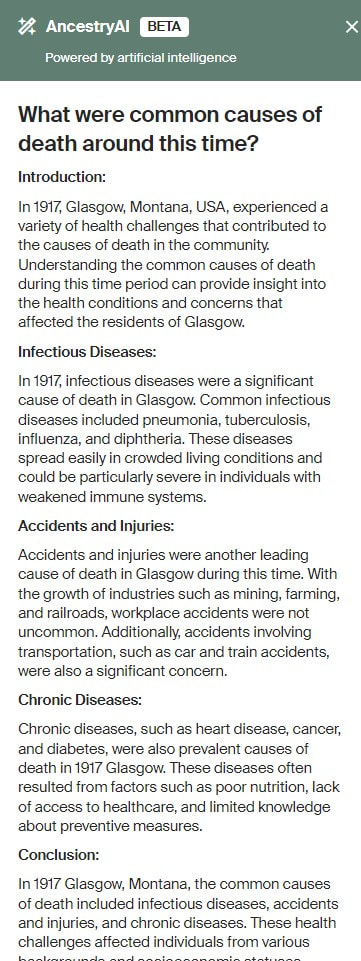
AI Ancestor Death Questions Samples
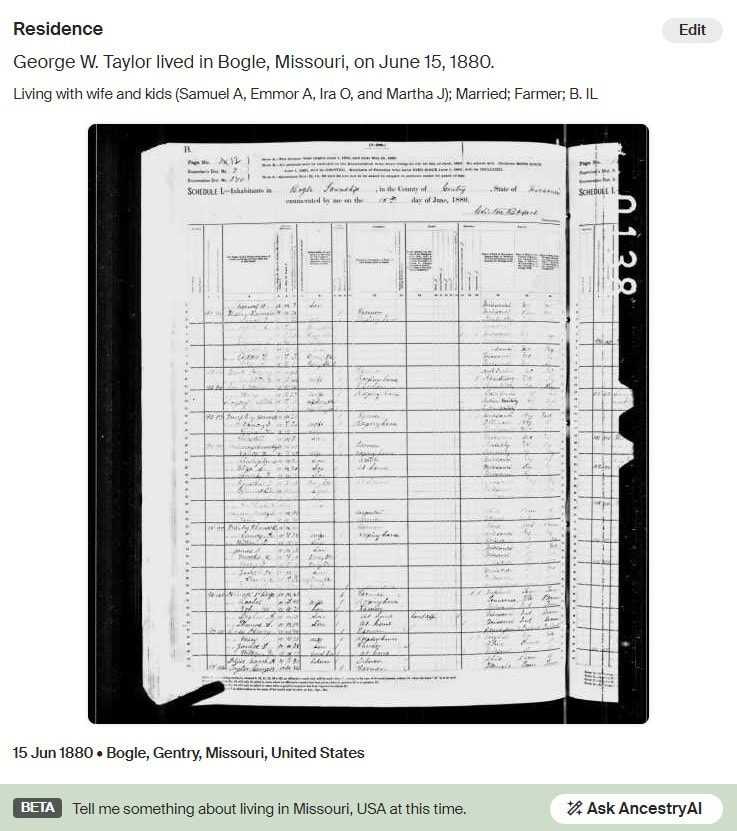
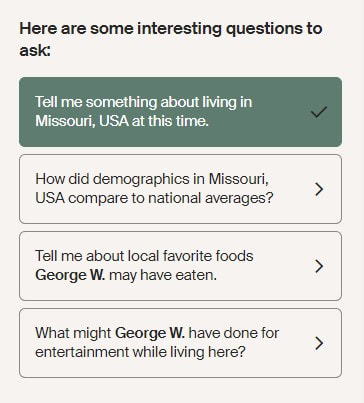
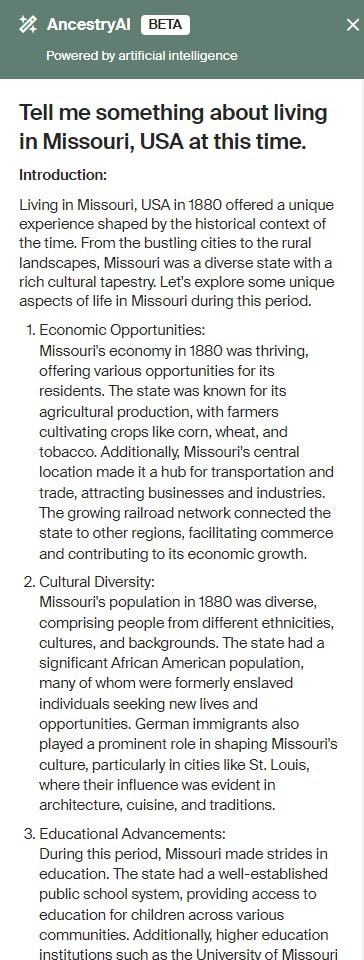
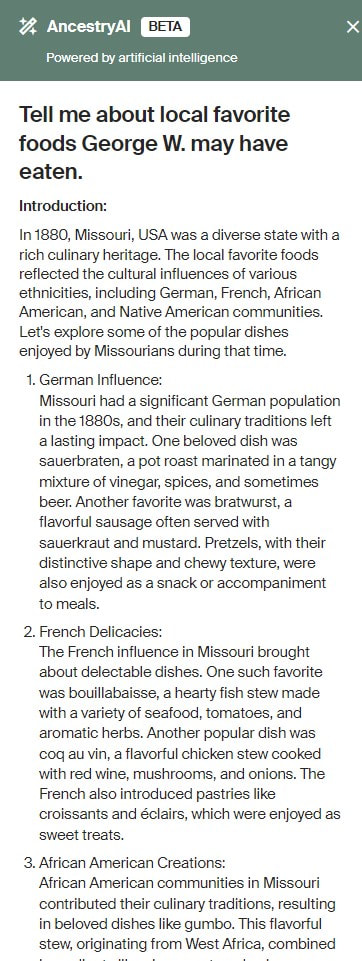
AI Ancestor Residence Questions Examples
How to get to AncestryAI for Your Ancestor
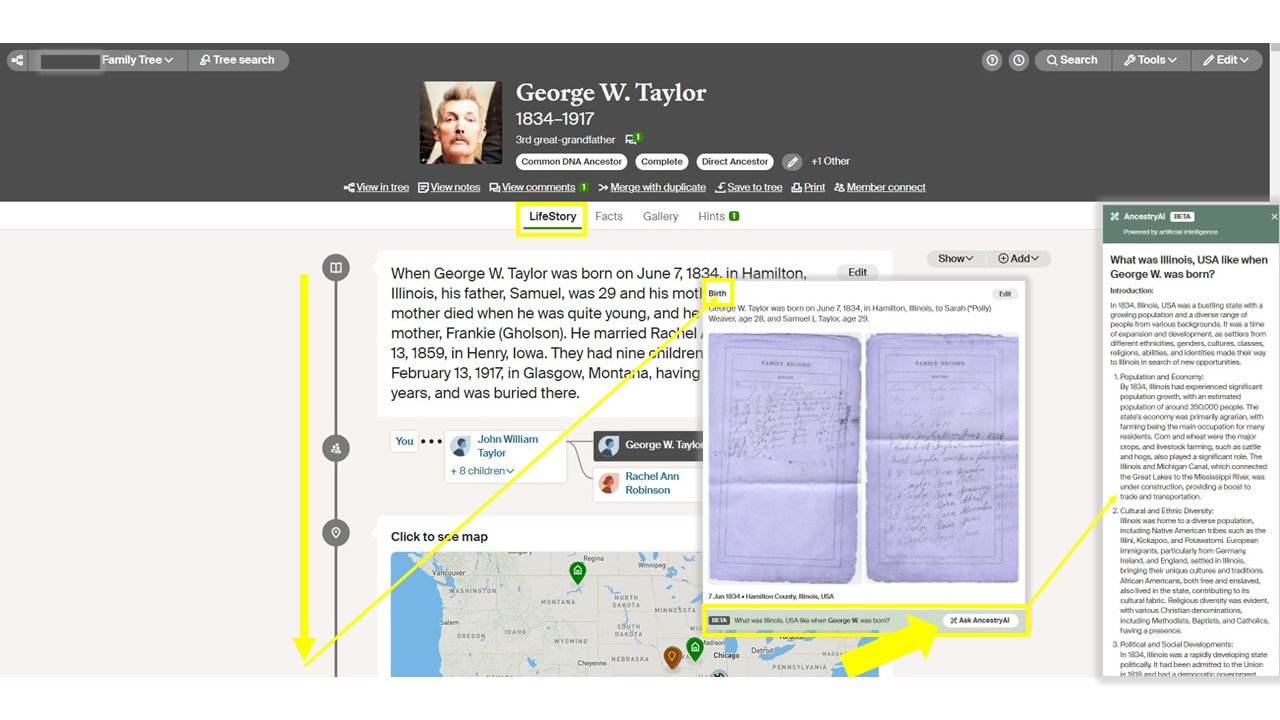 How to Get to AncestryAI Feature for Your Family Tree *Note: Be careful using this info in a story, as some of the information is general for the area and not the specific period or vice versa. 😉 AI to Enhance Your DNA Story You can also learn about your estimated ethnic regions in a fun, engaging, and educational way with the new AI feature for your AncestryDNA! With this new feature, you can learn about daily life, common foods, notable historical figures, climate and geography, population movements, population, the people, and family life in each of your estimated ethnic regions! Categories and Questions:
How to Get to AncestryAI in AncestryDNA
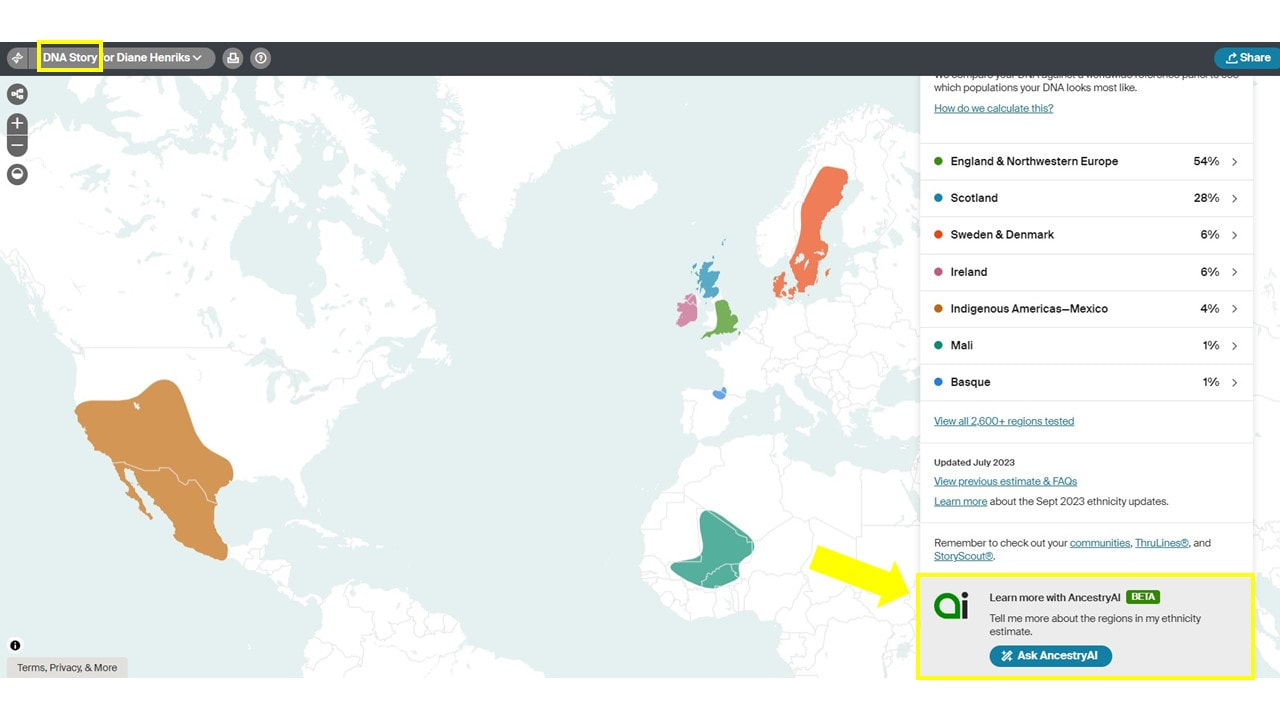 How to Get to AncestryDNA's AncestryAI Feature Go in and see if you have these 2 new AI features; if you do, then have fun with it! More Ancestry and Genealogy Resources Learn about more Ancestry updates, tips, tools, and features and other family history and genealogy resources under the Genealogy Resources category and on my dedicated Genealogy Resources page.
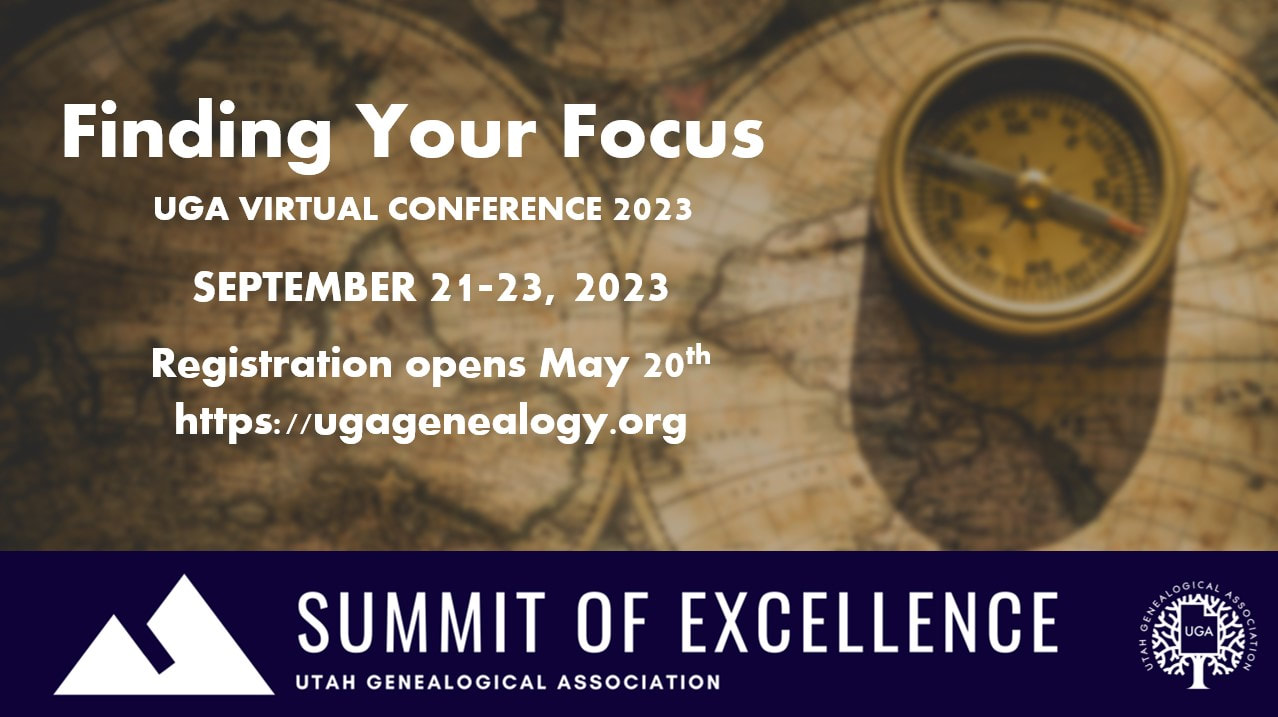 What a fantastic, fun filled, 3-day event of premier genealogical education that was! There were genealogical presentations on such a wide variety of topics, and from so many well-known speakers! With so many presentations going on live at the same time, you had to pick and choose carefully which ones you wanted to see live and right away. I’m not too worried about missing others that I really wanted to hear, because they’ll be available in a couple of weeks from now, until the end of December!
Even though I’m not a beginner, I still joined the FREE “Getting Started for Beginners Day”. I had the time, it’s always good to support and cheer on your peers, and it gave me an opportunity to see how others present and check out their slide shows! 😉 Which did I get to watch? I had the chance to hear:
Hopefully I’ll have time to watch a couple of others, I had to miss because of coinciding with other talks I wanted to hear, when the recordings come out. 😉 I don’t usually join a lot of presentations at an event, but I am learning that even if you think you know the topic inside and out, there is ALWAYS something new to learn! I learned a lot of new German research tips from Charlotte, in which most weren’t even part of the main presentation but rather the adlibs and sidenotes! I learned about the new, since June 2022, Virtual Record Treasury of Ireland from David Ryan, which I knew absoultely nothing about before this! Even though I’m not a beginner, I actually learned some new tips from Cheri Hudson Passey, on the beginners day! I loved how Whitney Tolman reminded us to “Find out what your clients like”, reminding us that not all clients need or want a long drawn-out report. Some like more details, while some may not and would rather have charts, graphs, or pictures. I definitely concur, thanks Whitney! And even though I have been using the majority of the same techniques since the beginning of my research days, I had never thought about the DAR descendant database for cousin bating, which I learned from Christine Cohan! I enjoyed all the presentations that I got to hear, and I commend everyone on a job well done! My absolute fave of the entire conference though, the Keynote Speaker, Craig Scott! I’ve got to say, he was about the best keynote I have ever heard, for ANY kind event! I learned some tips for business marketing analysis, being on the lookout for industry trends, and a few other business tips! Were you able to join the Summit of Excellence genealogy conference this year? If so, what were you able to learn? If you missed the UGA Summit of Excellence this year, don’t worry, there is always next year! 😉 Learn about more fantastic genealogy events, classes and presentations in Genealogy Events. |
Categories
All
Featured
Top Posts
BlogrollEvalogue.Life, Heart of the Family, Molly's Canopy, Climbing My Family Tree, Cami Mayer, Field Genealogist, Ancestor Detective, DNA Breakthroughs, Your DNA Guide, Ancestral Findings, Genealogy Tip of the Day, Family History Daily, Genea-Musings
BlogI hope my family history and genealogy blog on genealogy research tips, resources, events, and more, along with my own genealogy journeys, will help you in your research and in building your family tree to learn more about your ancestors and family history to preserve for future generations to come! 
Come visit me at Know Who Wears the Genes in Your Family if you're interested in starting your family history journey, booking me for your next speaking event, or family history and genealogy heirloom products!
          Archives
April 2024

|
 RSS Feed


HoursM-Su: 8am - 8pm


|
Know Who Wears the Genes in Your Family is dedicated to promoting family history and genealogy, while maintaining commitment to client care and professional service, and adheres to the Code of Ethics and Professional Practices put forth by the Association of Professional Genealogists.
|